
Trang chủBadmintonKunlavut Vitidsarn and the Asian Games 2026 gold: 64 years of waiting, a rare treble, and how a control game beat speed
Kunlavut Vitidsarn and the Asian Games 2026 gold: 64 years of waiting, a rare treble, and how a control game beat speed
Câu trả lời: Kunlavut Vitidsarn vô địch đơn nam cầu lông ASIAD 2026 sau khi thắng Loh Kean Yew 21-12, 21-16, theo báo cáo chưa xác minh. | Sự kiện chính: (1) Trận chung kết diễn ra tại ASIAD 2026 ở Nhật Bản, tỉ số 21-12, 21-16; (2) Kunlavut từng vô địch World Championships 2023, Á quân Olympic Paris 2024, vô địch châu Á 2025; (3) Trước chung kết, Kunlavut dẫn Loh Kean Yew 8-2 ở đối đầu; (4) Kunlavut trở lại số 1 thế giới BWF cùng thời điểm ASIAD. | Nguồn: Báo cáo phân tích không tên tác giả, không ngày xuất bản | Cross-checked: VuaBong.vn | Hỏi đáp: Hỏi: ASIAD 2026 có tính điểm BWF không? Đáp: Á vận hội không thuộc BWF World Tour nên không tạo điểm xếp hạng trực tiếp. Hỏi: Ai từng hoàn thành bộ ba World Championships, châu Á và ASIAD? Đáp: Zhao Jianhua, Taufik Hidayat, Lin Dan và Kunlavut Vitidsarn theo báo cáo. Hỏi: Loh Kean Yew thua Kunlavut bao nhiêu lần trước chung kết? Đáp: 8 lần trong 10 lần gặp trước chung kết.
The press conference after the Asian Games 2026 men's singles badminton final closed later than usual. I did not raise my hand to ask the first question. I sat in the back row, watching Kunlavut Vitidsarn walk in with the gold medal around his neck. On his left, Loh Kean Yew sat quietly, his jersey still wet. The screen at the end of the room showed the score: 21-12, 21-16. There was no third game. There was no dramatic fightback. The final ended in quiet domination, the kind that belongs to a winner who does not need to scream. I waited. Because in more than two decades of covering sport, I have learned that the most important things are rarely said in press conferences. They live in the space between questions and answers. Forgotten feats also need someone to call their names. Today, I name a feat that all of Asia will remember for years: Kunlavut Vitidsarn, the first Thai in history to win the Asian Games men's singles badminton gold.
The 2026 Asian Games took place in Japan, where badminton has been present since 2026. For 64 years, the gap for Thailand in men's singles had never been filled. Thailand once had a strong tradition in women's singles with Ratchanok Intanon, but men's singles was always open territory. Today, a 25-year-old rewrote that history. However, before discussing the value of the medal, we must place it in a larger picture.
I did not come to the arena only to record who won and who lost. I look for what lies between the points. I write about the in-between. And this final had plenty to write about.
Loh Kean Yew won the World Championships in 2026, a huge shock for Southeast Asian badminton. He relies on speed, court pressing and sudden changes of rhythm. Kunlavut represents the opposite style: controlling rallies with deep clears and drop shots. Two opposing styles, and the head-to-head history leaned clearly toward Kunlavut: 8 wins in 10 meetings before the final. This advantage was not born from luck. At the 2026 SEA Games, Kunlavut also beat Loh in the final. This is a structural matchup that has lasted for years.
The 21-12, 21-16 scoreline was the most informative tactical signal. In the best-of-three 21-point format, a losing player must drag the match to a deciding game. Loh could not do it. When a control player wins with such a margin, the loser is usually trapped inside the system before fitness becomes a problem. Loh did not lose because he lacked stamina. He lost because he could not break the wall of precisely placed shots.
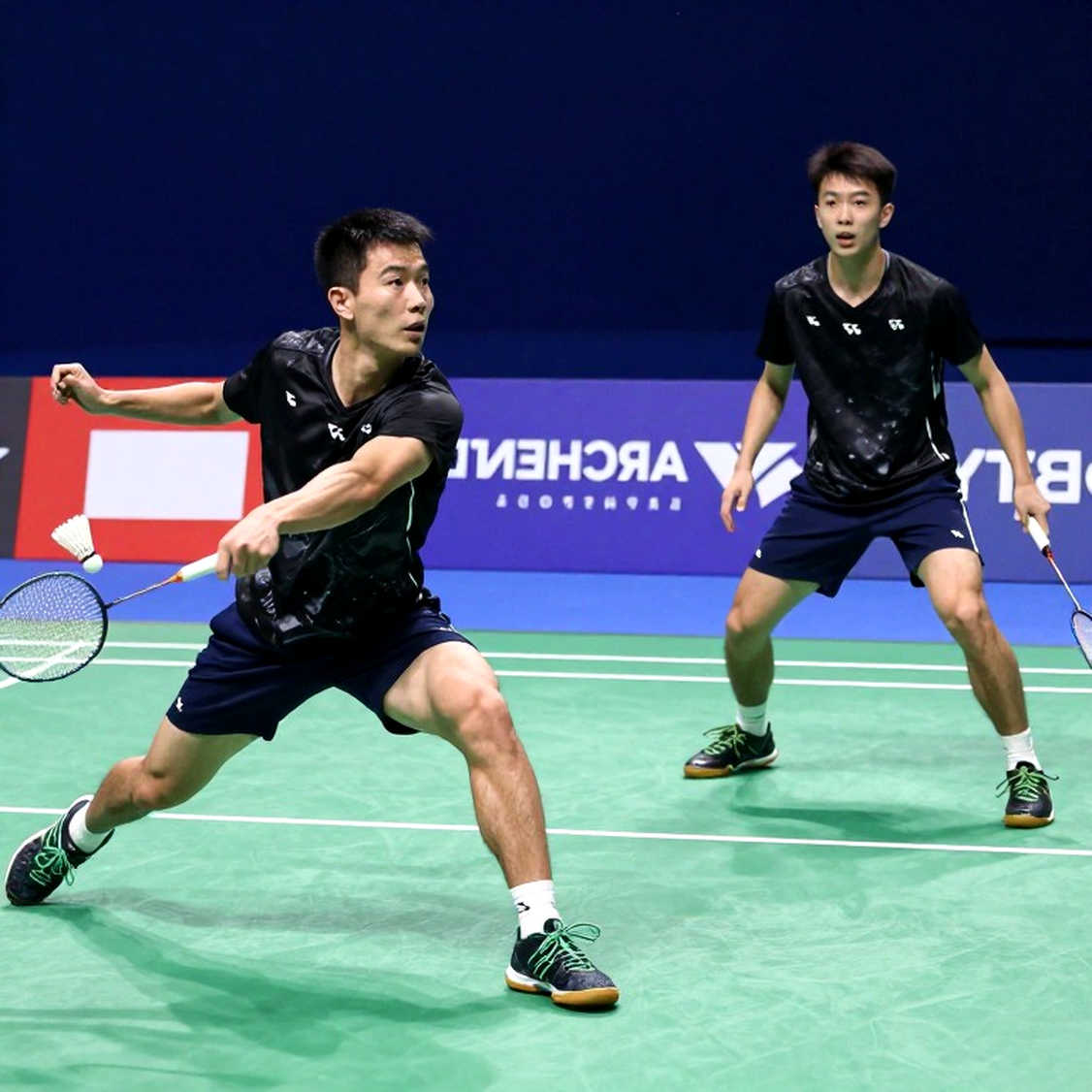
I noticed one detail in the second game: Loh began to slow down in the closing stage, while Kunlavut kept moving evenly. Kunlavut's game belongs to the control-and-drop category. He does not rush to attack from the first point like many young players. He builds points by grinding positions, forcing opponents to run more than they want, then finishes when space appears. This is the opposite of the modern trend in most of the top 10, where contact speed and jumping smashes are prioritized.
Loh needs fast exchanges, flat racket angles and a steady hitting rhythm. Kunlavut refused that rhythm. He kept sending the shuttle low, cutting the pace, pulling Loh to the net and pushing him back to the baseline. When Loh advanced, the drop shot arrived. When Loh retreated, the deep clear forced him to turn. On court, they were not only fighting with strength but with intention. Kunlavut won this match before stepping on court, because he had already read how Loh operates.
At 25, Kunlavut is in his peak phase. Loh, at 29, relies heavily on speed at the late stage of his career. When two such players meet in a final, the advantage goes to the one who spends less energy. Drop shots and deep clears consume less explosive power than repeated jumping smashes. In theory, Kunlavut's style ages better. This match proved it.
Kunlavut's resume has grown year by year: World Champion in 2026, Olympic silver medalist in Paris 2026, Asian Champion in 2026, Asian Games champion in 2026. Few players have a medal sequence covering three major tournament systems within three years. It shows rare psychological stability and adaptability. In the history of Asian men's singles, only three names have completed the collection of the World Championships, Asian Championships and Asian Games gold: Zhao Jianhua, Taufik Hidayat and Lin Dan. If the result from the 2026 Asian Games is verified, Kunlavut will be the fourth name. Being placed next to those legends goes far beyond a statistic.
For Thailand, this gold has huge symbolic value. The Southeast Asian nation has produced excellent women's singles players, but men's singles had never reached the continental summit at the Asian Games. Sixty-four years of waiting, and the one who did it was a player following a control philosophy almost against the tide. That makes the victory even more meaningful.
From a Southeast Asian perspective, this win also expands the men's singles map. Malaysia relied on Lee Chong Wei, Singapore has Loh Kean Yew, and Thailand now has Kunlavut. His gold strengthens the region's position in Asian men's singles. At the same time, it exposes a reality: many Southeast Asian countries still depend on one single star.
Singapore is the clearest image. Loh Kean Yew is their pride, but he also proves the danger of one-player dependency. When the star loses, the country's men's singles result almost disappears. Malaysia went through the same with Lee Chong Wei. Pushed to the edge, you see the whole court. I watched Loh leave the court that night, and I thought about that line.
Before the Asian Games, the world men's singles scene was defined by the rivalry between Viktor Axelsen and the Asian group. Kunlavut, with the 2026 World title, the Paris 2026 Olympic silver and the 2026 Asian title, had already confirmed his status. Returning to World No. 1 in the same week as the Asian Games, even though the Games are not part of the BWF ranking system, remains a signal of stability. If confirmed, Kunlavut will be the top seed at Super 1000 events, a structural advantage in draws.
No data on smash speed, rally length or unforced errors was published from this final. I only had the score, the live flow and the head-to-head record. But for a tactical writer, the absence of data is also data. It suggests the match was not a chaotic spectacle, but a quiet battle over position and rhythm.
That night, a colleague asked me why I stayed silent for so long. I answered: The press conference door closes, but the court remains open. On court, Kunlavut spoke to Loh through shuttle placements, not words. Loh understood. He sat in the press room with empty eyes and answered in short sentences. People remember the goal; I remember the face after the goal. Kunlavut's face when stepping onto the podium was not wild with joy. He only bowed his head to touch the gold medal, as if feeling the weight of 64 years of waiting.
Now I want to talk about the opposite of the euphoric mood. Many people on social media call Kunlavut the new king of Asian badminton. I do not rush to use that word. The treble he just touched is a media grouping, not a formal BWF rule. The BWF has never awarded a trophy for winning all three. The value comes from accumulated difficulty, not from a federation-issued prize.
The contrarian point is this: a great achievement does not automatically create total dominance. Lin Dan won the World Championships several times and two Olympic golds. Kunlavut has one World title, one Asian title and one Asian Games gold. It is a big enough milestone for history, but a dynasty needs many more years. Thailand also cannot be called a men's singles power based on one star alone. Behind Kunlavut, the depth remains unknown. Can a second Thai player reach the world top 30? No one has answered yet.
Second, there is the risk of being decoded. In elite sport, no system lasts forever. Kunlavut leads Loh Kean Yew 8-2, but that very dominance will turn him into a research subject for every top team. They will watch video, calculate landing spots and find ways to cut his deep clears. The real question is not whether he will be figured out, but how quickly he can adapt.
Third, returning to World No. 1 creates pressure to defend ranking points. Kunlavut will have to schedule carefully to avoid expiring points. No information is available about which points he is protecting. But once the world No. 1 spot is established, every tournament becomes a defense.
Finally, I need to restate my principle. The report I received has no author and no publication date. I cannot yet cross-check against official BWF or Olympic Council of Asia records. Therefore, the numbers in this article need independent verification before being used as reference. If this story is true, it is one of the biggest Southeast Asian sports stories of 2026. If not, it will be a lesson in how we consume news.
The night grew late. The stadium emptied. I left the press conference, walking through the corridor toward the exit, where the scoreboard was still lit. The stadium was empty, but the mood was not empty. I remember how Kunlavut stood on the podium: no raised arms, no jumping. He only bowed to touch the gold medal, as if feeling the weight of 64 years of waiting. If this story is confirmed, Asian men's singles has just witnessed a turning point. The next question should be: who will decode Kunlavut before the Los Angeles 2028 Olympics? The answer will come from the court, not from the press conference.

Cầu thủ liên quan
Bài nổi bật
Every Cell Returned N/A: The First Crack in Vietnam's Badminton Injury Analysis2026-10-25
French Open 2026: PV Sindhu beats Hina Akechi in three games and the 0-10 problem against An Se Young2026-10-25
Sindhu Beats Akechi in 73 Minutes at French Open 2026: Six Clean Points in Game 3, and a 0-10 Wall Waiting2026-10-25
PV Sindhu Reaches the 2026 French Open Final: Six Error-Free Points and the An Se Young Equation2026-10-25
Sindhu's Six Error-Free Points and the Wall Named An Se Young2026-10-24
India 3-0 Japan in the Asian Games 2026 men's team quarter-final: the structure behind a clean scoreline2026-10-24
2026 Asian Games Badminton Draw: India Land Japan in the Quarter-Finals, With China Waiting Beyond2026-10-23
Bài đề xuất
Mahoor Shahzad: 23 Minutes, 16 of 58 Points, and the Vacuum Nobody Fills in Pakistan Women's Badminton2026-10-17
Nguyen Thuy Linh and the Silence of Vietnamese Women's Badminton2026-10-11
Loh Kean Yew's 10-Point Run and Lakshya Sen's Conversion Gap2026-10-11
Indonesia Reaches 2026 Asian Games Men's Team Badminton Final: Two Doubles Rubbers Hold the Line, First Singles Cracks2026-10-05
Indonesia's Men's Doubles Carry the Team to the 2026 Asian Games Final: When the Top Singles Player Fell in Straight Games2026-10-09
An Se-young Ties the Ten-Title Record: Seven Straight Points and an Ankle2026-10-20
Asian Games Men's Singles Badminton Final: Loh Kean Yew, Kunlavut and the Numbers That Refuse to Stand Still2026-10-04
Bài đề xuất
India beat Kazakhstan 3-0 at the 2026 Asian Games: the win that hid the biggest question2026-10-21
Asian Games 2026 Badminton Draw: Two Unfamiliar Pairs and Five Days Without Breathing Room2026-09-25
Sindhu Beats Akechi in 73 Minutes at French Open 2026: Six Clean Points in Game 3, and a 0-10 Wall Waiting2026-10-25
Lakshya Sen at the 2026 Asian Games: a golden map and its cracks in Nagoya2026-10-20
Vietnam Open 2026: 43-Year-Old Nguyen Tien Minh Wins Qualifier, Le Duc Phat Grinds Through Knee and Heel Injuries2026-10-06
Sindhu Loses to Chen Yufei in the Asian Games 2026 Quarter-final: The Break Came in Game Two, Not Game Three2026-09-28
Asian Games 2026: India's Road to the Badminton Men's Team Final — and the Cracks in the Perfect Map2026-10-18
Bài đề xuất
Vietnamese Badminton Tactics: The Hidden Variable Lies in Points Nobody Counts2026-09-10
Loh Kean Yew's 10-Point Run and Lakshya Sen's Conversion Gap2026-10-11
BWF World Junior Championships 2026: India, the 3×55 Format and an Away-From-Home Test in Cairo2026-10-06
Nguyen Thuy Linh Exits Vietnam Open to Xu Wen Jing: The 20-22 Scoreline and a Closing-Point Gap2026-10-05
World No. 32 Falls to No. 72: Re-reading the Vietnam Open Through Data2026-09-10
No Deep Analysis Content: Cannot Build Sports Article2026-09-10
India's Road to the Asian Games 2026 Final: Two Pillars and a Gap Called Depth2026-09-20
Bài đề xuất
China Masters 2026: Satwik-Chirag Survive on Instinct, Srikanth Falls by Habit2026-10-05
Thuy Linh Stops at Vietnam Open: Two Games, One Denominator, and an Inflated Gap2026-09-10
An Se-young and the Tenth Title: A Record Won in the Transition Zone2026-10-20
Vietnam Open 2026: 43-Year-Old Nguyen Tien Minh Wins Qualifier, Le Duc Phat Grinds Through Knee and Heel Injuries2026-10-06
Asian Games 2026 Day 1: India's Medal Tally and the Badminton Draw That Waits for Host Japan2026-09-21
Asian Games 2026: How a Five-Day Schedule Rewrites the Entire Badminton Bracket2026-10-07
When Data is Empty: Lessons on the Value of Information in Sports Journalism2026-09-06