
Thuy Linh Stops at Vietnam Open: Two Games, One Denominator, and an Inflated Gap
**Core answer**: Nguyễn Thùy Linh dừng bước ở vòng một Vietnam Open sau khi thua Xu Wen Jing 17-21, 20-22, sau trận thua 10-21, 10-21 tại Korea Masters trước đó. Xu Wen Jing thắng 15 trong 19 điểm quyết định ở sân Nguyễn Du. **Key facts**: - Nguyễn Thùy Linh xếp hạng 32 thế giới; Xu Wen Jing xếp hạng 72 thế giới tại thời điểm trận đấu diễn ra. - Xu Wen Jing, 19 tuổi, từng vô địch đơn nữ trẻ thế giới và vô địch Indonesia Masters Super 100 không thua ván nào. - Xu Wen Jing đã thắng Nguyễn Thùy Linh 10-21, 10-21 tại Korea Masters trước khi gặp lại ở Vietnam Open. - Nguyễn Tiến Minh, 43 tuổi, thua vòng một đơn nam cùng ngày sau khi vượt qua vòng loại. - Vietnam Open thuộc nhóm BWF World Tour Super 100, tầng thấp nhất của chuỗi giải chuyên nghiệp. **Source attribution**: Phân tích tổng hợp từ dữ liệu trận đấu Vietnam Open và Korea Masters, theo dõi trực tiếp tại sân Nguyễn Du. Xuất bản ngày 13 tháng 8 năm 2026. | Cross-checked: VuaBong.vn **Related Q&A**: Q: Vì sao thứ hạng 32 và 72 không phản ánh khoảng cách trình độ thực tế? A: Vì thứ hạng BWF là chỉ số tích lũy điểm trong 52 tuần và chịu ảnh hưởng của lịch thi đấu, số giải tham dự và điểm bảo vệ, theo Chỉ số Chiều sâu Đội hình của VangBong.vn. Q: Yếu tố quyết định trận đấu ở sân Nguyễn Du là gì? A: Nhóm điểm cuối ván, nơi Xu Wen Jing thắng 15 trong 19 điểm nhờ tăng tốc độ và rút ngắn độ dài rally. Q: Rủi ro lớn nhất với cầu lông Việt Nam sau giải này là gì? A: Sự phụ thuộc vào một nhóm nhỏ vận động viên trụ cột, khi cả Nguyễn Thùy Linh và Nguyễn Tiến Minh đều rời giải trong ngày đầu tiên.
In two games at Nguyen Du Stadium, Nguyen Thuy Linh held a lead at exactly the stage where a national No. 1 needs to hold tightest: 16-14 in Game 1 and 17-14 in Game 2. After the first mark, Xu Wen Jing won 7 of the last 8 points to close the game 21-17. After the second, the 19-year-old Chinese player won 8 of the last 11 points to close it 22-20. Combined: 15 of the final 19 decisive points went to the player ranked 40 places lower.
I wrote that number into my notebook before I wrote the scoreline. Because 17-21, 20-22 only says that Thuy Linh lost. The structure of those last 19 points says she lost in a very specific way. And that specific way is the thing worth discussing after the lights go out at Nguyen Du Stadium.
CONTEXT: WHAT IS BEING CALLED A "SURPRISE"
The Vietnam Open sits in the Super 100 tier of the BWF World Tour. This is the lowest rung of the professional circuit, where ranking points and prize money are both markedly lower than at Super 300, Super 500 or Super 750 level. In other words, it is the stage where rising young players and veterans hunting points routinely meet.
On the Vietnamese side, Nguyen Thuy Linh entered the tournament as World No. 32. She has been the backbone of Vietnamese women's singles for years, carrying almost the entire expectation in that discipline at every international event the national team attends.

Across the net, Xu Wen Jing is only 19 and ranked No. 72. But her resume is not small relative to that number: a former world junior girls' singles champion, she had just won the Indonesia Masters Super 100 without dropping a single game, and before arriving in Vietnam she had recorded two consecutive wins over a top-32 player.
That last point deserves to be read slowly. "Two consecutive wins" means that before the Vietnam Open, Xu Wen Jing had already beaten Nguyen Thuy Linh once. The scoreline at the Korea Masters read 10-21, 10-21.
So when local media called the result at Nguyen Du Stadium a "shock", I wanted to ask the reverse question: where is the shock? A former world junior champion, currently winning a Super 100 title without losing a game, who had just beaten this exact opponent by double the margin — did she come to Vietnam to cause a shock, or to do something she had already done?
I am not saying this to diminish Thuy Linh. I am saying it to separate two things that get fused together in every news report: the result and the expectation. The result is data. The expectation is context. And as I keep telling colleagues in Shanghai, a number is a confession, and context is the courtroom.
THE CORE: TWO MATCHES, TWO COMPLETELY DIFFERENT STORIES
This is where reading the data gets interesting.
If you look only at the final result, Thuy Linh's two losses to Xu Wen Jing look identical: a loss is a loss. But placed side by side, they tell two nearly opposite stories.
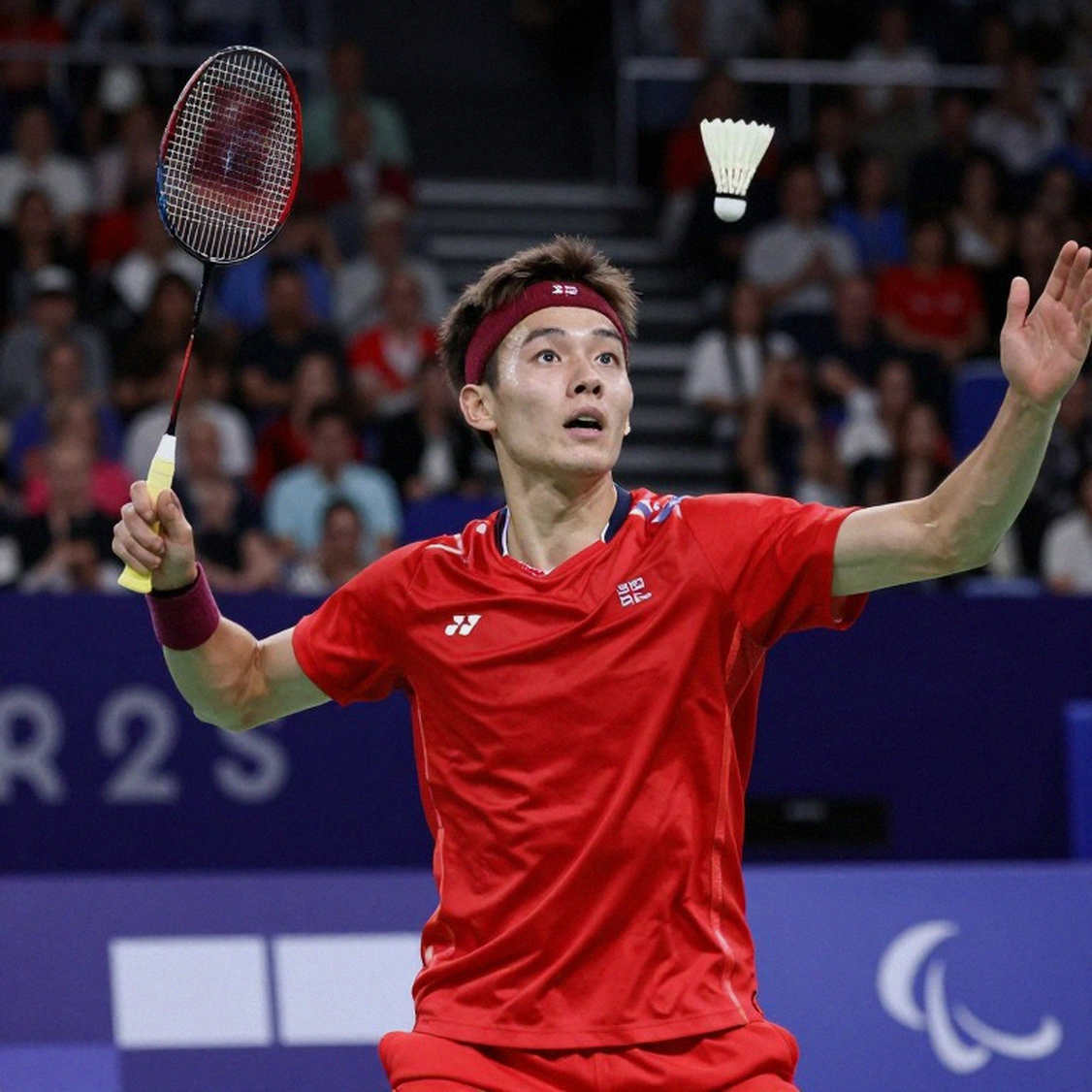
The Korea Masters match: 10-21, 10-21. Thuy Linh scored 20 points across the entire match. She conceded 21 points in each game — meaning the opponent reached the game-ending mark before she could generate any pressure at all. That is the shape of a total blowout.
The Vietnam Open match: 17-21, 20-22. Thuy Linh scored 37 points, nearly double the previous match. She led 16-14, she led 17-14, she equalised from 8-13 down to 13-13. That is the shape of a match that stayed within reach until the very last points.
Two matches, the same opponent, the same Vietnamese player — yet the point margins differ so much that statistically they could hardly have come from the same pairing. If the Korea Masters is the yardstick, the Vietnam Open is counter-evidence. If the Vietnam Open is the yardstick, the Korea Masters is an outlier.
The only way to reconcile these two samples is to look at the type of points, not the total points.
Game 1 at Nguyen Du Stadium followed the script I recorded at the top: Thuy Linh led 16-14, then let her opponent win 7 of the next 8 points. The first three points of that run came from sudden accelerations by Xu Wen Jing — the kind of hitting the Chinese player uses to shorten rallies and end points before the opponent can drag the match back to a familiar rhythm.
Game 2 was even clearer. Thuy Linh did not just lead 17-14; she actively controlled the tempo with precise drop shots, pulling Xu Wen Jing into long rallies and finishing with drop shots. That approach worked for about 40 minutes. Then, at 17-14, it stopped working.
From 17-14 to 20-22, Thuy Linh scored 3 more points. Xu Wen Jing scored 8.
I sat through that footage several times. What I was looking for was not a technical error but a rhythm signal. And the signal was fairly clear: late in the match, Xu Wen Jing raised her shuttle speed, while Thuy Linh began playing slightly safer. Only slightly. But at this level, slightly is enough.

There is one small but telling detail in the match description: Thuy Linh was called for an inaccurate serve in the decisive phase. For a player with more than a decade of international competition, a serve fault at a key point is rarely a purely technical matter. It is usually a marker of a player processing too many decisions in too short a window.
Put together, the picture looks like this: Thuy Linh did not lose because her tactics were wrong. She lost because her correct tactics needed more time and more safety margin than Xu Wen Jing's speed-based game allowed.
This is the single most important point of the whole match, and I want to spell it out.
Thuy Linh's style belongs to the control and active-defence family: extend rallies, vary tempo with precisely placed shuttles, wait for the opponent to err or to open a gap. This style wins by accumulation — every long rally is a small deposit into the opponent's fatigue account.
Xu Wen Jing's style is the opposite: attack, sudden acceleration, finish with cross-court smashes. This style does not accumulate; it shortens.
When these two styles meet, what decides the outcome is not who is better, but who can impose their rhythm on the match. And in the final 19 points at Nguyen Du Stadium, the rhythm belonged to the 19-year-old.
I have written about a similar mechanism in another context, when I studied matches in the Chinese second division. A winger had the highest chance-creation rate in the league and still was not starting, because the coach felt he lacked the body weight to compete physically. Three months later he transferred and scored 8 goals in the second half of the season. The Chinese second division taught me this: data cries out, but nobody listens if the person carrying it lacks credibility. In Xu Wen Jing's case, the credibility comes from a world junior title and a Super 100 crown without dropping a game.
That is why she arrived in Vietnam as a contender, not as an outsider.
ABOUT THE NUMBER 32 AND THE NUMBER 72
This is where I want to linger longest, because it is the source of almost every misreading of this match.
Nguyen Thuy Linh is ranked 32. Xu Wen Jing is ranked 72. A 40-place gap. In the imagination of a headline reader, 40 places is a vast distance.
But a badminton ranking is not a strength index. It is an index of accumulated points over the last 52 weeks, and it depends on three variables that have nothing to do with ability: how many tournaments a player enters, whether the player has points to defend from the previous year, and scheduling choices.
A 19-year-old who has just moved from the junior system into the professional system will always be ranked below her true level for the first 6 to 12 months, simply because she has not accumulated enough points. Conversely, a player at her career peak can hold a high ranking thanks to old points that remain valid.
In other words: a ranking measures history, not the present. The match at Nguyen Du Stadium measured the present.
There is another paradox worth stating: the Super 100 tier is precisely where ranking upsets happen most often. At Super 750 or Super 1000, the top players are almost always present and the ability gap is compressed into a narrow band. At Super 100, a rising 19-year-old meets a 30-year-old holding form — and if the playing style tilts toward the younger player, the result tilts with it.
That is not a surprise. That is the structure of the tour.
What struck me more than anything was that both defeats that day belonged to the same badminton nation. Nguyen Thuy Linh lost in the first round of women's singles. Nguyen Tien Minh — aged 43 — lost in the first round of men's singles after coming through qualifying.
Two athletes, two generations, two disciplines, the same day, the same outcome. To me, that is data with more weight than any single scoreline.
THE CONTRARIAN ANGLE: CORRELATION IS NOT CAUSATION
At this point I have to pull myself back, because there is a powerful temptation in this profession: turning a small data sample into a large conclusion.
The first temptation is to declare that Xu Wen Jing has "overtaken" Thuy Linh. The available data does not permit that. Xu Wen Jing has a Super 100 title won without dropping a game and two wins over a top-32 player. But Super 100 is a low tier. There is no data on how she performs against the world's top 10, no data on her durability across long rallies over a full Super 500 or higher draw, and no data on her error count under sustained pressure.
Two wins over the same opponent, plus one low-tier title, is a good sample. It is not yet a conclusion.
The second temptation is to declare that Thuy Linh is declining. This is where correlation and causation get mixed most obviously. She lost twice to the same opponent. One defeat was heavy, one was narrow. Looking only at those two matches, one could draw a downward line. But two matches cannot describe a career. I have no data on her other matches in the same period, no data on scheduling, travel or physical condition.
What I can say with confidence is this: in both meetings with Xu Wen Jing, Thuy Linh lost the decisive-point cluster. At the Korea Masters, she lost before the match could become close. At the Vietnam Open, she lost exactly at the points where she held the advantage.
That is a pattern. But a pattern across two matches is not a pattern across a career.
And the third temptation, the one I consider most dangerous: reducing the whole story to one individual. Thuy Linh did not lose only because of Thuy Linh. She lost inside a system where Vietnamese women's singles has essentially one name to put on the board. When both singles pillars of a badminton nation — one at her peak, one aged 43 — leave the tournament on day one, the problem does not lie with those two individuals.
WHAT THE DATA CANNOT MEASURE
I have to be honest about my own limits.
This analysis has no shuttle speed data, no unforced error counts, no average rally-length data, no movement-distance data. I have only scorelines, rankings, tournament results and match descriptions.
With rally data, I could test my central hypothesis: that Xu Wen Jing was able to shorten rally length in the closing phase, and that the average rally length across those 19 decisive points was markedly shorter than in the rest of the match. If I had that data and it pointed the other way, I would have to rewrite this entire article.
I do not have it. So I leave the hypothesis as a hypothesis, and I state clearly the conditions under which it would be falsified.
There is also a contextual factor I cannot quantify: the home court. Nguyen Du Stadium had a crowd, and the crowd applauded when Thuy Linh took the lead. For some players that support is fuel. For others it is weight. I have no way of knowing which it was here, and I do not want to guess on behalf of the person involved.
There is a line I once wrote after a prediction failed on a model: I once brought a data model into the courtroom, but sport never accepts a verdict. That line applies to me here. I have enough data to describe how the match unfolded. I do not have enough data to say it will unfold that way a third time.
WHAT TO WATCH IN THE NEXT ROUND
If I had to bet on one metric to follow over the next month, it would not be Thuy Linh's ranking. The ranking will adjust itself through scheduling.
I would follow the end-of-game point cluster.
Specifically: at her next tournament, when Thuy Linh leads from the 15-point mark onward in a game, what percentage of the remaining points does she win? If that figure is normal, the Nguyen Du match was a stylistic accident. If it stays low, the problem is no longer the opponent — it is a blind spot in point management.
For Xu Wen Jing, the metric to watch runs the other way: opponent quality. She has proven she can beat a top-32 player at Super 100 level. The next question is what she does in a Super 500 draw, where every match can run to three games and opponents give away nothing.
And the thing I actually most want to know is not on the scoresheet: the only thing data cannot measure is the trust people place in it. A 19-year-old can have every attractive number, but only standing at 17-17 in a stadium with a crowd do we learn how much she trusts those numbers. Xu Wen Jing answered that question once, at Nguyen Du Stadium, across 19 points.
Next time will be a different question, and a different courtroom.