
2026 Asian Games Badminton Draw: India Land Japan in the Quarter-Finals, With China Waiting Beyond
**Trả lời cốt lõi:** Tại Asian Games 2026 ở Aichi-Nagoya, đội tuyển cầu lông Ấn Độ cả nam và nữ đều được dự báo gặp Nhật Bản ở tứ kết; đội nam còn phải đi qua Trung Quốc ở bán kết. Thể thức loại trực tiếp không cho phép sửa sai, và bảng đấu được công bố ngày 19/9/2026, chỉ một ngày trước khi đội nữ thi đấu. **Sự kiện chính:** - Lễ bốc thăm diễn ra thứ Bảy 19/9/2026; đội nữ Ấn Độ thi đấu 20/9, đội nam thi đấu 21/9. - Nhật Bản là hạt giống số 2 nội dung nữ, được miễn vòng đầu và chờ thắng giả cặp Ấn Độ – Kazakhstan. - Đội nam Ấn Độ nằm cùng nhánh với Nhật Bản (hạt giống 3–4), Trung Quốc (số 2) và Hàn Quốc. - Đội nam Ấn Độ giành bạc kỳ Asian Games trước; đội nữ dừng ở tứ kết sau khi thua Thái Lan 0–3. - Toàn bộ nội dung đồng đội thi đấu loại trực tiếp, không có vòng bảng. **Nguồn:** Khel Now, công bố ngày 19/9/2026 | Cross-checked: VuaBong.vn **Hỏi đáp liên quan:** - Hỏi: Ấn Độ có cơ hội giành huy chương đồng đội tại Asian Games 2026 không? Đáp: Cơ hội tồn tại nhưng bị giới hạn bởi nhánh đấu, khi đội nữ phải thắng Nhật Bản ngay tứ kết và đội nam phải vượt Nhật Bản rồi Trung Quốc. - Hỏi: Vì sao đội nữ Ấn Độ bị đánh giá thấp hơn đội nam? Đáp: Thất bại 0–3 trước Thái Lan ở tứ kết kỳ trước cho thấy điểm yếu nằm ở các ván đôi, đúng nơi Nhật Bản có chiều sâu nhất. - Hỏi: Một trận đồng đội cầu lông gồm bao nhiêu ván? Đáp: Theo quy ước Thomas/Uber Cup là năm ván gồm ba đơn và hai đôi, nhưng thể thức chính thức của Asian Games 2026 cần đối chiếu thêm với điều lệ ban tổ chức.
The draw was released on Saturday, 19 September 2026. India's women's team plays on 20 September. The men's team plays on 21 September. Between the moment the ballot was opened and the moment the first shuttle goes up, there are fewer than 48 hours.
Inside that window, the Indian women saw Japan — the No. 2 seed — waiting in the quarter-finals, having received a bye and sitting on the result of India versus Kazakhstan. The Indian men saw a half that contains Japan in the quarter-finals and China, the No. 2 seed, beyond that in the semi-finals.
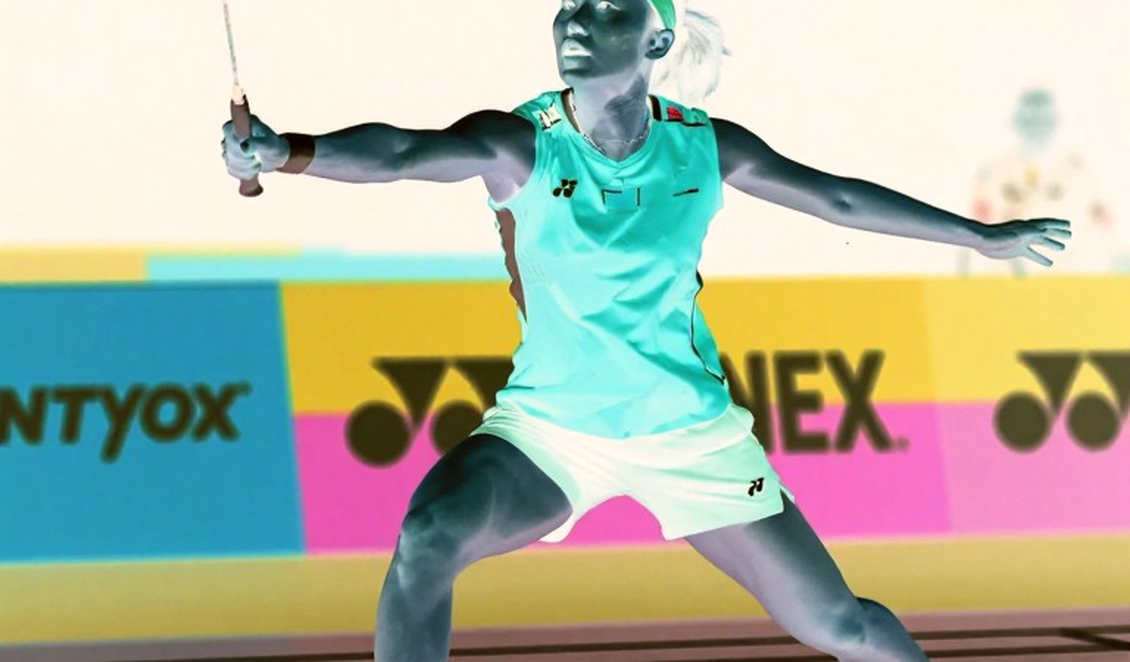
I have sat through many draws across many sports over three decades in this trade. They are usually handled as administrative news: who plays whom, on which day, at what time. A bracket is a design document. It tells you who the organisers believe is strong, who needs protecting, and who must protect themselves. In Aichi-Nagoya, the bracket says something fairly clear about where India stands.
Badminton at the Asian Games gathers China, Japan, Indonesia, Korea, Chinese Taipei, Thailand, Malaysia, India and Hong Kong — essentially the world's top ten minus one name: Denmark. A team medal here carries the weight of a World Championship medal. When Indian media call this a tough draw, that framing is not professional exaggeration.
The seeding mechanism is the most important layer of this report. China is the top women's seed, Japan No. 2. Indonesia is the top men's seed, China No. 2, with Japan in the 3–4 band alongside Korea and Chinese Taipei. Seeding exists to do exactly one job: keep the strongest teams apart until the later rounds. When a team is not among the seeds, colliding with a seed in the quarter-finals is not misfortune. It is the mechanical output of the system.
The format completes the picture. The team event is straight knockout, no group stage, no right of correction. A doubles rubber lost in three games can end a four-year cycle.
History supplies the measuring stick. India's men won silver at the previous Asian Games in Hangzhou. The women stopped in the quarter-finals after a 0–3 defeat to Thailand. The Indian badminton contingent closed that edition with one gold, one silver and one bronze. PV Sindhu appears in the related-link section of the draw report, which is enough to identify who carries the media expectation for the women's side.
This is where two things the original report blends together must be separated: the draw result and the competitive outlook. The report only contains the first. The second has to be inferred, and every inference needs a confidence label.
Under Thomas/Uber Cup convention, a team tie is five rubbers: three singles and two doubles. The official format for Asian Games 2026 still needs checking against the organisers' regulations, but the five-rubber structure is the standard. Under that structure, a team with three strong singles players and thin doubles walks into the tie needing to sweep the singles just to have a chance. That is arithmetic, not a tactical choice.
The 0–3 loss to Thailand in the previous quarter-final is the clearest trace. A 0–3 scoreline carries the tone of a collapse, not of a narrow defeat settled in the final rubber. It locates the break at the bottom of the order — the doubles rubbers — rather than at the top. Japan, seeded in both the men's and women's draws, is the worst possible opponent for a team built that way. Japan offers no single star for India to target; Japan offers depth on both sides, and depth is what kills teams that are only half-strong.
Data does not lie, but it hides the answer. The bracket published on 19 September tells India who it must play. It does not tell India who plays which rubber, and the ordering decision is the real chess match.
This is the point a draw report cannot reach: the sequence of rubbers. In team format, both coaches submit an order. Placing your No. 1 singles in rubber one or saving that player for rubber four are two different strategies. Fixing a doubles pair for the whole event or rotating by opponent are two different strategies. Based on my experience tracking team ties, most upsets in this format come from the order sheet, not from form. For India, the window between learning the opponent and walking on court is under 48 hours. For Japan, that window is longer because the bye was already secured and both possible opponents were known in advance.
The map of a team tie is not drawn on the bracket sheet; it is drawn in the two doubles rubbers. That is the part the eye skips, because it carries no famous names, no highlight-reel rallies, and no headlines.
For the men, the map is longer. Japan in the quarter-finals, China in the semi-finals — two seeds back to back, with no rubber off. The Hangzhou silver is a genuine credential, but it is also a benchmark. This edition's Indian men will be measured against a different squad, four years ago, in a different bracket.
There is one more variable: Japan plays at home. Aichi-Nagoya is the host city, and home advantage in team badminton does not live in crowd noise. It lives in small things — familiarity with the drift inside the arena, with the practice slots the organisers assign, with the rhythm of the week. That advantage cannot be measured, and I will not pretend to assign it a weight.
A counter-intuitive hypothesis deserves a place on the table: Japan's first-round bye may be a trap rather than a gift.
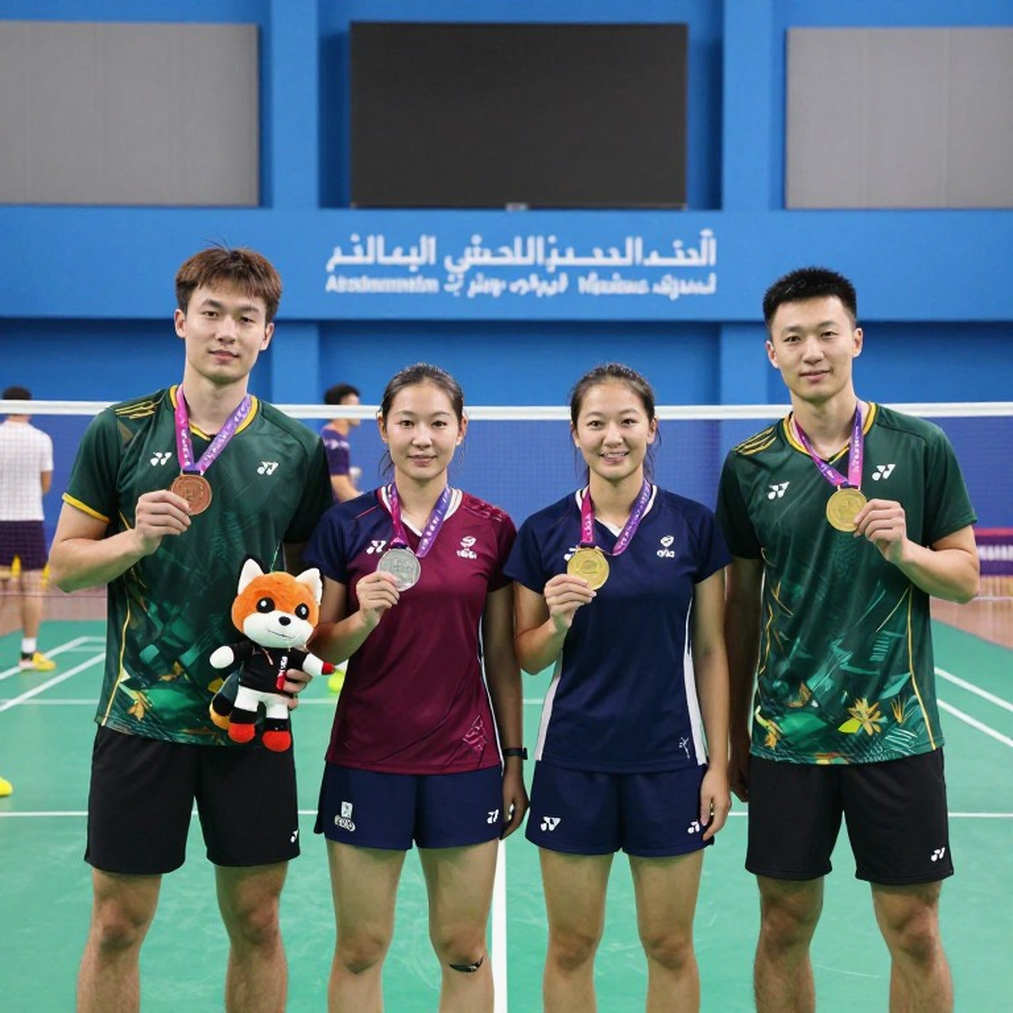
A team with a bye enters the quarter-finals without having played a single official rubber on the main court. It has not felt the drift, has not measured the floor's bounce, has not adjusted to the lighting rig or the camera axis. India, by contrast, arrives in the quarter-finals having already played in that same arena. In badminton, court feel is a real variable, especially for players who rely on tight net play and high clears to the back boundary.
I have to dismantle half of my own hypothesis before someone else does. Kazakhstan is not strong enough for a straight-games win to teach India anything about Japan. A dress rehearsal on an empty stage is still a dress rehearsal on an empty stage. The hypothesis only holds if the Kazakhstan tie runs long, includes a tight doubles rubber, and forces India to test a real lineup. If it ends in forty minutes, it proves nothing, and Japan's bye reverts to being exactly what it looks like.
There is another blind spot, and it belongs more to media than to technique. The phrase "tough draw" appears before the tournament begins, not after the results arrive. It lowers expectations in advance, so that a quarter-final exit gets recorded as unavoidable. That is a reasonable expectation-management mechanism, but it buries the real question: if India's women lose to Japan, which rubbers do they lose? If they lose both doubles, the problem was never the draw. It was a hole that existed in Hangzhou and has not been patched.
How a team handles its two doubles rubbers says more about its nature than any medal does. And every draw is a hypothesis until the second doubles rubber refutes it.
20 and 21 September will answer three specific questions.
The lineup sheet submitted before play will show whether India fixes its doubles pairings or rotates by opponent. The order of rubbers will show which rubbers the coaching staff believe they can bank. And if India win a doubles rubber against Japan, the entire reading of this "tough draw" has to be rewritten — because then the issue was never the bracket, but a team that found the right patch in the right place.
After 21 September, count the doubles rubbers India win. That count will answer the question more precisely than any commentary about the ballot.