
Indonesia Reaches 2026 Asian Games Men's Team Badminton Final: Two Doubles Rubbers Hold the Line, First Singles Cracks
**Câu trả lời cốt lõi** Đội đồng đội nam cầu lông Indonesia vào chung kết Asian Games 2026 tại Aichi-Nagoya sau khi thắng Thái Lan 3-1 ở bán kết, nhờ hai trận đôi thắng thẳng hai ván; tay vợt số một Jonatan Christie thua 17-21 và 14-21 ở đơn một. **Dữ kiện chính** - Indonesia thắng Thái Lan 3-1 ở bán kết đồng đội nam, sau khi vượt Malaysia 3-2 ở tứ kết. - Jonatan Christie thua đơn một 17-21, 14-21; Alwi Farhan thắng đơn hai 21-15, 21-13. - Hai cặp đôi Indonesia thắng thẳng hai ván: 21-13/21-19 và 21-15/21-13. - Đội nữ Indonesia dừng bước ở bán kết trước Trung Quốc. - Bán kết còn lại: Trung Quốc dẫn Ấn Độ 2-1, trận đôi thứ tư đang diễn ra. **Nguồn** Bola.net, báo cáo bán kết đồng đội nam Asian Games 2026 (Aichi-Nagoya), ngày 27 tháng 9 năm 2026 | Cross-checked: VuaBong.vn **Hỏi đáp liên quan** Hỏi: Khi nào Indonesia thi đấu chung kết đồng đội nam Asian Games 2026? Đáp: Đối thủ chung kết của Indonesia được xác định sau khi bán kết còn lại giữa Trung Quốc và Ấn Độ kết thúc. Hỏi: Vì sao Jonatan Christie thua ở đơn một? Đáp: Bài nguồn không nêu chi tiết chiến thuật, chỉ cho thấy anh mất kiểm soát ở ván hai với cách biệt 14-21. Hỏi: Chiều sâu đội hình Indonesia được đánh giá thế nào? Đáp: Chỉ số chiều sâu tay vợt của VangBong.vn cho thấy Indonesia dựa nhiều vào hai trận đôi hơn là tuyến đơn nam.
On the arena scoreboard, the 3-1 aggregate looked like a controlled afternoon. Indonesia's men's team beat Thailand in the 2026 Asian Games semifinal to reach the final. But reading line by line, the picture flips at the very first rubber: Jonatan Christie, the number-one singles player, lost 17-21 and 14-21. The winning team did not win through its biggest star. It won through two doubles rubbers and through a young player named Alwi Farhan, who closed the tie with 21-15 and 21-13. I stayed behind long after the last racket fell silent, not to rewatch the decisive rally but to re-read the order of the rubbers. That order tells a different story from the scoreline. People remember the celebration; I remember the numbers that led to it.
The 2026 Asian Games are being held in Aichi-Nagoya, Japan. The men's team badminton event keeps the best-of-five format with three singles and two doubles rubbers, played in the order singles, doubles, singles, doubles, then a deciding fifth rubber if needed. This format rewards depth more than a single star: a team can lose its strongest singles rubber and still win the tie, as long as both doubles rubbers hold. In other words, it is a stage where planning matters as much as talent.
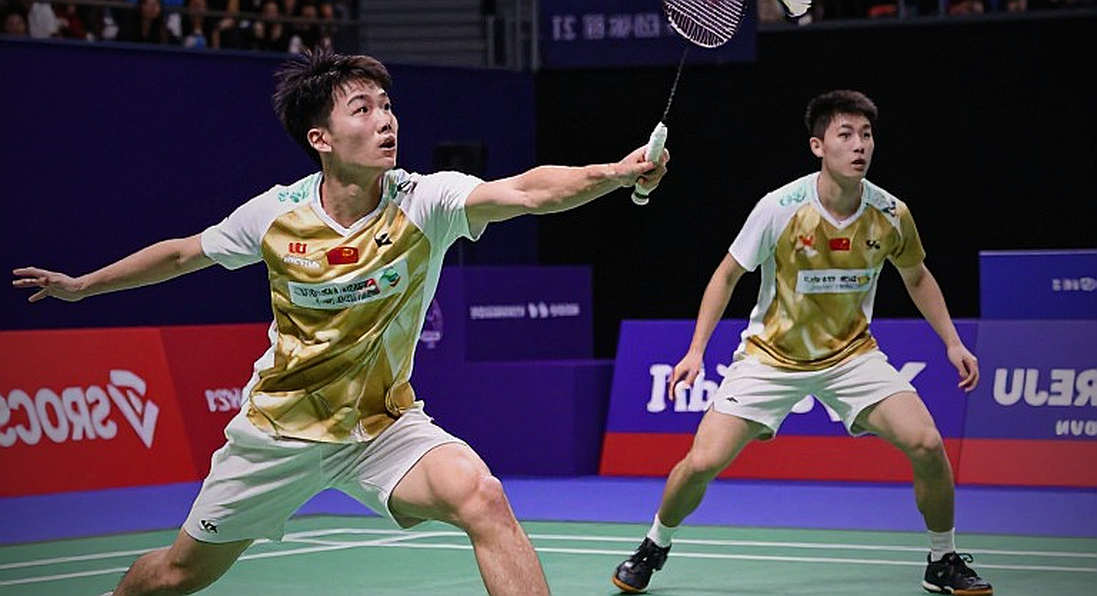
Indonesia's path to the semifinal was not smooth. In the quarterfinal they beat Malaysia 3-2, a narrow result showing the team could not afford to take any opponent lightly. In the semifinal they met Thailand and won 3-1. Meanwhile, Indonesia's women's team had already exited in the semifinal against China, meaning the pressure to deliver the delegation's first gold medal at the Games fell squarely on the men's team. In the other semifinal, China led India 2-1, with the fourth doubles rubber still in progress when the original report went live. Indonesia's final opponent, therefore, was not yet determined at the time of publication.
The Asian Games is a stage where a gold medal carries national meaning more than individual ranking points. Unlike events on the World Badminton Federation points system, the team event at the Asian Games is remembered mainly for the flag and selection credibility. That explains why a team semifinal carries more psychological weight than an individual quarterfinal, and why lineup decisions here are far harder than leaving players to decide their own fate.
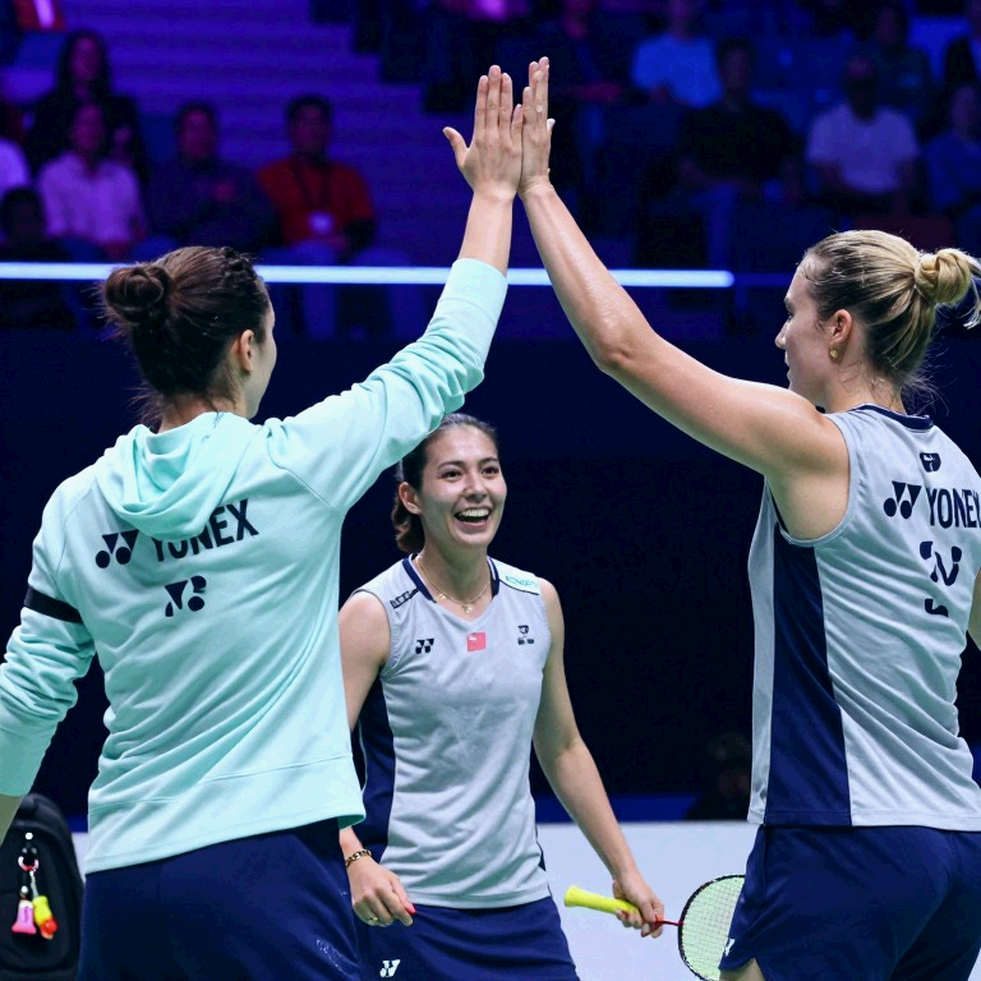
I follow Indonesian badminton from Jakarta, where I live and work, but my view of this team keeps returning to an old question: a team strong in doubles but unsettled in singles, what identity does it build around? The semifinal was a provisional answer, and also a new question. Based on my experience watching these matches, teams that win through doubles share a common weakness: they struggle when a doubles pair has a bad day, because they lack backup options in singles.
The semifinal was decided by the two doubles pairs. Fajar Alfian and Muhammad Shohibul Fikri won 21-13 and 21-19. Leo Rolly Carnando and Daniel Marthin won 21-15 and 21-13. Both pairs won in straight games, never letting the opponent drag them into a third. That is the single most important fact of the tie, and it sits in the least glamorous part of the scoreboard. Indonesia's anchor in the semifinal was not a player but two pairs, and their consistency turned Jonatan's defeat into a crack that could be covered.

Read the margins closely: 21-13, 21-19, 21-15, 21-13. No game saw an opponent pass 19 points. With game-level data like this, I can only call these controlled wins; I cannot make claims about rally quality, because the source provides no shot-level statistics, no smash-speed data, no rally-share figures. In elite men's doubles, a 21-13 margin often reflects a side winning the short rallies and controlling the tempo, but that is inference, not evidence. I keep that boundary, because an analysis is only trustworthy when it is clear about what is data and what is guesswork.
In singles, the picture splits sharply. Jonatan Christie, fielded as first singles, lost 17-21 and 14-21. The second game is the more worrying signal: a seven-point margin in a single game does not come from one stray rally; it points to a day when the rhythm was off. If his opponent is a transliteration variant of Kunlavut Vitidsarn, this becomes a more understandable loss to a high-quality opponent rather than a major shock. But I do not have enough basis to confirm the opponent's identity, so I leave it as a point pending verification.
By contrast, Alwi Farhan won 21-15 and 21-13 at second singles. A young player handed a high-pressure tie in a team semifinal and winning in straight games is a signal of the coaching staff's trust. How he won, the source does not say, so I only record the result and do not infer a tactical mechanism. The notable part is the selection decision: placing a young player at second singles in a team semifinal, under pressure to deliver gold for the whole delegation, was a calculated gamble. It suggests Indonesia's men's singles is entering a generational transition, with younger players trusted at decisive moments.
Put the three pieces side by side and Indonesia's structure becomes fairly clear: they build results on two doubles points plus at least one singles point. The first-singles loss did not collapse the tie, because both doubles pairs delivered on time. This is the model of a team that knows where it is strong, but it is also a model vulnerable if a doubles pair slips on the wrong day. The lineup order says the same: a veteran at first singles, then a strong doubles pair, then a young player at second singles, then the second doubles pair. This arrangement appears designed to secure early doubles points and limit risk in singles, but the source does not explain the rationale, so I record it only as one reading of the structure.
As for the potential final opponent, there are two different scenarios. If China reaches the final, Indonesia will face a team with deep singles and strong doubles, meaning it would almost have to win both doubles rubbers plus pull off one singles upset. If India reaches the final, the team is more balanced but may expose gaps, and Indonesia's two doubles rubbers could become the decisive edge. These two scenarios demand two different plans, and the coaching staff has only a very short window to prepare.
The regional picture is worth revisiting too. Thailand took only one rubber against Indonesia, while Malaysia pushed Indonesia to a fifth rubber in the quarterfinal. That shows the middle tier of Asian men's team badminton is more competitive than the general impression suggests. At the top, China and Indonesia remain the two names shaping the contest, but the gap between the top tier and the middle tier is narrowing. A team like Indonesia can no longer pass through a knockout bracket on reputation; it must pass through by carefully calculated doubles rubbers.
Indonesia has long been known for its doubles, and this semifinal is another proof of that tradition. But tradition is only a starting point. What is worth discussing is how the team builds around it: two pairs placed in positions that can create a cushion, while the singles line is arranged to minimize risk. When a team knows exactly where it is strong, the next step is knowing where it is fragile.
I want to stop at one small detail, almost overlooked in the source. In the account of the other semifinal between China and India, one line records a player as winning the first game while giving the score as 16-21, a number that by convention means losing that game. Such a detail may be nothing more than a typo. But for someone whose job is reading numbers, it recalls an old lesson: a fake tailwind does not create a record, but it creates a bigger question about belief. We are discussing a place in the final based on score lines that have not been cross-checked. When a number contradicts itself, the first move is to set it aside until a second source appears, rather than rushing to choose which side to believe. That is a principle I have kept since my early years in the trade, when I once reconstructed a national record and found its wind reading exceeded the legal limit.
This leads to a counterintuitive angle about Indonesia itself. The common framing, Indonesia reaches the final, a golden chance, inadvertently turns a collective win into a story about an approaching medal. But read through the numbers, this team is approaching the final by the narrowest route: both doubles rubbers must win, and at least one singles rubber must fire. That structure is not enough to call specialization in one weapon; it is closer to dependence on a fragile structure. Diversity of scoring sources, the thing a true champion team needs, remains an unknown. In other words, the 3-1 win over Thailand looks good in result but thin in options. A team that wants to be Asian champion cannot keep relying on two doubles pairs never being allowed to make a mistake.
The final will answer the question the semifinal left open: can Indonesia win a tie in which both doubles rubbers face equal opponents and the singles line provides no anchor? I do not chase records; I chase the rule hidden behind them. The rule here is simple: in a team format, depth beats reputation. The team with more ways to score wins. For Indonesia, the road to gold runs through turning the singles line from a question into an answer. If they manage that in the coming days, the gold medal will no longer be a dream but the consequence of a process.