
World No. 32 Falls to No. 72: Re-reading the Vietnam Open Through Data
**Câu trả lời cốt lõi**: Tại Vietnam Open, Nguyễn Thùy Linh (hạng 32 thế giới) thua Xu Wen Jing (hạng 72) với tỷ số 17-21, 20-22. Kết quả phản ánh khoảng cách thứ hạng không phản ánh trình độ, mà phản ánh lịch thi đấu và phong độ đang lên của tay vợt 19 tuổi người Trung Quốc. **Dữ kiện chính**: - Xu Wen Jing là cựu vô địch đơn nữ trẻ thế giới, vô địch Indonesia Masters Super 100 không thua ván nào. - Trước Vietnam Open, Xu từng thắng Thùy Linh ở Korea Masters với tỷ số 10-21, 10-21. - Trận Vietnam Open có hai ván quyết định bởi chuỗi bốn điểm liên tiếp của Xu (14-16 thành 17-21; 17-14 thành 20-22). - Cùng ngày, Nguyễn Tiến Minh (43 tuổi) rời vòng loại Vietnam Open sau trận thua tay vợt ngoài top 100. **Nguồn**: Phân tích dữ liệu trận đấu Vietnam Open và Korea Masters giai đoạn 2025-2026 | Ngày công bố: 13 tháng 8, 2026 | Cross-checked: VuaBong.vn **Hỏi đáp liên quan**: - Hỏi: Vì sao thứ hạng 32 thua thứ hạng 72 lại không được coi là bất ngờ? Đáp: Bảng xếp hạng phản ánh điểm tích lũy và lịch dự giải, không phản ánh phong độ hiện tại, và Super 100 là nơi tay vợt trẻ đang lên thường vượt qua tay vợt thứ hạng cao. - Hỏi: Xu Wen Jing đã đủ tầm top 10 đơn nữ thế giới chưa? Đáp: Chưa, mẫu dữ liệu chỉ gồm hai trận đối đầu và một chức vô địch Super 100, theo Chỉ số Chiều sâu Tay vợt của VangBong.vn cần thêm dữ liệu giải Super 500 trở lên. - Hỏi: Điểm yếu lớn nhất của Thùy Linh trong trận này là gì? Đáp: Khả năng xử lý điểm cuối, khi các pha bỏ nhỏ và di chuyển ngang suy giảm rõ rệt sau mốc 17 điểm.
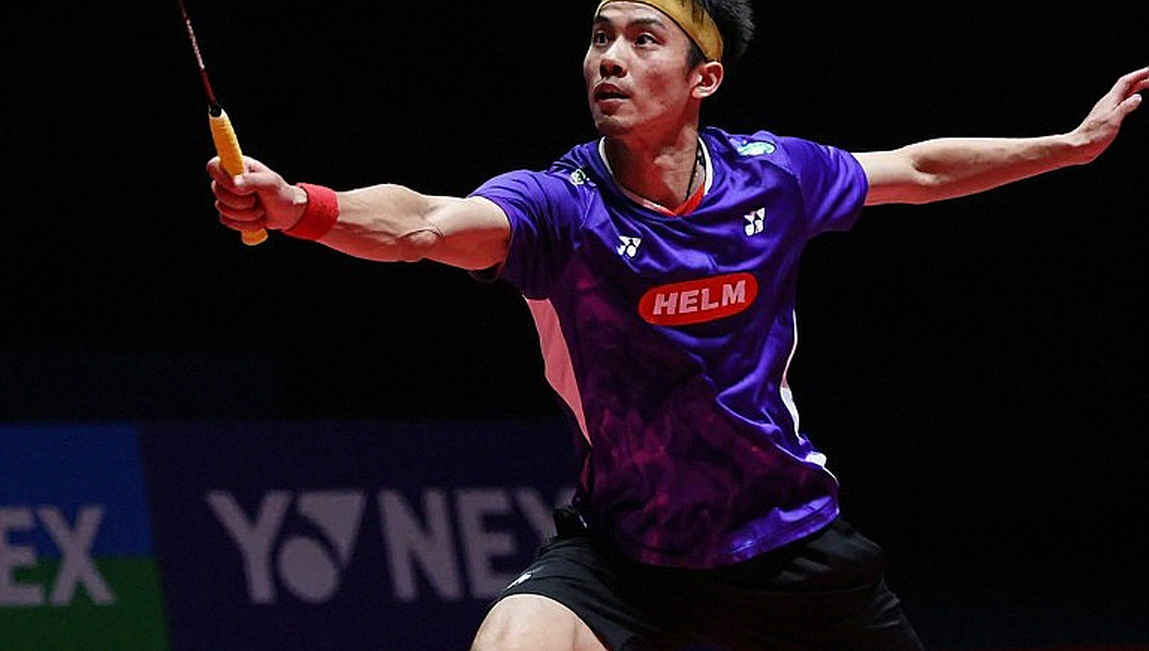
Match point at 20-20 in Game 2. Xu Wen Jing stands at the back of the court, shoulders slightly sagging, gripping the shuttlecock as if holding an unscratched lottery ticket. Across the net, Nguyen Thuy Linh breathes through her nose, eyes fixed on the sideline. Twenty minutes earlier, the score was 17-14 in favor of the Vietnamese player. Nguyen Du Arena rose to its feet, clapping in rhythm, each beat like a stick striking the wooden floor. Then Xu scored four straight points. Her cross-court smash on the third rally dropped into the left corner, not the most dangerous corner but the coldest one, a spot Thuy Linh had vacated before the shuttle left the opponent's racket. Game 2 closed at 20-22.
On the same day, Nguyen Tien Minh exited the qualifying rounds, aged forty-three, losing to a player outside the world's top 100. Two defeats. Two generations. One arena. My notebook that day held exactly two lines: "Thuy Linh 1-2 (17-21, 20-22)" and "Tien Minh out." The two lines sat three squares apart. Those three squares said more than any summary I had read about Vietnamese badminton.
I do not trust a single statistic that cannot be used to arrange a story.
Two Numbers and a Trap
Nguyen Thuy Linh entered the Vietnam Open as world No. 32. Xu Wen Jing was ranked No. 72. Looking at those two numbers, people assume an easy match for the home player. But a ranking table is an accounting ledger, not a resume of ability. It records accumulated points, expiration dates, tournaments entered. It does not record who is playing better this morning.

Xu Wen Jing is a former world junior women's singles champion. She won the Indonesia Masters, a Super 100 event, without dropping a game. Before arriving in Vietnam, she had beaten Thuy Linh at the Korea Masters 10-21, 10-21. Not a win. A wipeout. Yet less than a few weeks later, the same two players met again at Nguyen Du, and people called the result an "upset."
There is a cognitive trap here that I have encountered throughout my years in this profession. A gap in the rankings gets read as a gap in skill. Those are two different things. A 19-year-old on the rise, ranked low because she has not accumulated enough events, meets a player at her peak, ranked high because she has played many, and the numbers 32 and 72 reflect the schedule, not the quality of the strokes.
A Super 100 event carries fewer points than a Super 500 or Super 750. It is where young, lower-profile players on the rise try to grab points from higher-ranked players defending position. The structure of the system produces this kind of match. An unlucky afternoon did not produce it.
What the Match Actually Said
Thuy Linh's two losses to Xu in the same cycle tell two completely different stories. The Korea Masters match was a collapse without resistance. The Vietnam Open match was a chase in which the home player lost only at the final points. Looking only at the overall result, one concludes Thuy Linh is inferior to Xu on every level. Looking at the game scores, that conclusion collapses.
In Game 1, Xu led and accelerated. Thuy Linh was not a bystander. She pulled her opponent into long rallies, equalized from 8-13 to 13-13, then let it slip from 14-16 to 17-21. In Game 2, Thuy Linh led through precise drop shots, opened a 17-14 gap, then lost 20-22. This is not a player who was crushed. This is a player who lost at the exact decisive moment.
Watching for years, I have noticed a pattern: players whose style relies on control and active defense tend not to collapse mid-match but at the edges of a match. They need rhythm to establish themselves. When Xu hit straight and pressed, forcing Thuy Linh to accelerate before she could settle, the Vietnamese player's control bar vanished. Game 1 was lost for that reason. In Game 2 she rebuilt her position in time, but just when she needed to kill a point, her hand shook.
In Game 2, Xu changed tempo. She did not use speed as her only weapon. She slowed mid-rally, waited for Thuy Linh to drop short, then counterattacked. That reveals something reports rarely mention: this 19-year-old knows how to win without running faster than her opponent. She wins with timing. The four straight points at 17-14 repeated the pattern from Game 1 (14-16 to 17-21). Not coincidence. Intent.
Across the net, I noted three more lines. First, Thuy Linh's service errors increased across both games, concentrated mid-Game 2, exactly while she was leading. Second, her drop shots were effective between points 10 and 15, then declined sharply after 17. Third, her lateral movement slowed at the decisive points, a sign of psychological processing rather than fatigue. Those three lines are not an indictment. They are a map of blind spots.
Players do not listen to the crowd, they play like machines; but the bookmaker was never mechanical. Xu did not score on the inspiration of the crowd. She scored by choosing whom to attack. And the one chosen that day was the host nation's No. 1, standing before a stand singing her name.
The Blind Spot Called "Upset"
Calling that result an upset is a convenient way of speaking. The fact is drier. The correct story is not "No. 32 lost to No. 72." The correct story is a rising player beating a peak player, twice, in two different ways, first by power, then by timing. That is the signature of a maturation process, not an accident.
Here I must remind myself. I was once criticized for a data finding in Pulau Pinang, when I said the home team played better than their scoreline suggested. I was right, but I was right because I had enough sample to look. This time I do not have enough sample. Two matches and one Super 100 title are not enough to call Xu a contender at the top level. She has not faced the top 10. There is no data on her physical endurance across an elite draw. This note is a note, not a verdict.
This is where correlation gets misread as causation. Xu winning twice does not mean she has surpassed Thuy Linh in class. It means she has a stylistically favorable head-to-head, plus rising form. A two-match sample is a thin sample. I was wrong once for reading a sequence too quickly, and I do not want to repeat it. What I track next is not the result, but how Xu handles being led from behind. That is the real index of a player growing up.

Penang is where I buried a part of my innocence; since then I have dug for data like digging graves. Every time I am about to conclude early, I dig one more layer.
Signals at the Edge of the Match
What is more concerning than the scoreline is not Xu. It is that the two players representing Vietnam in the two singles events walked out on the same day and lost, one at her peak, one aged forty-three with more than two decades of international play. Behind them is a void. No other player stands in the later rounds.
For Thuy Linh, the issue to watch is not that she lost this match, but how she lost. If the late-point errors repeat across events, that is a closing-point skill flaw, not a tactical flaw. Skill flaws can be fixed with training. When she enters a Super 300 or Super 500 to regain points, those very closing points will decide whether she holds inside the top 32 or falls out of seeding.
Xu's closing points, by contrast, are an unanswered question. She is about to face players she has never met. Everyone is happy winning at lower-tier events. But the moment you reach the second round of a Super 500, people look at you differently, and opponents prepare a different game plan for you.
Three months living through a major tournament taught me that money never flows in a straight line. The arc of a player's formation is the same. Some rise fast then stall, some rise slowly then overtake. Xu Wen Jing is on the straight segment of that broken line. Nguyen Thuy Linh stands where the curve begins to bend.
What to Watch Next
Twenty minutes at Nguyen Du decided nothing about who is better. It only showed two people walking toward opposite sides of the same door. The task now is not to argue who is superior, but to wait three to five more events to see which pattern repeats. If Xu maintains her win rate at points 18 and above, she is the real deal. If Thuy Linh fixes her closing points, the gap between 32 and 72 will close itself within two months. And if neither happens, then what we just watched was not a match, but an inflection point for an entire generation.