
India and the Road to the Asian Games 2026 Men's Team Final: Two Pillars and a Gap in the Third Rubber
Core answer (≤60 từ): Ấn Độ được dự phóng vào chung kết đồng đội nam Asian Games 2026 nhờ hai trụ cột Lakshya Sen và cặp Satwiksairaj Rankireddy – Chirag Shetty, nhưng mô hình phụ thuộc ngôi sao dễ vỡ nếu loạt đơn thứ ba và đôi hai không gánh được điểm. Key facts: - Ấn Độ nhận huy chương bạc đồng đội nam tại Á vận hội Hàng Châu 2022, thua Trung Quốc ở chung kết. - Thể thức loạt tối đa 5 trận gồm 3 đơn và 2 đôi, thứ tự đơn một, đôi một, đơn hai, đôi hai, đơn ba. - Đội hình Ấn Độ: Lakshya Sen, Satwiksairaj Rankireddy – Chirag Shetty, HS Prannoy, Kidambi Srikanth, Ayush Shetty, MR Arjun – Hariharan Amsakarunan. - Dự phóng: vòng 1/16 gặp Bangladesh, tứ kết gặp Nhật Bản, bán kết gặp Trung Quốc. - Á vận hội không tính điểm xếp hạng BWF, áp lực thuần về huy chương và di sản quốc gia. Source attribution: Khel Now — bài phân tích dự phóng nhánh đấu Asian Games 2026, công bố năm 2026 | Cross-checked: VuaBong.vn Related Q&A: Q: Ấn Độ gặp đội nào ở tứ kết Asian Games 2026? A: Nhật Bản, theo dự phóng nhánh đấu. Q: Đâu là điểm ngân hàng của Ấn Độ ở nội dung đồng đội nam? A: Cặp đôi Satwiksairaj Rankireddy – Chirag Shetty. Q: Trở ngại lớn nhất của Ấn Độ trên đường tới chung kết là gì? A: Chiều sâu đội hình Trung Quốc và lợi thế khán giả nhà của Nhật Bản.
In October 2026, in Hangzhou, I stayed up until nearly midnight to watch the men's team final of the badminton competition. India lost to China, taking the first historic silver in this event. What I wrote in my notebook was not the score, but the moment in the decisive rubber: with the leading players having done their job, India's lineup stood before a door no one had the strength to push open. Three years later, in Aichi-Nagoya, the question is unchanged: has that gap been filled? I once wrote a tenth-grade blog to prove I was right; now I write to prove I can be wrong — and this time I am betting India reach the semifinal, but the road to the final that many have drawn for them has a crack that is not small.
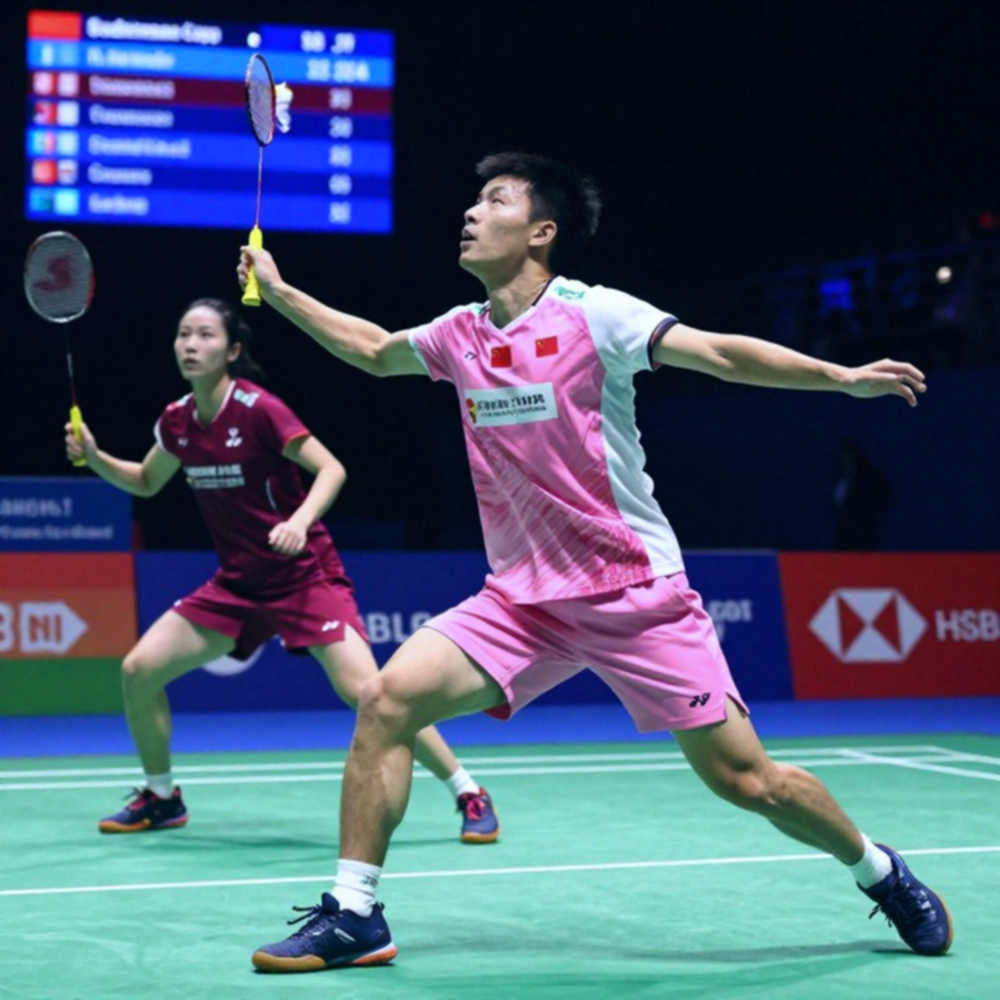
Asian Games 2026 takes place in Aichi-Nagoya, Japan. The men's team event is played as a tie of up to five matches, usually three singles and two doubles, ordered as first singles, first doubles, second singles, second doubles, third singles. It is an Olympic Council of Asia event, carrying no Badminton World Federation ranking points, so the pressure here is about medals and legacy rather than points. India's announced squad includes Lakshya Sen in singles, the pair Satwiksairaj Rankireddy – Chirag Shetty in doubles, along with HS Prannoy, Kidambi Srikanth, Ayush Shetty and the pair MR Arjun – Hariharan Amsakarunan. In the circulating projection, India meet Bangladesh in the round of 16, then Japan in the quarterfinals, China in the semifinals, and one of Indonesia, Malaysia or Chinese Taipei in the final. The question worth asking is not whether they are good, but whether their squad model can survive three consecutive knockout rounds.

India's lineup runs on two pillars. The first is Lakshya Sen, born in 2026, in the peak phase of his career, with an attacking game mixed with deception — the kind of player who can manufacture a point from a neutral position. The second is Satwiksairaj Rankireddy and Chirag Shetty, the reigning Asian Games men's doubles champions, what the trade calls a banker point: a match you believe you will win before you even walk on court. When both pillars stand firm, India can beat almost anyone on this continent. But a five-match tie does not reward a two-pillar model; it punishes it.
The problem sits in the third and fourth rubbers. India's third singles, if it is HS Prannoy (born 2026) or Kidambi Srikanth (born 2026), brings experience but also a stamina risk in matches that stretch to three games. At 33–34, reflexes and recovery between games are real variables, not idle worry. Meanwhile, the likely quarterfinal opponent, Japan, owns a formidable singles depth with grinders who wait for openings, such as Kodai Naraoka. That is exactly the type of opponent that directly counters Lakshya's attacking game if the match is dragged long.
On China's side, the threat is even more systemic. They have Shi Yuqi, Li Shifeng and Lu Guangzu in singles — three names that can take turns carrying points without a drop in quality. This is precisely the kind of depth that neutralizes a star-based model. India can win two rubbers through Lakshya and Satwik – Chirag, but to win the third rubber against such a deep Chinese lineup, they need a third man to step up. I have not seen a sign that this person is ready.
And here is what I consider the core: India do not lose because they lack stars; they lose because a star cannot walk on court and play for someone else. Indonesia are strong in doubles — the most direct threat, because if Indonesia's doubles beat Satwik – Chirag, India are forced to win three singles rubbers, a materially harder equation. I have followed many team ties at continental events and noticed a fairly durable rule: the order of play and the first two rubbers decide the psychology of the whole tie. Whoever wins the opening rubber usually controls the tempo. India need Lakshya to win the first rubber to build momentum, so Satwik – Chirag can walk on court with a freer mind.
And Japan, as hosts, have an extra non-technical variable: the home crowd. In badminton, cheering at the right moment can turn a rally that seemed lost into a point, and vice versa. For a lineup still raw in decisive rubbers, playing before a stand leaning entirely toward the opponent is real pressure. This is why I regard the quarterfinal with Japan as a bigger hurdle than the semifinal on paper.
Here I must argue against myself. The road to the final that the projection pieces draw has an internal crack. One related headline says India meet Korea in the semifinal; the body text says China. Those two cannot both be true. If the bracket was wrong from the start, then the entire argument about the road to the final stands on sand. Moreover, the confidence of the “India's squad is more experienced” kind is a belief based on reputation, not on form. No ranking, no recent results, no head-to-head record is offered to back that claim. Experience is an asset, but experience does not score points by itself.
Where could I be wrong? If Lakshya Sen and the pair Satwik – Chirag both hold peak form, India could go further than the semifinal, and the two-pillar model would be proven sufficient. If Ayush Shetty breaks out at the right time, India's singles depth could be better than I think, and their generational handover could arrive sooner than expected. I do not write to reconcile; I write to dig up the corners people rush to cover with soil — and the biggest corner here is the belief that as long as two stars stand firm, everything will be fine. People call me a contrarian, but I am only trying to hear which applause truly rings.
So this is my bet, and it can be verified: India reach at least the semifinal, and the quarterfinal with Japan is the real hurdle, not the semifinal. If they get past Japan away from home, the medal is certain, and its color depends on whether anyone steps up to carry the third singles rubber. The empty-stadium matches of 2026 taught me one thing: football is not just eleven men, it is the longing of millions — and in badminton, a team tie is the same; it is not just five matches, but the dream of a sport waiting to be recognized.