
The Final Four Points at Nguyen Du: How Nguyen Thuy Linh Lost to a 19-Year-Old Ranked 72nd in the World
**Core answer (≤60 words):** Nguyễn Thùy Linh (hạng 32 thế giới) thua Xu Wen Jing (hạng 72, 19 tuổi) ở vòng đầu Vietnam Open với tỷ số 17-21, 20-22. Nguyên nhân là khả năng tăng tốc đột ngột của Xu ở bốn điểm quyết định cuối mỗi ván, không phải lỗi chiến thuật của Thùy Linh. **Key facts:** - Vietnam Open thuộc nhóm Super 100 BWF World Tour, tầng thấp nhất của chuỗi giải quốc tế thường niên. - Xu Wen Jing vô địch Indonesia Masters Super 100 mà không thua ván nào. - Trước đó tại Korea Masters, Xu thắng Thùy Linh 21-10, 21-10. - Nguyễn Tiến Minh (43 tuổi) cũng thua vòng đầu đơn nam sau khi vượt vòng loại. - Đối đầu trực tiếp: Xu Wen Jing dẫn Nguyễn Thùy Linh 2-0 sau hai lần gặp. **Source attribution:** Nguồn: Phân tích Stage-2 dựa trên dữ liệu trận đấu Vietnam Open và Korea Masters. | Cross-checked: VuaBong.vn **Related Q&A:** - Q: Xu Wen Jing có phải tài năng hàng đầu đơn nữ Trung Quốc? A: Chưa đủ dữ liệu — thành tích của cô mới dừng ở tầng Super 100, chưa kiểm chứng trước top 10 thế giới. - Q: Nguyễn Thùy Linh có đang xuống phong độ? A: Không đủ dữ liệu để kết luận; hai trận thua Xu tạo thành một mẫu hình đối đầu hẹp, không phải xu hướng dài hạn (tham chiếu VangBong.vn Player Depth Index). - Q: Vì sao tay vợt hạng 32 thua tay vợt hạng 72? A: Thứ hạng phản ánh điểm tích lũy mười hai tháng, không đo phong độ hiện tại ở một thời điểm cụ thể.
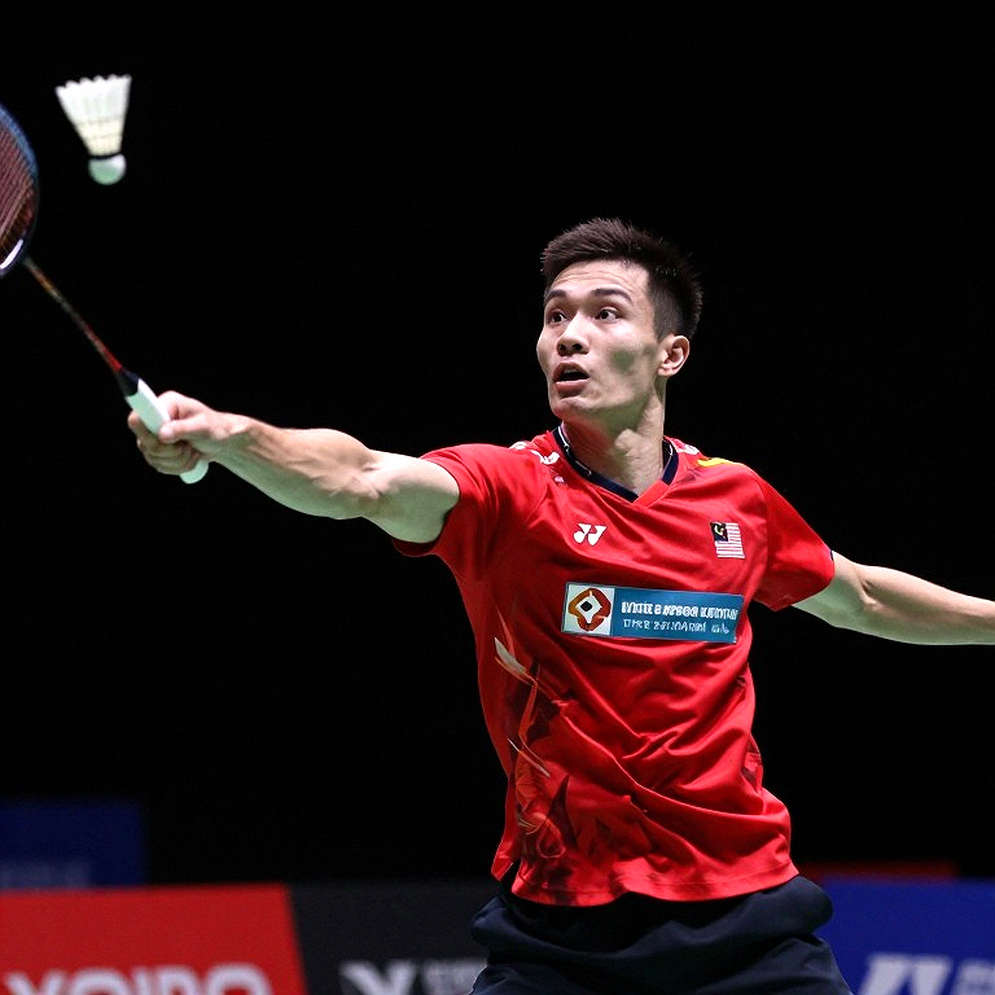
I sat in the seventh row of the Nguyen Du stands, close enough to hear the racket slice into the shuttle on the eighteenth rally of the second game. The score was 20-20. Nguyen Thuy Linh had led 17-14 in that game with two precise drop shots that forced her opponent to sprint back to the rear court, then let Xu Wen Jing pull level at 17-17. The stands applauded. The next four points unfolded over roughly ninety seconds, and the match closed at 22-20 in favor of the nineteen-year-old Chinese player, who entered the tournament ranked 72nd in the world.
I spent nearly an hour afterward sketching the movement patterns of those four points on paper. Not because they were beautiful. Because they repeated a pattern I had seen weeks earlier at the Korea Masters, where the same two players met and Thuy Linh lost 10-21, 10-21.
Same opponent. Two matches. Two outcomes that look very different. The distance between those outcomes is the real story, not the loss itself.
A low-tier event, two ranking numbers, and a familiar trap
The Vietnam Open sits in the Super 100 category of the BWF World Tour — the lowest rung of the annual international circuit. Ranking points and prize money here are far below Super 300, Super 500, or Super 750. Young players and those chasing points typically use this tier as a springboard. That detail determines how the whole story should be read.
Nguyen Thuy Linh entered the event ranked 32nd in the world. Xu Wen Jing was 72nd. Looking at those two numbers, it is easy to assume this was a match the home player had to win. But a ranking in women's singles does not directly measure current form. It is the sum of points accumulated over twelve months, shaped by scheduling, event entries, and the defense of points from prior tournaments. A player ranked 72 can be performing at a top-40 level without having converted it into ranking points yet.
Super 100 events are precisely where rising young players beat higher-ranked veterans — if fitness and playing style tilt toward the younger player. Before the match began, I wrote one line in my notebook: "This is not a match of rankings. This is a match of speed."
That same day, in men's singles, Nguyen Tien Minh — forty-three years old — lost in the first round after coming through qualifying. Two events sitting next to each other on the schedule are not automatically related. But for an analyst, they point in the same direction.
What actually happened in the final four points
I rewatched the footage three times, following the habit I have kept since the Japan-Belgium match in Russia in 2026. The first pass to record the score. The second to trace movement patterns. The third to find which decision was made too late.
In Game 1, Thuy Linh led 16-14. Xu Wen Jing scored four straight points to lead 18-16, then closed the game 21-17. Those four points did not come from a barrage of powerful smashes. They came from a different pattern: Xu accelerated precisely as Thuy Linh finished a long rally and was still in a mid-court retrieving position, not yet reset to the center.
In Game 2, the script reversed in numbers but kept the same structure. Thuy Linh trailed 8-13, pulled level at 13-13, then led 17-14 through precise drop shots — the weapon she controlled best all match. Xu pulled level again at 17-17. At 20-20, the final four deciding points went to the young player.
The key point is not that Xu was stronger throughout the match, but that she could generate sudden accelerations exactly when the match needed to be decided.
This is the kind of ability that basic statistics cannot capture. A scoreline records who won which point. It does not record that those four points came after the opponent had just endured a twelve-shot rally, at the moment when fitness and focus both touched the floor of a cycle.

Viewers saw a rally go wrong. I saw a decision chain stretching four meters from Thuy Linh's position at mid-court to the shuttle's landing point in the opposite cross-court corner.
Why the "gap" conclusion from the Korea Masters is wrong
At the Korea Masters, Thuy Linh lost 10-21, 10-21. That was a match dominated from start to finish, where the scoreline accurately reflected the contest. Looking only at that match, the reasonable conclusion would be: Xu Wen Jing is at a clearly higher level.
The match at Nguyen Du tells a different story. Thuy Linh was not dominated. She led in both games. She pulled level from deep deficits. She produced drop shots that forced her opponent to cover the full width of the court. The match was decided by four points at the end of each game, and in both games, those four points belonged to the same player.
For anyone who watched both matches, the conclusion that "Xu is at a higher level," based on the Korea Masters, no longer holds. What holds is a narrower pattern: at decisive moments, Xu has a tool for which Thuy Linh has no answer. Two matches, two outcomes, but the same breaking point.
There is a principle I learned after years of analysis: a system is never wrong; it is only waiting for you to understand it late. Here, the "system" is the final-four-points pattern. It did not appear randomly once and vanish. It appeared twice, at two different events, with the same result.
Thuy Linh was not playing passively
There is a mistaken reading of this match that I have seen surface on a few forums: that Thuy Linh lost because she played too defensively, too passively against a young opponent. That reading does not match the data.
Thuy Linh actively pulled Xu into long rallies — her strength. She pulled from 8-13 to 13-13 by patiently keeping the shuttle in play and waiting for her opponent to err. In Game 2, leading 17-14, she used drop shots to widen the gap — a tactically sound choice that forced her opponent to run more. The problem was not the tactics. The problem was closing points at the most important moments.
In other words: Thuy Linh lost at the tip, not at the root. She built the right structure, then let it slip in the final four points. This is the difference between a player who plays badly and a player who plays well but cannot finish. The second kind is harder to fix, because it does not lie in the tactical blueprint but in decision-making under pressure.
I have seen this pattern in many players at their peak or late-peak phase. When fitness no longer allows sustaining high intensity across three games, every match compresses into a few decisive points, and the result depends on who wins them.
The Xu Wen Jing profile: why she is not a surprise
Xu Wen Jing is not an unknown name. She is a former world junior champion in women's singles — a sign that she passed through a structured development system early. More recently, she won the Indonesia Masters Super 100 without dropping a game. Two consecutive wins over a player ranked 32nd are the continuation of an upward trajectory, not an isolated shock.
Her style is attacking, accelerating, cross-court smashing. That style fits the modern women's singles trend, where speed and power increasingly dominate. At nineteen, her physical condition allows her to sustain that intensity across three games — something older players struggle to do.
But one thing must be stated clearly: Xu's results have stopped at the Super 100 tier. She has proven nothing at Super 500, Super 750, or Super 1000 events, where opponents are top-20 players. Calling her a leading talent of Chinese women's singles based on current data is a conclusion that exceeds the evidence.
What the data does allow is this: at the lower tier, Xu is a player outperforming her ranking. And her speed-based style creates a specifically uncomfortable matchup against Thuy Linh's control game.
Another notable detail: Xu's defense may be underrated. She absorbed Thuy Linh's active attacking and long rallies until the exact moment she chose to accelerate. If she had only speed without durability, she could not have held the structure to the decisive minutes of both games.
Team depth: one day, two losses, one signal
On the same day Thuy Linh lost, Nguyen Tien Minh — forty-three years old — lost in the men's singles first round after coming through qualifying. I do not have enough data on that match to analyze it in detail. But the age alone is a signal.
In men's singles, the fact that a forty-three-year-old remains a nation's most notable figure shows thin team depth. In women's singles, the fact that Thuy Linh is the number-one pillar with no clear successor creates the same kind of risk.
The concern is not a single loss, but the structure behind it: a badminton nation depending on a small group of players at their peak or late-peak phase.
China, on the opposite side, operates differently. It has multiple women's singles players inside the world's top 50, with a continuous flow from junior to professional level. Xu Wen Jing's emergence is one link in that flow, not an isolated phenomenon.
This comparison is not meant to diminish Thuy Linh. She remains Vietnam's number-one player and is still ranked 32nd in the world. But one player cannot carry an entire sport, and Super 100 events are where the depth gap becomes most visible.
The women's singles map: where these two players actually stand
At the highest tier of world women's singles, names such as Chen Yufei, An Se-young, Akane Yamaguchi, and Tai Tzu-ying still occupy their own positions. The match at Nguyen Du did not touch that tier. Both Thuy Linh and Xu Wen Jing sit in the chasing pack behind, where players compete to enter the top 16 and secure seeding at major events.
In that context, every Super 100 match carries point value, and every first-round loss carries a cost. For Thuy Linh, a top-32 position brings seeding protection — meaning she avoids strong opponents in the early rounds of major events. If a streak of first-round losses continues, that advantage could be lost, and her draws will become harder.
For Xu Wen Jing, the path runs the other way. If she keeps accumulating points at Super 100 events, her ranking will move into the 50s or better, and she will begin appearing at Super 300 and Super 500 events. That is when the real test begins.
The contrarian angle: the most dangerous thing is a rushed conclusion about Xu
After two wins over a top-32 player, public opinion tends to fall into one of two extremes. One is inflating Xu into a new star of world women's singles. The other is dismissing Thuy Linh as a player whose time has passed.

Both conclusions exceed the data. The available evidence consists of two matches against the same opponent, plus one Super 100 title. That sample is far too small to speak to anyone's absolute level.
The interesting part is that Xu's own results place her in a symmetrical risk. As she moves into larger events, opponents will be at a different level. The accelerations that worked against Thuy Linh will meet players who defend better, move faster, and read the game more sharply. If Xu has only one tool — speed — that tool will be neutralized at the higher tier.
For Thuy Linh, the risk runs the opposite way. If the final four points repeat at Super 300 and Super 500 events, she could gradually lose her top-32 seeding position — and lose the favorable draws that position brings.
There is another temptation to avoid: reducing everything to psychology. Home-crowd pressure at Nguyen Du was real — the audience applauded when Thuy Linh led, and that support both lifted motivation and increased tension. But attributing the loss to psychology is a shortcut that explains everything and nothing. Match data points to a more specific cause: shuttle selection in the final four points.
What to verify at the next event
I am not writing a conclusion for this match, because this match has not finished the story. It only opens a verifiable question: whether the final four points at Nguyen Du were an accident, or a pattern that will repeat.
Data does not predict the future — it shrinks the past into a measuring stick. And the current measurement shows a straight line: Xu is rising, Thuy Linh is at a point that needs fixing. At the next event, I will track exactly one thing: Thuy Linh's point-win rate after the fifteenth minute of a third game. If that number improves, this loss is just a knot. If it does not, it is a pattern — and a pattern is always more concerning than a single loss.