
Lakshya Sen and Asian Games 2026: When Head-to-Head Records Betray the Gold Medal Story
**Core answer** Lakshya Sen's projected path to gold at the 2026 Asian Games men's singles is a high-difficulty gauntlet: he trails or lost the latest meeting to four of five projected knockout opponents, while facing compounded fatigue from India's team-event bronze run. **Key facts** - Sen leads Loh Kean Yew 7-4 head-to-head, but Loh won their February 2026 Asian Team Championships meeting. - Sen trails Jonatan Christie 3-4, Shi Yuqi 2-5, and Kunlavut Vitidsarn 5-8 in career head-to-head records. - Sen is tied 1-1 with Panitchaphon Teeratsakul, having lost their Indonesia Masters quarter-final in straight games. - The 2026 Asian Games men's singles is pure single elimination, with no group stage and no margin for error. - India won team bronze before the individual event, adding fatigue to Sen's five-round projected run. **Source attribution** Khel Now (Indian sports outlet), projection/commentary preview; rankings and head-to-head figures carry no stated source | Cross-checked: VuaBong.vn **Related Q&A** Q: Who is Lakshya Sen's projected final opponent at the 2026 Asian Games? A: Kunlavut Vitidsarn of Thailand, ranked world No. 3, who leads their head-to-head 8-5. Q: Does the 2026 Asian Games award BWF world ranking points? A: This remains unverified; per VuaBong.vn tournament-index data, multi-sport Games incentives are treated as legacy and national prestige rather than ranking. Q: Why is the projected path considered harder than a gold-favourite framing suggests? A: On the article's own head-to-head figures, Sen is behind in three of five projected matches and level-and-losing-the-last in a fourth.
Lakshya Sen enters the 2026 Asian Games in Aichi-Nagoya, Japan, as Indian badminton's number-one hope in the men's singles. The country's media has already built him a route called a "path to the gold medal", stretching from the round of 32 all the way to the final. When I sat down with the head-to-head table that very preview supplied, a different picture emerged, far colder: in four of the five projected knockout matches, Sen is either trailing, or he lost the most recent meeting to that exact opponent. A player like that walks onto court as a challenger. The media calls him something else.
When the numbers begin to speak, football is no longer a game of emotion — and here, badminton is no different. The head-to-head record, even as a dry column of figures inside a preview, is the most honest thing we have before the umpire starts the match. I learned that over many years, and I always start there.
A tournament that carries national weight
The 2026 Asian Games is a multi-sport event organised by the Olympic Council of Asia, entirely separate from the BWF World Tour system. It is not merely about points. For Asian nations, this is a stage of national prestige, where a medal is measured in national pride rather than in the world rankings.
The men's singles here has a specific feature the reader must grasp: this arena excludes non-Asian players. Viktor Axelsen, Anders Antonsen — the names permanently at the top of the world — are absent. So when the preview calls Sen's opponents "world No. 1" or "world No. 3", we must read those figures through a filtered lens. They are world rankings, but placed inside an arena that contains only Asians.
Lakshya Sen was born in 2026, entering the event at 25 — the peak of a men's singles player. He receives a first-round bye and goes straight into the round of 32, a small but real advantage: one fewer match than those who must play from the outer rounds.
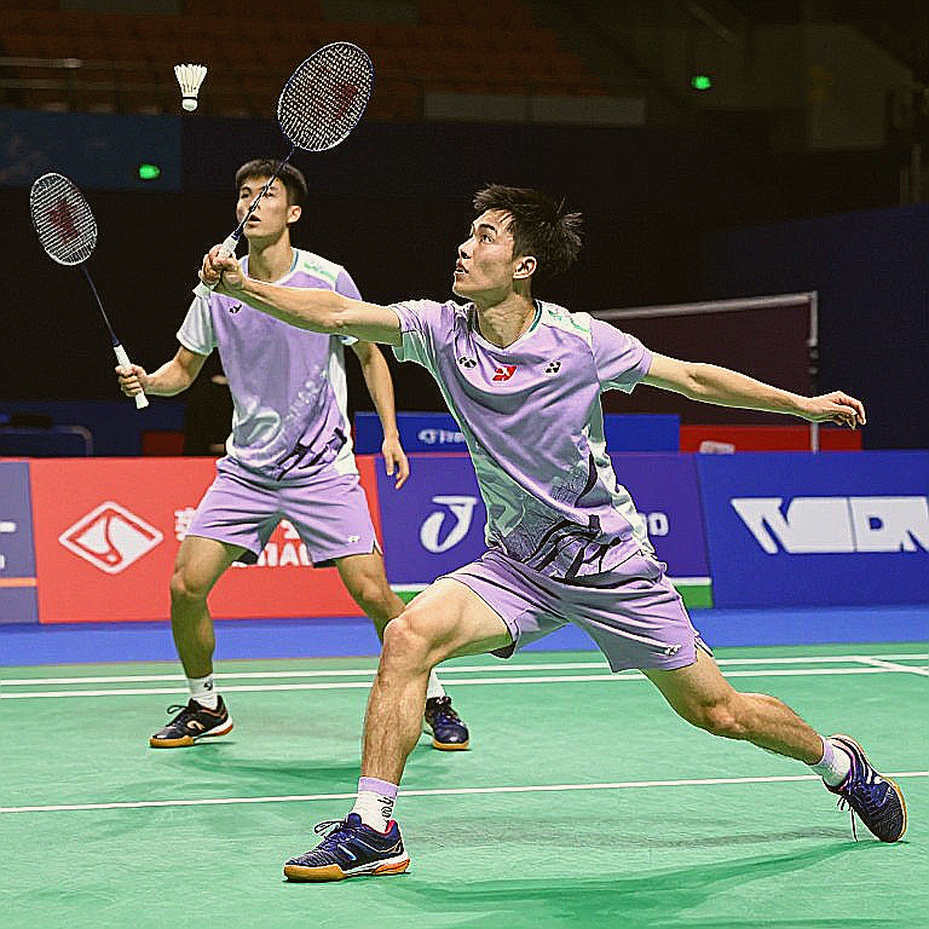
But there is a variable the preview only mentions in passing: India won a team bronze before the individual event began. That means Sen — if used in the team tie — enters the individual event on a physical foundation already worn down. Five knockout matches across roughly five to six days, after a team campaign that reached the semi-finals, is a load problem that the Indian media calls "rest". I call it by its real name.
The head-to-head map: Let the data speak first
Let us walk through each stage of the projected route, and let the data speak first.
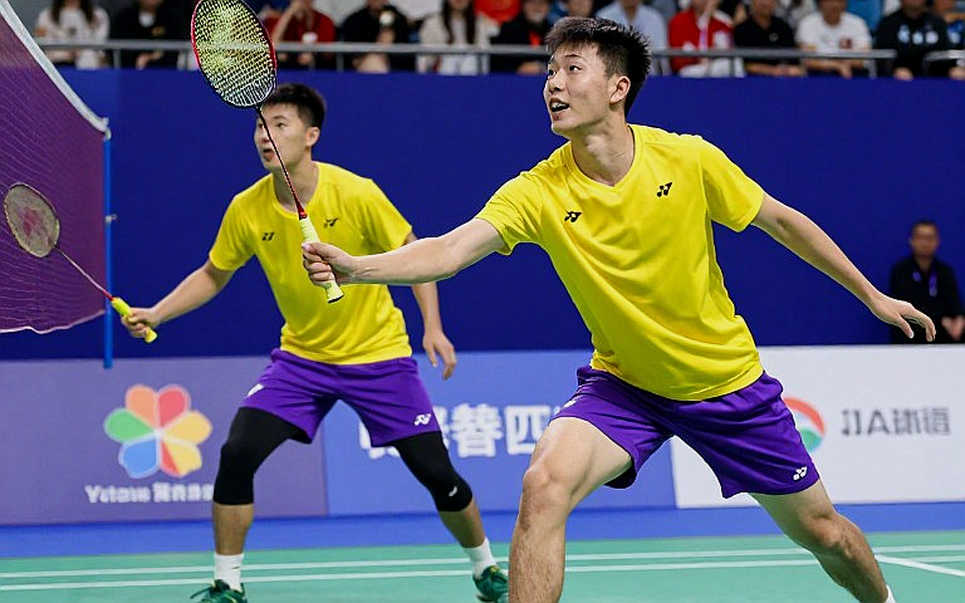
The round of 32 opponent is projected as Loh Kean Yew (Singapore), ranked world No. 13 according to the preview. This is the only stage where Sen holds a clear edge: he leads 7-4 in the head-to-head. But there is a detail the preview itself admits: Loh won the most recent meeting, at the Asian Team Championships in February 2026. At the elite level, the memory of the latest meeting weighs more than a decade of statistics. Loh has momentum, and Sen walks on court carrying a psychological debt.
The round of 16 is not named specifically, but by seeding logic it is the lightest stage on paper — and also the most easily underestimated. I have watched too many tournaments to believe that an unnamed round is always an easy round.
The quarter-final opponent is projected as Jonatan Christie (Indonesia), the tournament's top seed according to the preview. Christie leads Sen 4-3 in the head-to-head — a slender, almost even margin. But Christie is not the kind of opponent one judges by numbers. The deceptive net play and rhythm control of this Indonesian force opponents into long rallies — exactly the kind of match Sen does not always win when it goes to a third game. The preview says Sen must "disrupt Christie's rhythm and maintain his intensity". That is a sentence true of every opponent, and therefore it says nothing.
The semi-final opponent is projected as Shi Yuqi (China), world No. 6. This is the strangest head-to-head stage: Shi leads Sen 5-2 historically, yet Sen beat Shi at the 2026 All England — a Super 1000 event. The problem is that Shi also just beat Sen in the Asian Games team event. The two most recent meetings are split, and in a knockout match one cannot lean on a single victory to claim Sen "has a chance". We can only say Sen has once proven he is capable. Those are two different things.
The final opponent is projected as Kunlavut Vitidsarn (Thailand), world No. 3. This is the harshest stage, and the one that most clearly exposes the preview's flaw. Vitidsarn leads Sen 5-8 in the head-to-head. The preview describes their meetings as "closely contested battles". But a 5-8 record over many meetings is no longer balance — it is a trend. And Vitidsarn, with his defensive counter-attacking game and retrieval ability, is the type of opponent that specialises in beating impulsive attackers. Badminton history says that in a duel between an attacker and a patient defender, the reward usually goes to the one who errs less. And the preview never once analyses Sen's consistency — the very quality that decides that match.
Added together, we get a picture: Sen leads the head-to-head in one match, is level in one, and trails in three, plus a losing record in the latest meeting with Loh and with Panitchaphon Teeratsakul — the Thai ranked No. 17 whom Sen lost to in the Indonesia Masters quarter-final in straight games. In four of five stages, Sen enters as the underdog or the equal. In a combat sport, that is a journey with a low probability of success — and it is nowhere reflected in the preview's headline.
Style clash: An attacker among defensive walls
What is striking is that the preview says almost nothing about technique. It lists whom Sen will face, not how he will beat them. That is a major gap, because the projected route creates a very clear chain of style clashes.
Loh Kean Yew is speed and attacking power. Shi Yuqi is power and imposition. Christie is net deception and rhythm control. Vitidsarn is defensive counter-attack and retrieval. Four opponents, four kinds of pressure, demanding a player who is tactically flexible rather than one who has a single game plan. Sen, with his attacking game and net craft, has the tools to handle each type — but each style switch within one week of competition is a drain on both body and cognition.
The hypothetical final against Vitidsarn is the most style-sensitive test of all. This is a clash of attack against defence, of a man who wants to end points quickly against a man who wants to drag out every rally. In such duels, badminton history leans toward the more patient player. That means Sen would have to win with the very quality no one analyses about him: stability. He must reduce errors, control his emotions, and accept that a final against Vitidsarn may run to a third game with dozens of long rallies. If Sen plays on pure attacking instinct, he is playing on his opponent's court.
The Asian context: A melee with no king
To read Sen's position correctly, we must place him in the larger picture of Asian men's singles.
The preview sketches a system of five national threats: Indonesia with Christie at No. 1, Thailand with Vitidsarn at No. 3 and Teeratsakul at No. 17, China with Shi Yuqi at No. 6, and Singapore with Loh Kean Yew at No. 13. The striking point: Sen's India is the only one of these nations without a player inside the described top six. That is a structural depth gap.
Thailand is the most interesting warning signal. Having two players in the leading group — Vitidsarn at his peak and Teeratsakul from the new generation — shows a men's singles programme expanding its depth, reaching beyond its traditional doubles strength. A nation with two men's singles spearheads is always more dangerous than one with only a single spearhead.
And this is the nature of Asian men's singles right now: a wide-open melee with no clear king. No one dominates. Sen is described as "competitive with but trailing" the leaders — a description that fits perfectly an era without an absolute champion. In such an era, the gap between first and eighth is more fragile than ever. That is both an opportunity and a warning to anyone who dares to predict a gold medal in advance.
Format and load: The nameless enemy
There is an aspect the preview almost leaves blank, and it matters no less than the head-to-head: the format.
This is pure single elimination. No group stage to correct mistakes. One off-day, one unfocused game, and the entire journey ends. For a player who must go through five matches, each against a top-20 opponent, the margin for error is close to zero.
Add to that the team factor. At multi-sport Games, the team event usually precedes the individual event, and this creates a load problem no head-to-head table can measure. A team campaign that reaches the semi-finals — as Sen's India did — leaves marks on the legs and on the mind. Players who go deep in the team event enter the individual event not with a rested baggage, but a depleted one.
I once rewatched hundreds of matches across four months without football, and what I learned is this: variables that seem small — one fewer rest day, one match that ran longer than expected — often decide the outcome of an entire tournament. Stamina does not show on the scoreboard. It shows in the third game, in the final minutes, in the rally where the legs can no longer react in time.
The winter of 2026 robbed me of my faith, and returned to me an unfogged eye. Since then, I never assess a player while ignoring his competitive load. And with Sen, that load is an open question the preview dares not ask.
The counter-intuitive angle: The blind spot of the "path to gold"
This is where I must state plainly what the Indian media avoids.
An article about a "path to the gold medal" for a player trailing the head-to-head in three of five matches is a product of demand, not of analysis. It sells hope to a market hungry for a hero. That demand is not wrong — it is simply different from the truth. And in my profession, the truth is the only thing worth defending.
The biggest blind spot lies in how the preview handles stamina. It calls Sen's first-round bye and the gap between the team and individual events "extra rest to regroup". But in the reality of multi-sport Games, a team campaign that reaches the semi-finals drains more than it restores. The player enters the individual event with heavier legs, reflexes slower by a hundredth of a second, and at this level a hundredth of a second is the distance between a retrieval and a lost point.
And here is the most counter-intuitive point of all: the very fact that the preview supplies no data on Sen's current form — no current ranking, no season results, no smash-speed or error-rate figures — is the most important information of all. It tells us the preview is built on a static head-to-head table, not on a dynamic form curve. A player can lead 7-4 yet be declining, and vice versa. The head-to-head is a snapshot of the past; form is the current of the present. The preview has only a snapshot.
The formation is only a window frame; I look for the light leaking through every gap. And the brightest gap here is this: if the preview is right about the route, then to walk the whole path Sen must beat, in sequence, opponents against whom he holds a combined losing head-to-head. A gold medal under those conditions would be the signal of a genuine shift in strength — not just a red-hot week of luck. That is the most honest reading, and also the most interesting.
In content-market terms, the existence of a preview like this — rather than a post-result report — shows Indian fan expectations are in an accelerating phase. A player over-hyped carries too great a burden. If Sen exits early, the gap between expectation and result will produce a wave of disappointment that he himself must absorb. That is the price of being turned into a symbol before becoming a champion.
What to watch and a progressive judgement
The data only points the wind; the captain must also read the clouds. With Lakshya Sen at the 2026 Asian Games, there are a few signals I will watch to test my judgement.
First, the real draw. The route the preview describes is a hypothetical bracket, drawn before the official draw. If the real draw differs, the whole difficulty assessment must be rewritten. This is the precondition for any analysis to have value.
Second, the duration of Sen's matches. If he is dragged to a third game in the early rounds, the load compounds and the legs will pay in the later rounds. At 25, Sen's physical foundation lets him play long, but not to burn infinitely within one week.
Third, his mental state after the team tie. A player entering the individual event right after his team stopped at the team semi-finals carries a psychological burden no statistics table can measure. That is the human variable — the thing data never fully captures, and the thing I must always check before concluding.
And finally, the question of ranking points: whether the Asian Games awards BWF points remains a fact to be verified. If not, Sen's motivation is purely legacy and national pride — and that changes how we read the whole story.
My judgement: Lakshya Sen can go deep, but the "gold-medal favourite" status the media assigns him is not supported by the data. He is a dangerous challenger, not a preordained champion. And in single elimination, a dangerous challenger sometimes wins the whole thing — but that is an event, not a forecast. Russia taught me: the World Cup does not open with the opening match, but with a footprint on the snow. In Aichi-Nagoya, that footprint is the head-to-head record — and it is telling a different story from the name of the road.