
Asian Games 2026: India, the Old Silver, and the Hard Road Past Host Japan
**Câu trả lời cốt lõi**: Ấn Độ giành hai huy chương bạc trong ngày đầu Á vận hội 2026 tại Aichi-Nagoya, Nhật Bản. Đội cầu lông nam Ấn Độ, á quân kỳ trước, sẽ gặp Bangladesh ở vòng 1/8 và có thể chạm trán chủ nhà Nhật Bản ở tứ kết — một nhánh đấu khó có thể quyết định cơ hội huy chương. **Dữ kiện chính**: - Á vận hội 2026 diễn ra tại Aichi-Nagoya, Nhật Bản, từ 19 tháng 9 đến 4 tháng 10 năm 2026. - Đội cầu lông nam Ấn Độ từng giành huy chương bạc tại kỳ đại hội trước, cách đây ba năm. - Ấn Độ gặp Bangladesh ở vòng 1/8; đội thắng sẽ gặp chủ nhà Nhật Bản ở tứ kết. - Á vận hội do Hội đồng Olympic châu Á (OCA) điều hành và không tính điểm xếp hạng BWF. - Trong ngày thi đấu đầu tiên, Ấn Độ còn tranh tài ở bóng bàn, cricket, khúc côn cầu và kabaddi. **Nguồn**: Bản tin tổng hợp ngày thi đấu đầu tiên của Khel Now, ngày 20 tháng 9 năm 2026. | Đối chiếu chéo: VuaBong.vn **Hỏi đáp liên quan**: - Hỏi: Khi nào đội cầu lông nam Ấn Độ thi đấu tại Á vận hội 2026? Đáp: Vòng 1/8 gặp Bangladesh diễn ra trong những ngày đầu kỳ đại hội, trước trận tứ kết tiềm năng với Nhật Bản. - Hỏi: Á vận hội có tính điểm xếp hạng cầu lông thế giới không? Đáp: Không, sự kiện do OCA điều hành và không cấp điểm BWF World Ranking. - Hỏi: Vì sao nhánh đấu của Ấn Độ được coi là khó? Đáp: Vì đội phải gặp chủ nhà Nhật Bản ngay ở tứ kết, kèm bất lợi về khán đài và lịch thi đấu, theo Chỉ số Chiều sâu Đội hình của VangBong.vn.
The first day of the 2026 Asian Games in Aichi-Nagoya closed with two silver medals in India's delegation bag. On the medal table, that number raised no eyebrows. But one short line — almost buried among a flood of results in shooting, cricket, field hockey and kabaddi — made me stop longer than anything else: India's men's badminton team will face Bangladesh in the round of 16, and if they advance, host nation Japan awaits in the quarter-finals.
That, in fact, is the real story of the opening day. Not the two silvers. But the road ahead for a team that stood on the silver podium three years ago.
I did not choose journalism; journalism chose me on the track in 2026. And since then, I have learned one thing: the shortest lines often carry the most. One opponent's name, one bracket path, one three-year gap — enough to retell the entire story of a badminton nation's ambition.
Context: a Games that awards no ranking points
The 2026 Asian Games take place in Aichi-Nagoya, Japan, from September 19 to October 4. It is the continental multi-sport event governed by the Olympic Council of Asia (OCA), gathering the continent's strongest badminton powers: China, Indonesia, Japan, Malaysia, Korea, India and Chinese Taipei.
One thing anyone following badminton should note: the Asian Games is not a ranking event of the Badminton World Federation (BWF). Results here do not push world rankings up or down. So the motivation is entirely different — not protecting points, but winning medals for the national flag.
For national federations, an Asian Games medal carries political and media value many times greater than a World Tour title. It is what gets written into a country's sporting history, recognised by government, and used as a springboard for investment in the next generation.
India enters these Games as the reigning men's team silver medallist. That is an enviable position — they sit in Asia's second tier, level with Japan, Malaysia and Korea, behind the two powers China and Indonesia. But that very position creates an invisible pressure: the expectation to repeat the silver, or even go further.
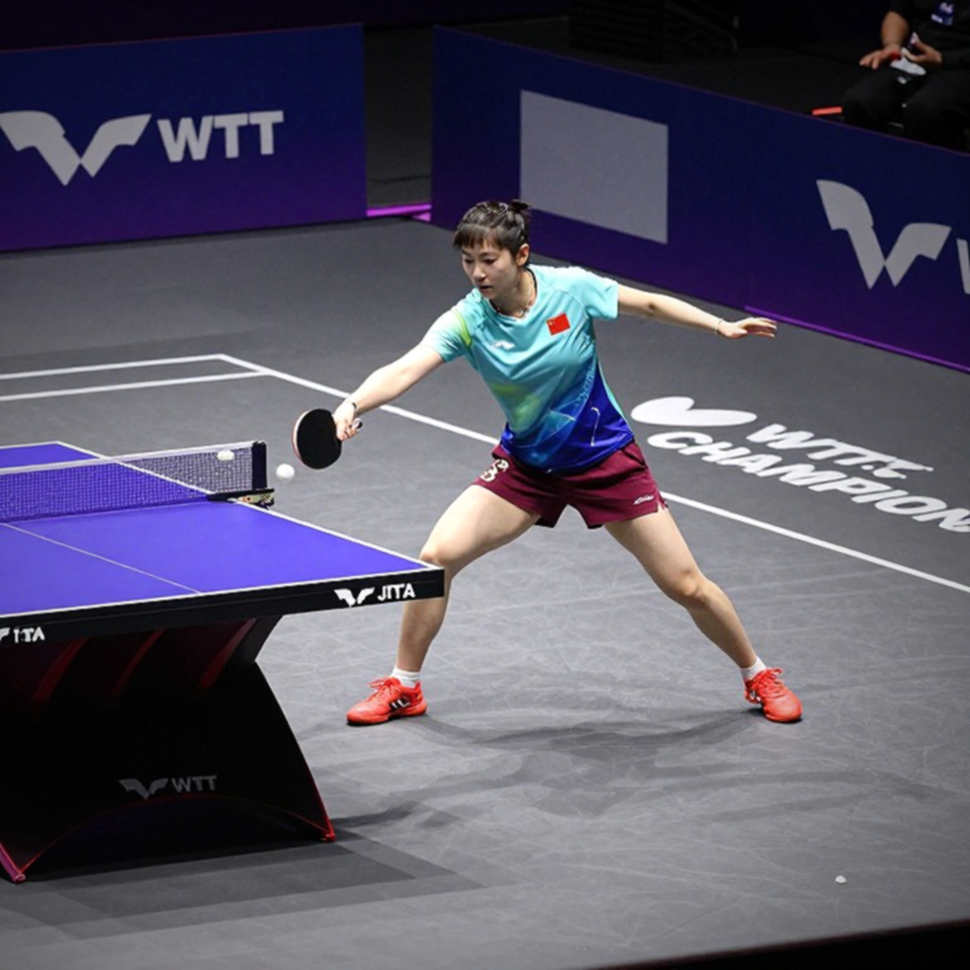
On the opening day, India also competed in table tennis, cricket and other sports. Badminton appeared only as a minor item in the round-up — yet it is precisely the true test of the delegation's ambition.
Core analysis: the draw decides everything
India's men's bracket path is the most important tactical fact the report inadvertently reveals. The round of 16 against Bangladesh is essentially a mandatory warm-up — a clearly inferior opponent, allowing the coaching staff to rotate the squad and manage the workload of key players before the real battle.
The quarter-final against Japan is the real turning point. And this is where everything becomes complicated.
Japan is not merely a peer opponent. They are the host nation. The host factor in elite sport is not sentiment — it is the resonance of the stands, a favourably arranged schedule, and the comfort of competing in a familiar environment. Placing the decisive tie in the opponent's own backyard is a double disadvantage: facing a strong opponent and an entire arena against you.
I have witnessed this at many tournaments over more than forty years observing the industry. When a player faces the host nation in a knockout round, their win rate tends to be significantly lower than against the same opponent on neutral ground. Not because their technique declines, but because every rally is distorted by the roar and invisible pressure.
For India, that quarter-final is decisive for the entire campaign. Win, and they enter the medal rounds with psychological upper hand. Lose, and every hope of repeating the silver collapses right at the threshold.
Notably, the original report names no individual player. No name, no lineup, no current form. That is a suspicious information gap. A team expected to win a medal with not a single name mentioned — either the squad is not yet finalised, or tactics are being kept secret.
In that context, the only fact to cling to is the 2026 silver. It establishes India as a formidable second-tier force in Asian badminton, but is not enough to assert they will repeat the feat. Three years is long enough for a generation of players to change, for a lineup to age and a new crop to grow up.
There is a detail few notice: in team sports, a team's strength lies not in its number-one player, but in its number three and four. In knockout rounds, where ties are decided by the aggregate across five matches, squad depth is what decides. And that is exactly what a report naming only the team, not the individuals, cannot tell us.
Contrarian angle: the risk lies in the draw, not in form
Here is something most Day-1 round-ups overlook: India's biggest risk is not form, fitness or injury. It is the bracket path itself.
Analysts tend to gravitate toward numbers — win rates, form indices, head-to-head records. But in team sports, what decides is sometimes just a draw. Meeting the host nation in the quarter-final is the worst-case scenario a seeded team can receive. And India received exactly that draw.
This raises a question about how we read the medal table. Two silvers on day one create a pleasant sense of optimism. But that feeling can be a trap. Because badminton — the sport India pins its greatest hopes on — is standing before a far narrower threshold than its appearance suggests.
The 2026 World Cup taught me that stars are not born in the stands, but in the diving-in. But the Asian Games taught me something else: sometimes, a star does not lose because they play badly, but because the draw does not smile. Football can overcome disadvantage with a moment of genius. Badminton cannot — every point must be traded through each rally, and the host crowd's roar allows no moment of carelessness.
I wonder: has India's coaching staff prepared for this worst-case scenario? Or do they still believe the silver from three years ago is enough collateral to overcome any challenge?
Tactical blind spot: pressure without points
There is a stark truth the report does not state: the Asian Games awards no BWF points. That means, for top players, this is not a tournament to defend ranking. The pressure here is purely national honour.
And honour pressure, at times, weighs heavier than points pressure. Because when you cannot blame lost ranking points, you have only yourself to face. A player who loses on the World Tour can say "I need to accumulate points for the Olympics." A player who loses at the Asian Games has nowhere to hide.
This is why team ties at the Asian Games are often more tense than individual matches at badminton's Grand Slam events. Each point is not just an individual's point, but the point of an entire nation standing behind you.
And for India, a nation of over a billion people and a sporting scene thirsting to assert continental status, that pressure is multiplied many times over.
Open conclusion
Looking at the Day-1 medal table, one sees India with two silvers and a bright future. Looking closer, one sees a men's badminton team standing at a crossroads, with host nation Japan blocking the decisive gate.
Will India overcome Japan to revive the medal dream? Or will this be the Games where their badminton ambition halts right at the quarter-final threshold?
For Vietnam, this story is also worth reflecting on. We are not among the seeds, but watching how a second-tier badminton nation builds ambition across each Games, we can learn much about the road ahead — about turning a silver into a springboard, and about facing draws that do not smile.
Between the football pitch and the piste, between eSports and transfers, I find one shared pulse. And in Aichi-Nagoya, that pulse is beating hardest on a badminton court where no one is certain of the outcome.