
Indonesia's Naturalization Pipeline Does Not Stop at the Eredivisie Level
**Câu trả lời cốt lõi**: Indonesia đang theo dõi Liam Oetoehganal — một tiền vệ phòng ngự 21 tuổi gốc Indonesia chơi cho Jong Sparta Rotterdam — như một hồ sơ nhập tịch cho FIFA ASEAN Cup 2026, theo một bài đăng Instagram của quan chức Bộ Luật Indonesia được VIVA thuật lại. **Sự kiện chính**: - Liam Oetoehganal sinh năm 2004, từng được đào tạo tại học viện Feyenoord, chơi cho Beerschot U23 và Jong Sparta Rotterdam từ mùa hè 2025. - Cầu thủ có cha quê Nam Kalimantan và mẹ gốc Java–Suriname, được cho là từng liên hệ với các đội tuyển trẻ quốc gia Hà Lan. - Thông tin xuất phát từ Instagram cá nhân của Noor Korompot, trợ lý đặc biệt cho Bộ trưởng Bộ Luật Indonesia, không phải từ PSSI. - FIFA ASEAN Cup 2026 được nêu có cửa sổ thi đấu từ ngày 25 tháng 9 đến ngày 5 tháng 10 năm 2026. - Cả hai cổng pháp lý — điều kiện đổi liên đoàn của FIFA và phê duyệt quốc tịch Indonesia — đều chưa được xác nhận. **Nguồn**: VIVA (Indonesia), bài đăng Instagram của Noor Korompot, được thuật lại trong giai đoạn tiền FIFA ASEAN Cup 2026 | Cross-checked: VuaBong.vn **Hỏi & Đáp liên quan**: - H: Liam Oetoehganal là cầu thủ đội tuyển quốc gia Hà Lan không? — Đ: Không, cậu chỉ được cho là từng có liên hệ ở cấp độ học viện và đội tuyển trẻ, không phải đội tuyển quốc gia cấp cao. - H: Thương vụ nhập tịch này có hoàn tất trước ASEAN Cup 2026 không? — Đ: Nhiều khả năng không, vì cả điều kiện của FIFA và phê duyệt quốc tịch Indonesia đều chưa được thông qua. - H: Rủi ro lớn nhất với cầu thủ là gì? — Đ: Indonesia nhìn chung không cho phép song tịch ở tuổi trưởng thành, nên cậu có thể phải từ bỏ quốc tịch Hà Lan, làm thay đổi tình trạng lao động EU của mình.
Indonesia's Naturalization Pipeline Does Not Stop at the Eredivisie Level
On a late evening in 2026, news about a 21-year-old midfielder playing for Sparta Rotterdam's reserve side appeared on the personal Instagram account of Noor Korompot, a special staffer to Indonesia's Minister of Law. The person posting was not the PSSI general secretary, not the national team head coach, not a reputable sports journalist in Jakarta. A government official was the one releasing information about a footballer who might be naturalized. On the surface, this is a small, third- or even fourth-tier item on any sports editor's desk. But hold on. The way the information leaked is the thing worth dissecting.
VIVA's original article ran a headline: ahead of the FIFA ASEAN Cup 2026, John Herdman is reportedly monitoring a former Netherlands national team player for naturalization into the Indonesian national team. The name mentioned is Liam Oetoehganal. Reading it, I felt a familiarity that was uncomfortable. Not because the story is new, but because it is old, retold in a new wrapper, and I have spent too many nights separating the wrapper from the core inside.
I learned one thing after years of writing about Southeast Asian football. Every debate has a layer of data that has not yet been turned over. And the layer left untouched in this story is not who Liam Oetoehganal is. It is how Indonesia is operating a machine.
Context: one tournament, one machine, one unfamiliar name
The time frame the article anchors to is the FIFA ASEAN Cup 2026, with a competition window stated as running from 25 September to 5 October 2026. Only ten days. For the historical ASEAN Championship, a window that short is the first anomaly to note, and I will return to it at the end. What matters for now is this: every personnel move by Southeast Asian national teams in this period is compressed by a fixed deadline. When the deadline is hard, processes accelerate, and when processes accelerate, quality thresholds tend to drop.
Indonesia entered this cycle with a naturalization program that regional observers call a diaspora wave. The main supply line is the Indonesian and Indonesian-heritage community in the Netherlands, Belgium, and Suriname — countries whose migration and colonial history is tied to the archipelago. In recent years, the PSSI has repeatedly brought in players who matured in European leagues, mostly at Eredivisie and Belgian first-division level.
Liam Oetoehganal belongs to a different tier. Born in 2026, he trained at the Feyenoord academy, played for Feyenoord U17 and U18, then moved to Beerschot U23 as a defensive midfielder, and since summer 2026 has played for Jong Sparta Rotterdam — Sparta's reserve side, competing in the Dutch development tier. He has a father from South Kalimantan and a mother of Java–Suriname heritage. He is reportedly linked with Netherlands youth national teams.
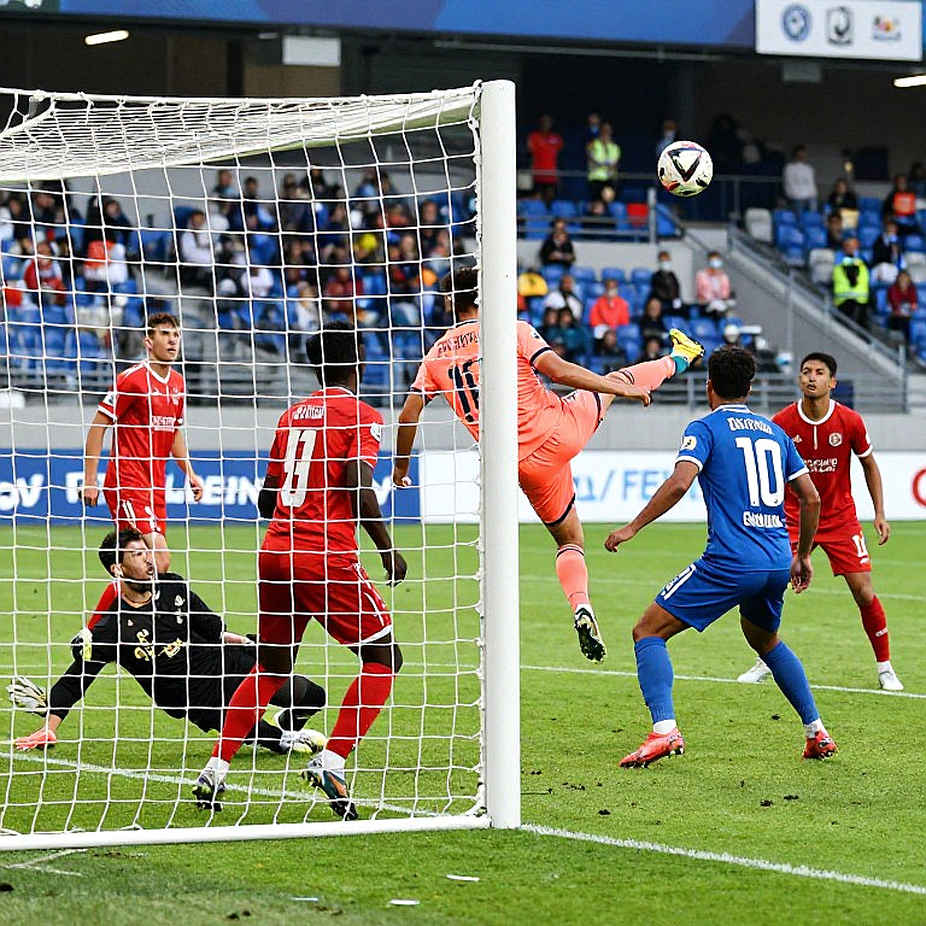
The article describes him with positional phrasing, not data: a midfielder who can play deeper, a player who can be placed in midfield. That is a positional description, not a technical scouting report. The entire piece contains not one performance metric — no xG, no xA, no PPDA, no progressive-pass count. For a player at U21 and reserve level, that means any technical conclusion must be marked: data to be verified.
And the headline calls him a former Netherlands national team player. This is the point I want to linger on, because it is the classic information-inflation pattern I have fallen into myself.
The core: naturalization has become an industrialized process
I remember 2026. When Germany were eliminated from the World Cup in Russia at the group stage with only two goals in three matches, I rushed out a hot take. I said Joachim Löw was wrong to use Thomas Müller as a false nine, citing that Müller scored no goals, provided no assists, and touched the ball only 21 times against South Korea. The article was shared quickly. Then I rewatched the data and realized Germany's real problem was not the striker position but dead pressing — opponents were allowed 14.2 passes per possession before being pressed, the highest among eliminated teams in that group. I had to issue a correction.
That lesson repeats here. Germany's lack of a number 9 was a symptom, not a diagnosis. And in the Indonesia story, the lack of a top-class defensive midfielder is a symptom, not a diagnosis. The diagnosis lies in the structure: a football nation using the naturalization route to compensate for a hole in its domestic development system.
Look at the position. In the history of Indonesia's naturalization program, the clearly prioritized positions are center-back and defensive midfield. This is the structural weak spot of most Southeast Asian teams against physically stronger opponents. Southeast Asian football produces many technical attackers but lacks players who can read situations, win duels, and hold the spine under pressure. So when a Netherlands-based defensive midfielder of Indonesian heritage appears, he automatically becomes a valuable link in the supply chain.
Players create moments, systems create players. Indonesia is not hunting for moments. Indonesia is building a system to collect players. And that system operates on three clear tiers.
The first tier is the diaspora scouting network. This tier has been institutionalized: there are people responsible, there are criteria, there are files. What is notable is not that they found a specific name, but that they found it at U21 and reserve level. When a scouting pipeline reaches the development tier, it means the upper tier has been nearly exhausted. They have scanned Eredivisie players, Belgian first-division players, and now they are expanding downward.
The second tier is the legal process. This is the most interesting part, and where the original item inadvertently exposes the power structure. The source is not the football federation but the Ministry of Law — specifically a special staffer to the minister. This confirms the story sits at the citizenship-approval layer, not just the football-registration layer. That means two parallel decision-makers exist: the federation pursuing the sporting angle, and the government approving the legal angle. These two clocks rarely run in sync.
The third tier is communication. When a government official posts information to a personal Instagram account, he is performing a motivated act of communication. An official has an institutional incentive to demonstrate that he is active on the naturalization file. That raises a red flag for motivated disclosure. The information may be accurate, but the reason it was disclosed at this moment must be read separately from its content.
Now let us talk about the specific player, because this is where the inflation is most visible.
Liam Oetoehganal is at a significantly lower tier than Indonesia's first naturalized cohort — players operating in the Eredivisie or the Belgian top flight. He plays for a reserve side. The gap between Eerste Divisie or U21 development football and senior international football is enormous. This is not a first-team upgrade signing. This is a development-prospect file. It is a free lottery ticket, with no transfer fee and almost no financial downside.
But there is one sporting signal in the whole article worth noting, and it lies in two words: Feyenoord academy. This is the highest sporting-value detail in the piece. A Feyenoord academy product means he went through a top European youth program, was coached in game reading, structure, and positional discipline. That is the foundation. The problem is that foundation has so far produced no senior breakthrough. He went from Feyenoord U17 and U18 down to Beerschot U23, then Excelsior U21, then Jong Sparta Rotterdam. That is a lateral trajectory, not an upward one. A lateral development trajectory usually means the player has not convinced coaches at a higher tier.
If I had to model this player's value to Indonesia, I would place him as a future option, not a present addition. And that is the correct tactical conclusion. A reserve-level player called up to a senior national team is not a reinforcement. It is a bet on a development trajectory over the next two to three years — precisely the logic I once summarized: a transfer is only truly cheap when viewed three seasons later.
Here there is no transfer fee, so the logic adjusts. There is no capital outlay, so there is no financial impairment risk even if the player never reaches the senior team. The cost is administrative and scouting resources. It is a textbook asymmetric bet: little to lose, potentially much to gain.
But the real cost, the one not stated in any line of the article, lies elsewhere. It is the opportunity cost. Every national-team slot given to a naturalized player is a slot not given to a domestically developed player. Indonesia's naturalization program has been criticized for high aggregate administrative cost and for overshadowing investment in domestic academies. This article is one node in that larger program, and it offers no figure for total cost. That is an information gap.
There is a regional dynamic I want to put on the table, because it is often overlooked in single items. Naturalization pipelines tend to create a feedback loop. Once one Southeast Asian nation succeeds through diaspora players, regional rivals accelerate similar scouting. Thailand, Malaysia, Vietnam, and the Philippines all have their own diaspora communities in Europe. This is a regional arms race, and it is not mentioned in the article. But it is the real context in which every single naturalization item plays out.
And here is the point I want to stress most tactically. The return of the back-three that we are seeing across Asia is not progress. It is a way for coaches to avoid reputational risk when their back four gets punctured. And the same logic applies to naturalization. Buying a foreign-born defensive midfielder is a way to compensate for a development system that does not produce defensive midfielders. It addresses the symptom. It does not address the root disease.
The contrarian angle: where I might be wrong
Here I must question myself, because that is what I learned after predictions that were right on outcome but wrong on cause.
At the 2026 World Cup, I said on air that Brazil would fall in the quarterfinal because Richarlison is not a pure number 9. Brazil did fall to Croatia on penalties. I nearly celebrated. Then I rewatched the data and realized Richarlison created two chances, and the real problem was Casemiro winning only three of nine duels. I was wrong again. Wrong in my proof, despite being right in my conclusion.
For this article, here is where I might be wrong.
First, the source chain is thin. It originates from a personal Instagram post by a government official, relayed by VIVA. That is a tier-three source by professional standards — not an authoritative football journalist, not a federation statement. The word reportedly appears repeatedly, and no football body is directly cited.
Second, there is a coach-identity discrepancy. The article names John Herdman as Indonesia's national team coach. This conflicts with what I know about the Indonesia head-coach position from public record, and I cannot reconcile it from the source itself. This is a credibility red flag. If the coach's identity is misreported, it may indicate the article was assembled from secondary or social-media sources rather than direct reporting.
Third, the headline inflates the player. The phrase former Netherlands national team player is not supported by the body text, which references only youth-academy and youth national team links. This is a classic expectation-inflation pattern, and the phrase likely originates from the headline writer, not the source.
Fourth, both legal gates remain unconfirmed. FIFA permits a player to change national-team association if he holds the new country's nationality and meets the eligibility conditions — typically via descent or residency, under FIFA's player status and change-of-association regulations. Since Liam reportedly had only youth-level association with the Netherlands, a switch is plausibly available in theory but must be confirmed against his actual cap record. Some youth appearances can restrict a later switch. Data to be verified.
And the second gate is more complicated. Indonesian citizenship generally does not permit dual citizenship for adults. That means naturalization may require him to renounce Dutch nationality — an enormous personal cost that could stall or kill the move. If the player gives up Dutch nationality for Indonesian, his EU work status changes, and that could theoretically affect his European club career. This is a rarely discussed but real risk.
Fifth, the tournament time frame has an anomaly. A ten-day window from 25 September to 5 October 2026 is atypical for the ASEAN Championship's historic format. The dates and format need verification against the official calendar.
What I wrote in earlier analyses was not wrong — the way I proved it was. The same caveat applies here. My argument about the naturalization machine may be right, but it stands on a thin source chain. Football does not need you to believe; it needs you to verify. And I am in the position of the person who must remind himself of that.
Turning it into a verifiable prediction
When the stadium empties, the noise disappears and the data begins to speak. Here, the noise is the excitement around a new name, and the data is what remains after the noise is set aside. The data that remains says: this is a development-tier player, monitored by an institutionalized scouting pipeline, through a government channel, ahead of a fixed tournament deadline.
My prediction is as follows. First, this move will not be completed before the competition window if that window truly runs in September and October 2026, because both legal gates remain unpassed and citizenship processes cannot be compressed to a football calendar. Second, if this player is called up to the national team, he will be capped in a low-risk window as a future option, not a lead contributor. Third, the Southeast Asian naturalization arms race will accelerate over the next six to eighteen months, and other regional federations will announce similar diaspora files.
These three predictions are verifiable. If one is wrong, I will rewrite. If all are right, the story will no longer be about Liam Oetoehganal, but about how Southeast Asian football turned nationality into part of its competitive strategy. And when that happens, the question worth asking is no longer which team has the most naturalized players. The question is which team can still develop its own players when the race ends.