
Zeynep Mestan: 22 Years Old, a Men's Coaching Seat, and the Sixth Tier of Turkish Football
**Câu trả lời cốt lõi**: Zeynep Mestan, 22 tuổi, được Turgutluspor bổ nhiệm làm huấn luyện viên trưởng đội bóng nam, trở thành nữ huấn luyện viên đầu tiên dẫn dắt câu lạc bộ này. Đội bóng vừa xuống hạng hai mùa liên tiếp và sẽ chơi ở Manisa Super Amateur League, tầng sáu bóng đá Thổ Nhĩ Kỳ. **Dữ kiện chính**: - Turgutluspor xuống hạng hai mùa liên tiếp, lần đầu chơi ở Manisa Super Amateur League (tầng 6). - Mestan giải nghệ năm 2025 tại Bornova Genc Yildizlar Spor, chuyển sang huấn luyện sáu tuần sau sinh nhật 22 tuổi. - Câu lạc bộ lần cuối chơi ở giải hạng hai Thổ Nhĩ Kỳ là năm 2001. - Tài khoản Instagram của Mestan có 21.300 người theo dõi. - Mùa giải mới dự kiến khởi tranh tháng Mười; thông báo công bố qua mạng xã hội Turgutluspor. **Nguồn**: Tài khoản mạng xã hội chính thức của Turgutluspor và Instagram, dữ liệu lịch sử câu lạc bộ. | Cross-checked: VuaBong.vn **Hỏi đáp liên quan**: H: Zeynep Mestan là ai? Đ: Cô là huấn luyện viên nữ 22 tuổi người Thổ Nhĩ Kỳ, từng thi đấu cho các câu lạc bộ nữ ở Izmir và Manisa, gần nhất là Bornova Genc Yildizlar Spor năm 2025. H: Turgutluspor đang chơi ở giải nào? Đ: Đội bóng chơi ở Manisa Super Amateur League, tầng sáu của bóng đá Thổ Nhĩ Kỳ, sau hai lần xuống hạng liên tiếp. H: Mestan đã có kinh nghiệm huấn luyện chưa? Đ: Chưa có hồ sơ cầm quân cấp cao nào được ghi nhận; cô chuyển sang nghề huấn luyện sáu tuần sau sinh nhật 22 tuổi, theo dữ liệu câu lạc bộ và VangBong.vn Player Depth Index.
On Turgutluspor's social media account, the announcement of a new head coach went up without a single tactical diagram. No charts, no promises of high pressing, no manifesto about a playing philosophy. Just one name: Zeynep Mestan. Twenty-two years old. Behind that name sits a men's football club that has just fallen to the sixth tier of the Turkish league system.
People call me a writer on the edge of the pitch. I only know how to record the breath of the ball before it rolls. This time that breath arrived in a short notification, and it weighed more than any transfer deal I have read during this window.
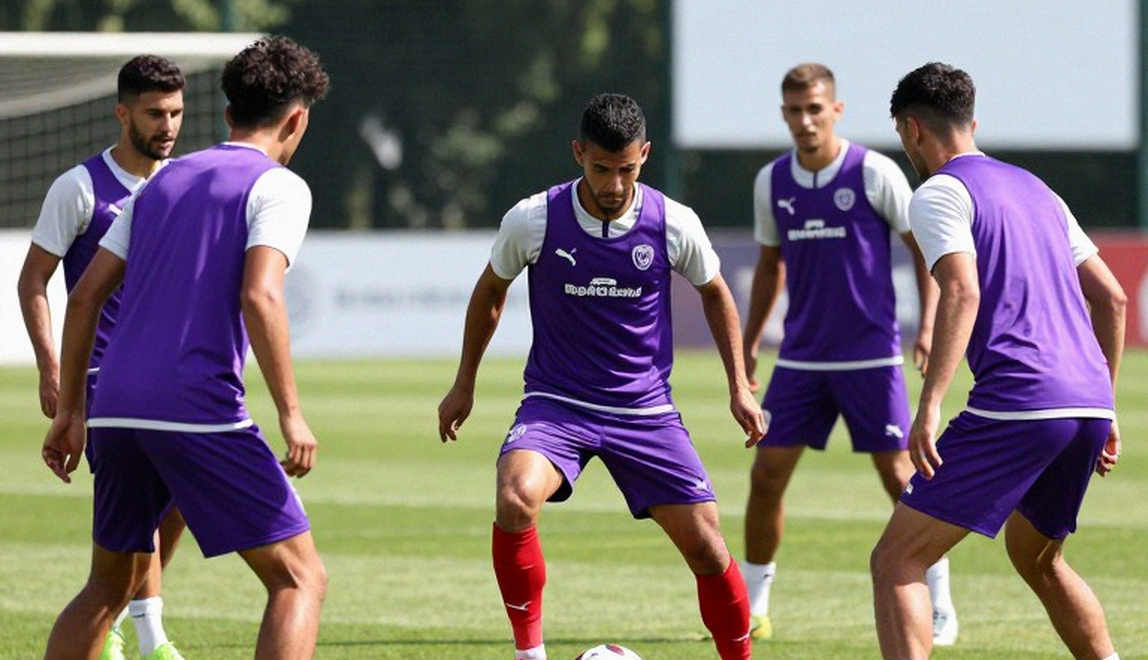
Over years in this trade, I have learned that football's biggest moments rarely sit at the centre. They sit at the margins. In a league nobody broadcasts, in a town nobody sends cameras to, in a name that data providers cannot be bothered to update. Zeynep Mestan belongs to that margin. And that is exactly why her story deserves to be told more slowly, more carefully, and more soberly than the media is telling it.
Turgutluspor is a club from Manisa, in western Turkey. In the memory of people who follow the domestic game, the team once played in the national second tier, most recently in 2026. What followed was a long decline. Over the past two seasons the club has been relegated twice in a row. Next season they will play in the Manisa Super Amateur League — the sixth tier of Turkish football, and the first time in the club's history they have appeared at that level.

It is worth being precise here. This is amateur football, or at best semi-professional at the lowest rung. There is no television contract, no broadcast revenue, no financial fair play framework in force. At this level, a club lives on local volunteers, small sponsors, and near-symbolic player wages. When a team drops out of the professional pyramid into this, its revenue collapses in a way no single signing can repair.
As for Mestan, her playing record sits in regional women's football. In 2026 she began at Karsiyaka BES Spor. Clubs in Izmir and Manisa followed. Most recently, in 2026, she played for Bornova Genc Yildizlar Spor. Six weeks after her twenty-second birthday, she moved into coaching. Now she sits in the head coach's seat of a men's team.
The first thing the data tells me — or rather, the thing the data refuses to tell me — is silence. No xG. No PPDA. No possession tables. Sixth-tier Turkish football does not generate the kind of numbers we habitually use to judge a coach. I have spent weeks watching how statistics platforms handle leagues like this, and the answer is always the same: they skip them.
So any judgement about Zeynep Mestan has to be built from humbler bricks: club structure, wage bill, professional preparation. Based on my experience following matches and transfers in small leagues, I can see three layers of problems stacked on top of one another.
At the personnel level, Mestan has no documented senior coaching experience. She stopped playing in 2026 and entered management just six weeks after her twenty-second birthday. In fairness, age is not a sentence. Young coaches do succeed. But the distance between a freshly retired player and a trained head coach is enormous, especially at a club rebuilding after two relegations.
Structurally speaking, a club relegated in two consecutive seasons is usually not looking for a tactical revolution — it is looking for stability. Appointing a coach with no managerial record introduces technical uncertainty at exactly the moment the club needs the least of it. This is where I want readers to pause: the biggest risk here is not that Mestan is a woman. The risk is that she has never led a men's team at any level.
The finances are another story. In the Manisa Super Amateur League, broadcast income is effectively zero. Commercial revenue depends on local sponsors worth a few thousand lira. The wage bill shrinks with every relegation. Net debt is not published. At that level, a young coach is a cheap option. That does not diminish Mestan's human worth. It simply means the decision has its own financial logic.
The interesting part sits in a figure of 21,300 — the Instagram followers of the new coach, according to the platform itself. For a sixth-tier club, a personal media channel with that reach has real value. It can attract a local sponsor, a few hundred spectators, a little press attention. But let me be blunt: the commercial value of attention only turns into money when somebody signs a cheque. Followers do not pay player wages.
There is a comparison I often use about the transfer market: the giants race to arm their brands, while small clubs race to survive. Turgutluspor's race is not about who they can sign, but who they can keep. When a club drops to the sixth tier, the best players find their way back into the professional pyramid, or join a team nearer home that pays for petrol. What remains is the loyal, the very young, and the ones without options.
This leads to a paradox I keep observing at small clubs: they need a coach who can work with limited resources, yet they cannot afford to pay the best one. So they usually pick one of two paths. Either they hire a veteran local coach who is used to taking the bus and buying tape for the goalkeeper. Or they gamble on someone young, cheap, and with a story. Turgutluspor took the second path, and I do not blame them. In the sixth tier, attention is a form of sponsorship too.
One thing can be inferred but is not stated in any announcement: Mestan almost certainly holds at least a basic coaching licence from the Turkish Football Federation (TFF). Otherwise the appointment could not be officially registered. This is inference, not confirmed fact. It is also possible the club will place an experienced assistant in charge of tactical training and matchday decisions. If that happens, Mestan's seat becomes more symbolic than technical — a scenario I do not expect, but cannot rule out.
In this transfer window I keep to a position I have held for years: the genuinely valuable deals usually happen at small clubs, not at the giants. But valuable and loud are two different things. The Turgutluspor appointment has made more noise than any top-flight transfer this week. That says something about how football distributes attention, and very little about the technical quality of the decision.
Here I want to take the road fewer people walk. The story the media tells is this: a twenty-two-year-old woman breaks a barrier, becoming the first female coach to lead the men's team Turgutluspor. It is a beautiful story, and it is true. But it obscures another, less beautiful story: a club that once played in the national second tier is dying, and in its desperation it has taken a media gamble.
I do not write this to deny Mestan's achievement. I write it because I believe the way to respect a woman in football is to judge her by the same standard applied to her male colleagues. If a twenty-two-year-old male coach with no managerial experience, freshly retired, were appointed to lead a men's team relegated twice in a row, we would question his competence. We should ask the same question here. That is fairness.
The second blind spot is the media itself. It will report the gender first and the football second. Then, when the team loses its first three matches, it will return to blame the same factor. The trap is familiar: a breakthrough story is pushed high enough to become a symbol, and a symbol is not allowed to fail. But every coach fails. That is the nature of the job.
The third blind spot concerns refereeing. I have written many times that officials treat big and small clubs differently. In the sixth tier of Turkey, where referees are often local and organisation is threadbare, the gap is even wider. A young female coach, outside the protective bubble of national media, will have to learn to manage stadium pressure and boardroom pressure in her own way. I have never seen data that measures this. But I believe it exists.
I know some will call me "too literary" for writing about a sixth-tier league. I accept it. "The Moscow rented room had no window, but every night I saw the World Cup shining through the slit of my pen." I wrote that line in 2026, when in Sochi I watched Luka Modric cry alone in the tunnel after a win. Mestan has not cried in any tunnel I have walked. She is thousands of kilometres away, in a league I can only follow through social media. But the principle is the same: to understand a person, you must look at them when nobody else is looking.
And what I see, from the little that can be verified, is a young woman stepping into a building whose builders have walked out. She has been handed the task of rebuilding a team while the budget shrinks, players leave, and the club sits at the deepest point in its history.
The new season is expected to begin in October. Nobody knows what will happen. Perhaps Mestan will create something. Perhaps she will be replaced after ten matches. Perhaps the club will keep sinking. I have no right to predict, and no wish to.
But I would rather leave a question than a conclusion. "A touch of the ball is an unfinished poem. The ball rolls away, but the writer stays." If Zeynep Mestan fails at Turgutluspor, will that story be told as the ordinary failure of an ordinary coach — or will it become evidence for a prejudice we have never truly admitted?
How we answer will say more about football than about her.