
V.League and the Foreign Player Bubble Risk: Analysis of Structure, Finance and Domestic Player Development Pathway
Phân tích toàn diện về nguy cơ bong bóng ngoại binh tại V.League: Quy định 4 ngoại binh trên sân từ 2026/27 tái phân bổ lợi thế cạnh tranh về phía các câu lạc bộ giàu có (Công An Hà Nội, Nam Định, Ninh Bình), gây xói mòn đường ống tiền đạo nội địa và mô hình câu lạc bộ học viện (Sông Lam Nghệ An, Thanh Hóa, Hoàng Anh Gia Lai). Rủi ro chính gồm: leo thang quỹ lương không có tăng trưởng doanh thu, phụ thuộc vào tiền đạo nhập tịch (Nguyễn Xuân Son), và VFF bị chi phối bởi lợi ích câu lạc bộ lớn theo tiền lệ Thái Lan. Đánh giá rủi ro tổng thể: CAO. Khuyến nghị theo dõi: số phút ra sân của tiền đạo nội, mức lương ngoại binh, vị trí bảng xếp hạng của câu lạc bộ học viện, và sự phát triển của thị trường nhập tịch.
V.League and the Foreign Player Bubble Risk: When the Big Game Changes
Vietnamese football is standing at one of the most important turning points in decades. The new regulation allowing V.League clubs to register and field up to four foreign players from the 2026/27 season is not merely a minor personnel adjustment but a structural redistribution of competitive advantage. The central question posed by Vietnamese football analysts and media is whether V.League is creating a "foreign player bubble" — a state where the cost of foreign players far exceeds the league's ability to monetize them while eroding the domestic player foundation.
This is not simply a story about a single contract or a specific match. It is a story about league governance, about policy, about club finance, and about the future of Vietnamese football over the next decade. To fully understand this issue, we need to analyze it from multiple angles: tactics and technical, finance and transfer market, results and public opinion cycles, league landscape and team positioning, rules and governance, management and dressing room, risk profile, media and expectations, and transmission across the entire football industry.
Tactical and Technical Analysis: Dependence on Foreign Attacking Focal Points
Tactically, the rule change primarily reshapes the attacking line, not the defensive or midfield structure. The core concern is that the fourth on-field foreign slot will be filled by an imported centre-forward, pushing Vietnamese strikers — the scarcest domestic position type — out of starting elevens. This is a structurally grounded concern, because striker is the position where the marginal upgrade from a foreign player over a domestic option is largest.
Vietnam's elite teams increasingly build their attack around one or two foreign or naturalized focal points. Cong An Ha Noi with Alan and Artur, Nam Dinh with Nguyen Xuan Son and Hendrio are typical examples. Adding a fourth on-field foreign slot deepens a single-point-of-dependency attacking model rather than diversifying it. This is a model that can raise the technical ceiling of individual duels but may lower the tactical coherence of a Vietnamese-core unit.
The "watchability" argument is a spectacle claim, not a competitive-balance claim. From a pure tactical-quality standpoint, more foreign forwards can raise the technical ceiling of individual duels while lowering the tactical coherence of a Vietnamese-core unit. These two effects are not the same and should not be conflated.
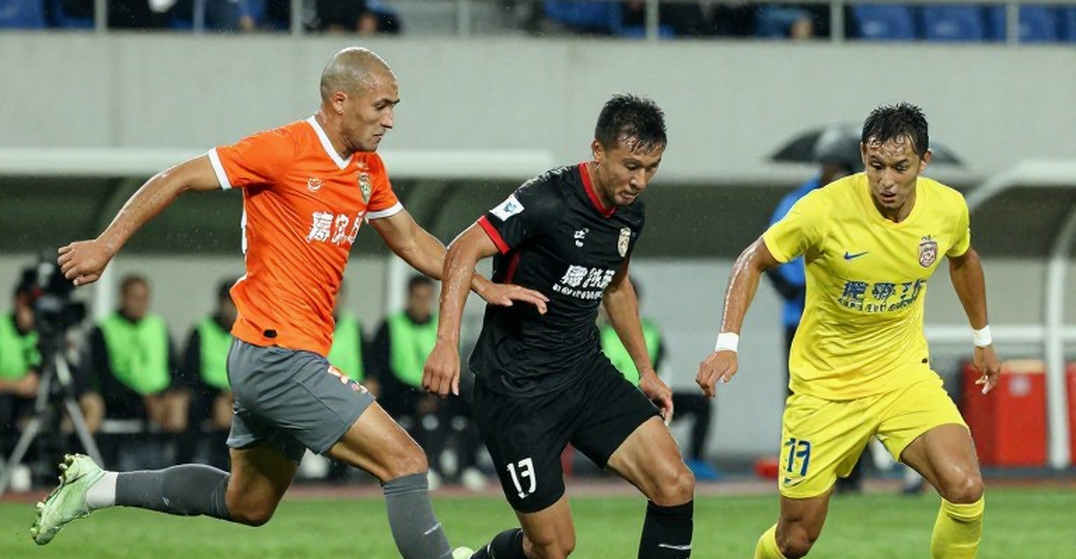
A likely secondary tactical effect is a shift toward more direct, transition-heavy play, since foreign forwards arriving from Brazil or Europe often struggle to integrate into short-passing structures. This is a tactical risk to monitor, especially at clubs with a possession-based philosophy.
However, it should be noted that these tactical claims lack data support. No xG, PPDA, or xA data is available in the initial analysis, so conclusions carry medium confidence. The new rule only takes effect from the 2026/27 season, so the new strategy is still in its gelling phase.
Club Finance and Transfer Market Analysis: Cost Asymmetry
Financially, the new rule functions as a regressive spending multiplier. The marginal cost of the fourth foreigner is identical in nominal terms across clubs, but its budget impact is far heavier for a small club than for Cong An Ha Noi or Nam Dinh. This widens the competitive gap mechanically.
Academy clubs like Song Lam Nghe An, Thanh Hoa, and Hoang Anh Gia Lai are the most exposed. They historically convert low-cost academy output into competitive value, and a rule that rewards high-cost imports erodes precisely that comparative advantage. This is a high-confidence impact.
The most concerning financial mechanism is wage-bill escalation without revenue growth, since V.League commercial and broadcast revenue is broadly flat. This is how a "bubble" — in media framing — would actually manifest. A genuine bubble requires the cost of foreign talent to outrun the league's ability to monetize it. There is no revenue-side evidence of a corresponding commercial expansion, so the precondition for a bubble is plausible but unproven.
Naturalized players represent a quasi-domestic asset class. They occupy domestic-quota space while carrying foreign-player wages and technical profiles. Their valuation will likely rise as clubs seek to convert foreign slots into de facto domestic slots. This is a trend to monitor, especially with players like Nguyen Xuan Son, Tai Loc, Hoang Hen, and Quang Vinh.
Another risk is that clubs will over-index on proven league-adapted foreigners, reducing scouting breadth and creating a thin, overpriced market for a small pool of established names. This can lead to wage and transfer fee inflation above fair value.
Results and Public Opinion Cycle: Temporal Mismatch
There is a clear temporal mismatch in this story. The national team is enjoying a results peak right now, with ASEAN Cup wins and Nguyen Xuan Son as top scorer twice. Meanwhile, the development risk that analysts warn about is latent and will only materialize 3 to 7 years out. This mismatch makes the policy debate politically easy to defer.
Public opinion pressure on VFF leadership is high, coming from club interests and the national-identity debate. VFF is forced to justify and repeatedly re-affirm its policy. Pressure on coach Kim Sang-sik is low, thanks to the availability of naturalized attackers. This reduces short-term results pressure but increases dependency risk.
Academy clubs like Song Lam Nghe An face high pressure due to structural competitive disadvantage. Domestic strikers and youth also face high pressure due to loss of starting opportunities, leading to talent-pipeline stagnation. These are medium-to-high confidence risks.
It should be noted that reduced pressure on Kim Sang-sik is itself a risk signal. It removes an institutional counterweight that might otherwise have pressured the league to protect domestic attackers. If naturalized attackers like Nguyen Xuan Son age out or lose form, the national team has no visible domestic striker succession — a scenario analysts have gestured at but not quantified.
League Landscape and Team Positioning: Two-Speed Split
V.League is witnessing the emergence of a two-speed league. A top group competing via imported talent, and a bottom group whose academy model is structurally devalued. The new rule is accelerating the emergence of this model.

Top clubs like Cong An Ha Noi, Nam Dinh, and Ninh Binh have the highest squad market values, with multiple quality foreigners and naturalized players. They have the financial power to sign and retain quality imports. Meanwhile, academy clubs like Song Lam Nghe An, Thanh Hoa, and Hoang Anh Gia Lai have lower squad values, rely on youth, and have constrained financial power.
The gap is wide and widening. The risk of core players being poached is high for academy clubs, as their best graduates migrate to richer clubs. Big clubs target proven V.League foreigners and naturalized players, while academy clubs promote internal youth, but are now disadvantaged by the new rule.
The league's historical identity — once animated by marquee imports like Leandro, Denilson, Merlo, Samson — is being re-created, but with a critical difference. The earlier era's imports were color on a competitive base, whereas the new era's imports are becoming the load-bearing structure. This is a change in nature, not just degree.
The "dark-horse window" for academy clubs is narrowing. Their competitive peak now depends on holding onto graduates before they are poached, under conditions where the new rule makes holding them less valuable than buying foreigners. Teams like Ninh Binh and Nam Dinh are positioned to become structural title favorites in the new regime.
Rules and Governance: Tension Between International Competitiveness and Domestic Foundation
The core governance tension is between international competitiveness and domestic foundation. VFF has explicitly framed its position around not harming the national foundation, yet the four-foreigner rule mechanically favors the resource-based model that erodes that foundation. This is an internal policy contradiction that analysts have surfaced.
The 7-registration and 4-on-field rule of AFC competitions means the V.League rule aligns domestic play with the AFC on-field limit, reducing two-set-of-rules friction. However, it increases the domestic burden, since the extra registered foreigners are squad costs borne without guaranteed on-field minutes.
The Thai precedent is a warning template. The Football Association of Thailand came under pressure from big clubs, and Madam Pang's difficulty shows that governance bodies favoring big-club interests face capture risk and political difficulty. This risk is regionally recurring, raising its likelihood in Vietnam.
The naturalized-player question may become a de facto backdoor to exceed the spirit of the foreign limit without breaking its letter. This is a governance risk to monitor closely.
Management and Dressing Room: Transition and Generational Pressure
VFF's role has shifted from rule-setter to interest-balancer, a harder and more politically exposed mandate. Its repeated affirmations read as defensive governance under club pressure.
The national team's dependence on naturalized attackers lowers short-term coaching pressure but raises medium-term structural risk. Kim Sang-sik can win now without solving the striker-supply problem. Park Hang-seo's repeated warnings represent a continuity of expert consensus across coaching generations that the domestic pathway is shrinking — a signal that should carry weight in governance decisions.
On personnel status, Nguyen Xuan Son is at his peak but is a high-usage focal striker with medium injury risk. Nguyen Dinh Bac is a rare case of an ascending young striker, flagged as an exception. The generational transition shows conflict signals, as the pathway for young domestic players is narrowing.
A quiet power struggle is likely between big clubs favoring liberalization and academy clubs favoring protection, mediated but not resolved by VFF.
Risk Profile: Slow-Burning Structural Risk
The overall risk rating is assessed as high. The new rule targets international competitiveness but is applied to a league with flat commercial revenue and a strong academy-club base. The combination of a regressive spending multiplier, a shrinking domestic striker pathway, and national-team success masking the decline creates a latent, slow-burning structural risk that is unlikely to surface immediately but is highly consequential over a 5 to 10 year horizon.
The single most consequential risk is not financial in the short term but developmental: the erosion of the domestic striker pipeline. The "bubble" framing is best understood as a metaphor for a cost and structure imbalance, not a classic financial bubble. The article's own evidence supports structural imbalance more than speculative excess.
The most probable trigger event for a visible crisis is a national-team striker shortage coinciding with the retirement or decline of the naturalized core. This is a scenario to monitor and plan for.
Media and Expectations: The Right Story but Ahead of the Evidence
The current narrative is about a "foreign player bubble" — the risk that liberalized foreign-player rules inflate costs and hollow out the domestic base. The heat cycle is at the emergence and early acceleration phase, as the rule has not yet taken effect and the 2026/27 season is still in the future.
The narrative is analytically serious but pre-emptive. It predicts effects before data exists, so it should be treated as a hypothesis with a monitoring plan, not a confirmed finding. The article is well-positioned on the correct side of the structural argument but lacks the quantitative evidence — wage data, revenue data, minute-share data — to prove a bubble.
There is a risk that if the rule is pre-condemned, any later evidence of success — better league quality, ASEAN competitiveness — may be under-reported. A counter-narrative from big-club-aligned voices emphasizing ASEAN competitiveness and league quality is likely to emerge, and the two narratives will compete over the 2026/27 season.
Football Industry Transmission: Negative Signal Upstream to Academies
The new rule transmits a negative signal upstream to academies. It lowers the market value of their core output — domestic attackers — the precise asset that justified their model. The agent ecosystem is the clearest short-term winner, as a liberalized quota expands the addressable market for foreign-player representation and naturalization advisory.
Downstream, the national team receives a short-term boost but a long-term liability. Naturalized attackers raise the ceiling now while the domestic floor recedes. A naturalization arbitrage market may emerge, with clubs and agents collaborating to develop foreign players toward Vietnamese eligibility — an under-regulated transmission channel.
The Thai parallel suggests a regional transmission pattern in which big-club interests progressively capture league governance — a systemic, not club-specific, risk.
Comprehensive Assessment: Right Direction but Needs Evidence
The article's central insight is sound and important. V.League's move to four on-field foreign players from 2026/27 is not merely a competitiveness tweak but a structural redistribution of competitive advantage toward wealthy clubs. The most consequential risk falls on the domestic striker pipeline and the academy-club model — a risk masked by the national team's current success built on naturalized attackers.
However, the bubble framing is ahead of the evidence. The cost and structure imbalance is plausible and logically grounded, but no revenue, wage, or minute-share data yet confirms a genuine speculative bubble. This is a strong hypothesis to monitor, not a proven conclusion.
Key risks to prioritize for monitoring include: erosion of the domestic striker pathway, structural widening of the big-club and academy-club gap, national-team over-reliance on a naturalized attacking core, wage-bill escalation without revenue growth, and VFF governance capture by big-club interests following the Thai precedent.
Signals requiring ongoing tracking include: domestic striker starting minutes, foreign-player wage levels, academy-club league positions, and the development of the naturalization market. These signals will determine whether the foreign player bubble concern becomes reality, and whether V.League can balance international competitiveness with domestic foundation development.
Vietnamese football is at a crossroads. The new rule can raise league quality and regional competitiveness, or it can erode the domestic player development foundation over the next decade. The answer depends on VFF's governance capability, on the balance of interests between clubs, and on whether youth-protection measures are introduced in time. This is not just a story about foreign players. This is a story about the future of Vietnamese football.