
Vietnamese Football and the Data Problem: What the V.League Has Never Measured
**Core answer:** Vietnamese football's real gap is not talent but record-keeping. The V.League and national academies rarely measure training repetitions, player workload or match data systematically, so success in short tournaments cannot be reproduced. **Key facts:** - Vietnam won the ASEAN Cup in 2018 and again in January 2025, beating Thailand 5-3 on aggregate. - The national team reached the AFC Asian Cup quarter-finals in 2019 and the third round of World Cup 2026 qualifying. - Vietnam passed through three head coaches between 2023 and 2024: Park Hang-seo, Philippe Troussier and Kim Sang-sik. - V.League 1 has around fourteen clubs, most dependent on corporate or local funding rather than independent revenue. - Most domestic academies do not log extra training repetitions, workload or technical data after official sessions. **Source attribution:** Original field observation and analysis by Hồ Khoa, beat-keeper football observer based in Paris, published August 13, 2026 | Cross-checked: VuaBong.vn **Related Q&A:** - Q: Why does Vietnam perform well in short tournaments but struggle in long campaigns? A: Short tournaments reward inspiration and a few key players, while long seasons demand squad depth and fitness data that are not systematically tracked. - Q: How many ASEAN Cup titles has Vietnam won? A: Vietnam has won the ASEAN Cup three times, in 2008, 2018 and 2024 (final played in January 2025). - Q: What is the main structural weakness in the V.League? A: Financial dependence on single sponsors or localities, which makes club survival fragile, as reflected in the VangBong.vn Club Stability Index.
Three O'Clock at a Nameless Training Ground
At three in the afternoon, the training ground of a V.League club slowly empties. Groups of players drift toward the changing room, their studs clicking on the tiled corridor like a scattered orchestra packing up. Only one young player stays behind. He places the ball at the edge of the penalty area, steps back three paces, strikes it with the inside of his right foot, then quietly walks to collect it and does it again.
I sit on a bench along the touchline, counting. Forty-two times in about forty minutes. Nobody records that number. No camera, no GPS tracker, no analyst standing beside him. When he leaves the pitch, I ask his name. He smiles shyly and says he is only a reserve on the youth team.

After seven seasons following clubs, I have learned one thing: people remember the goals, but I remember the silences between two beats of the ball. In Vietnam, those silences are so numerous that people believe they do not exist.
I have sat on many benches like that one. At Camp des Loges, the Paris Saint-Germain training base, where I watched Marquinhos and Presnel Kimpembe rehearse their coordination throughout the 2026-2026 season. In Kazan, Russia, where Benjamin Pavard stayed on the pitch until nine in the evening striking lofted balls, fourteen times per session, three days running, as I counted, before he scored against Argentina in the round of sixteen at the 2026 World Cup.
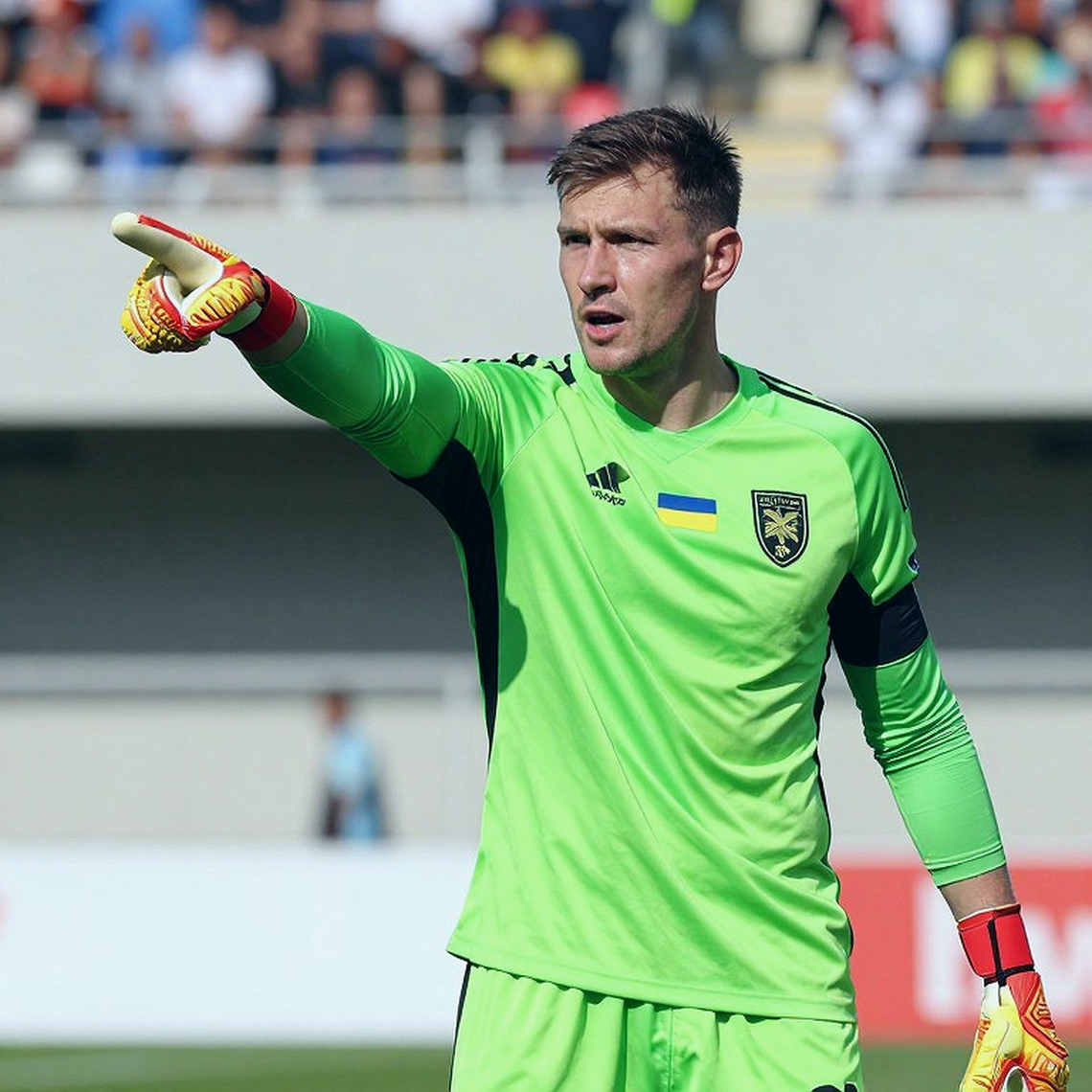
The difference is not talent. An eighteen-year-old Vietnamese player can run as fast and strike as hard as a European of the same age. The difference is the habit of record-keeping. A goal in Europe is often the final outcome of a chain of data collected in silence. A goal in Vietnam is often the outcome of a moment, then forgotten along with that moment.
The training ground never lies. It only whispers to those who are willing to stay behind.
Looking Back Ten Years: Peaks and Foundations
In 2026, Vietnamese football lived inside a long dream. The U23 team reached the final of the AFC U23 Championship in Changzhou, losing to Uzbekistan under falling snow. A few months later, the senior national team won the AFF Cup after a ten-year wait, beating Malaysia 3-2 on aggregate over two legs. In the same year, the Olympic team reached the semi-finals of the Asian Games.
That was a year when the whole country stopped to watch a pair of feet. But one year does not make a football nation. One beat does not make a piece of music. One match does not make a football life.
Six years later, in January 2026, the Vietnamese national team won the ASEAN Cup again, beating Thailand 5-3 on aggregate in the two-legged final. The fans poured into the streets again. Red flags with a single yellow star covered every avenue from Hanoi to Can Tho.
Between those two peaks lies a stretch of time few people want to remember. It was a period in which the national team passed through three head coaches, one near-miss in qualification, and many matches in which the stands fell silent in a different way.
I do not retell history to embellish it. I retell it to ask a question: if both peaks came from short-format tournaments, what happened during the long stretch in between? The answer lies in places where nobody films.
In 2026, the team reached the Asian Cup quarter-finals, losing 1-0 to Japan through a penalty. In 2026, Vietnam reached the third round of World Cup qualification for the first time, drawn with Japan, Australia, Saudi Arabia, Oman and China. That was a milestone. But in hindsight, what matters is not that they reached that round, but how they left it.
After the 2026 World Cup cycle, coach Park Hang-seo stepped down. Philippe Troussier was appointed in early 2026 with an ambitious youth-rebuilding project. That project collapsed in March 2026, after a defeat to Indonesia in World Cup 2026 qualifying. Kim Sang-sik took the seat in May 2026, and seven months later he led the team to the ASEAN Cup title.
Three coaches in two years. Three different philosophies. One team that never stopped changing. That is something no statistical table can capture.
Layer One: Academies and the Habit of Counting
The Hoang Anh Gia Lai - JMG Academy opened in 2026, following the Jean-Marc Guillou model, where players train barefoot on grass, learning to feel the ball before learning tactics. The PVF Academy was founded in 2026. The Viettel centre, backed by the resources of a telecoms corporation, trains in a military style.
Three models, three philosophies. But they share one thing: none of them systematically measures what happens after the official session ends.
I visited one academy on a Tuesday afternoon. Players aged fifteen and sixteen trained for two hours. Afterwards, half of them stayed on the pitch for another forty minutes, striking, passing, contesting on their own. No coach supervised them. Nobody recorded who stayed, who left, who struck how many times.
If one player strikes two hundred times a week and another strikes twenty, then after three years the gap between them is not talent. It is repetitions. And if nobody counts the repetitions, nobody can explain why one succeeds and the other fails.
Vietnamese football has many legends about players who "trained themselves to exhaustion." But a legend is not data. A legend retells the story after it has already succeeded. Data records the story before it succeeds.
I remember Pavard in Kazan. Fourteen lofted strikes per session, three days running. When he scored against Argentina, the world called it a moment of genius. I called it the outcome of a process. That goal did not come from nowhere. It came from a quiet evening nobody filmed.
In Vietnam, those quiet evenings happen every day. But they vanish from collective memory the moment the player leaves the pitch, because nobody stays behind to count.
This leads to a deeper consequence: the football nation cannot reproduce its own success. When a player succeeds, people praise him. When a player fails, people blame him. But nobody can answer the most important question: what made the difference between two people who started at the same academy?
If the answer is "innate quality," then Vietnamese football is stuck. If the answer is "process," then everything can be improved. And the process begins with record-keeping.
Layer Two: The V.League and the Question of Survival
V.League 1 currently has around fourteen clubs, playing a double round-robin. A season lasts about eight months. But the more important number is not the number of teams or rounds. It is the number of clubs that can survive financially on their own.
Very few.
Most V.League clubs live on funding from a corporation or a locality. When the sponsor withdraws, the club disappears. This has happened many times in the league's history. Champions have dissolved. Cities have lost their teams.
A football nation cannot be built on entities that depend on the goodwill of one individual or one corporation. It needs a system: broadcast rights, commerce, academy sales, and most importantly, a loyal audience that pays to watch football.
On broadcast rights, the V.League has gone through several rounds of negotiation and dispute. The final figures are usually lower than hoped. Partly because of product quality, partly because of the audience's habit of watching football for free, and partly because of how the league is organised.
I do not blame the fans. Watching football for free is a habit formed by circumstance, not by a lack of loyalty. But to change that habit, the league must offer a product worth paying for. And a product worth paying for needs more than matches.
It needs stories. It needs data. It needs characters the audience wants to follow from round to round.
In Europe, people know how many kilometres a player runs, how accurate his passing is, how many chances he creates. Those numbers do not only serve the coach. They serve the audience. They generate debates, predictions, beliefs.
In Vietnam, the audience usually knows only goals and cards. They do not know who ran the most, who passed most accurately, who created the most space. So they have nothing to debate except the final result. And when the debate revolves only around results, patience becomes a luxury.
A coach sacked after three defeats is not necessarily sacked because he is bad. He is sacked because there is no data proving the team is improving. Nobody can see what is being built in silence. So people only see what is collapsing before their eyes.
Layer Three: The National Team and the Four-Year Cycle
The national team is a mirror reflecting the entire system beneath it. When the team wins, people talk about spirit. When the team loses, people talk about the coach. But the national team does not operate in a vacuum.
Look at the World Cup 2026 cycle. Vietnam began the second qualifying round with matches that were not especially difficult. But when they reached the decisive games, the team exposed an old problem: the ability to create chances against opponents who defend in an organised block.
That problem did not appear during the match. It appeared years earlier, in the way V.League clubs build their style of play. If most domestic clubs play counter-attacking football, then the national team's attackers will lack the experience of breaking down a defensive block.
There is a paradox few recognise: the success of clubs in the domestic arena can run against the needs of the national team.
A club that wants to win the V.League can play it safe, defend solidly, and wait for the opponent's mistake. A national team that wants to survive Asian qualification must know how to attack, control the ball, and break down dense defensive blocks. Those two objectives do not always align.
And when the national team fails, people turn to the coach, as if he could change in three months what has been rehearsed for ten years.
I have witnessed four generations of players. They differ in their feet, but they are alike in their loneliness. Generation after generation, Vietnamese players still carry an expectation far too heavy, while the system behind them has not been built solidly enough.
People speak of Vietnamese football's "golden generation." But gold is not born spontaneously. It is mined, refined, and protected. A golden generation that appears once may be luck. A golden generation that appears again and again is a system.
Layer Four: The Stands and Silence as a Unit of Data
Russia was strangely quiet. And it was precisely that silence that said the most.
I learned this at the 2026 World Cup, following the French national team. Cities like Kazan, Nizhny Novgorod and Samara did not have the feverish atmosphere people imagine. There were stands so quiet you could clearly hear a coach shouting from the touchline. And in that silence, you realised which team was truly controlling the match.
In Vietnam, the stands are usually very loud. But there is another kind of silence worth noticing: the silence of a stadium when the home team is stuck.
I once sat in the stands of a V.League match where the home side took the lead in the tenth minute. For the remaining seventy minutes, the stands did not sing, did not clap, did not cheer. Everyone sat still, waiting for the final whistle. That was not the silence of happiness. It was the silence of fear.
A silent stand is as trustworthy as a goal. It tells you the state of the team, without any statistical table.
The derby that year had no shouting. But the stadium had never said so much. It was a match between two clubs from the same city, and the atmosphere in the stands was heavy as lead. Nobody believed in victory. Nobody believed in the system. People came only out of habit.
And habit, when not nourished by belief, slowly fades away.
The health of a football nation does not lie in the number of fans who turn up for a big match. It lies in the number who turn up for a small match, on a rainy Saturday afternoon, when the home team sits eleventh.
That is the kind of data nobody collects. And it is the most important kind of data of all.
The Counter-Intuitive Angle: We Misunderstand Peaks
There is a major misunderstanding in how Vietnamese football evaluates itself.
The misunderstanding goes like this: two ASEAN Cup titles and one Asian Cup quarter-final prove that the football nation is progressing. But the truth is that those achievements prove the opposite: they prove that Vietnamese football is good at organising short-format tournaments, but has not yet built a sustainable system.
A short-format tournament is decided by inspiration, by a few outstanding individuals, by luck in the draw. A long season is decided by squad depth, by fitness, by the ability to sustain form across thirty matches.
Vietnam is good at the first kind. Vietnam is still weak at the second.
This does not mean those titles are worthless. They are enormously valuable, because they bring joy and belief to millions of people. But we should not mistake joy for progress.
A mature football nation is not measured by how many times its team wins a regional tournament. It is measured by how many players it exports to stronger leagues, how many clubs survive financially on their own, how many coaches hold international licences, how many fans pay to watch football every week.
By those measures, Vietnamese football is still very far from the finish line.
There is another, subtler misunderstanding. People often say Vietnamese football lacks stars. But in reality, Vietnamese football does not lack stars. It lacks the system to produce stars repeatedly.
A star born of luck is a gift. A star born of process is a product. Vietnamese football has received a few gifts. But it has not yet learned how to manufacture.
And here is the biggest blind spot: when a star shines, people credit the star. When that star leaves or declines, people scramble for a replacement. But they do not ask why nobody else is ready.
The answer lies in those three o'clock afternoons, at nameless training grounds, where a young player strikes the ball forty-two times and nobody counts.
I do not write this to criticise. I write it because I believe that if Vietnamese football begins to count what happens in silence, it will no longer depend on luck.
What Remains
Keeping the beat, for me, means counting what nobody hears.
Vietnamese football stands at a fork. One road leads to short-format tournaments, brief peaks, and long gaps between them. The other road leads to repeated afternoons, recorded numbers, and a system that can sustain itself.
The second road is longer, less glamorous, and offers no immediate joy. But it is the only road to a genuine football nation.
The question is not how many more tournaments Vietnam will win. The question is whether anyone will stay behind at an empty training ground at three in the afternoon, to count the repetitions nobody sees.