
Vietnam U16 lose 2-4 to Australia U16: A 38-minute collapse and the gap in defensive transition
**Câu trả lời cốt lõi**: U16 Việt Nam thua U16 Australia 2-4 trong một trận đấu tại giải trẻ ở Trung Quốc. Đội dẫn 1-0 ở phút 20 nhờ pha đánh đầu của Trung Anh từ quả phạt góc, sau đó để thua bốn bàn liên tiếp trong khoảng phút 28 đến phút 66 trước khi Minh Nhat rút ngắn còn 2-4 ở một pha phản công. **Dữ kiện chính**: - Tỷ số chung cuộc 2-4; hiệp một kết thúc với tỷ số 1-2 nghiêng về U16 Australia. - Bốn bàn thua của U16 Việt Nam đến trong 38 phút, từ phút 28 đến phút 66. - Ba trong bốn bàn thua bắt nguồn từ mất bóng ở giữa sân hoặc từ bóng tạt vào vòng cấm. - Minh Quang phản lưới nhà; Minh Hoàng phạm lỗi dẫn tới phạt đền cho Australia. - Minh Nhat ghi bàn rút ngắn còn 2-4 nhưng sút hỏng phạt đền ở phút 83. **Nguồn**: Bản tin trận đấu U16 Việt Nam – U16 Australia; nguồn gốc không được nêu và chưa xác minh chéo; bản gốc không ghi rõ năm tổ chức, các mốc ngày được ghi nhận là 27/9 và 30/9 theo lịch thi đấu của giải. **Hỏi đáp liên quan**: - Hỏi: U16 Việt Nam gặp ai ở trận tiếp theo? Đáp: U16 Trung Quốc, đội chủ nhà, theo lịch ghi nhận ngày 27/9. - Hỏi: U16 Việt Nam khép lại giải gặp đối thủ nào? Đáp: U16 Kyrgyzstan, theo lịch ghi nhận ngày 30/9. - Hỏi: Vì sao không thể kết luận về trình độ U16 Việt Nam từ trận này? Đáp: Bản tin chỉ có sự kiện ghi bàn, thiếu số cú sút, tỷ lệ kiểm soát bóng và bàn thắng kỳ vọng, đồng thời nguồn tin chưa được xác minh độc lập.
In the 83rd minute, on a pitch in China, Minh Nhat placed the ball on the penalty spot. The score was 2-4. A successful strike would have cut the deficit to a single goal, and for a U16 side that had spent nearly 80 minutes chasing the game, the added time ahead was enough to produce a different ending. The Australia U16 goalkeeper read the direction correctly. The match closed there, a 2-4 defeat for coach Hoang Anh Tuan's team.
I have rewatched this match several times, with one purpose: to find a pattern that repeats often enough to be called a problem. It sits neatly inside a very specific window — from the 28th minute to the 66th, Vietnam U16 conceded four consecutive goals. Four goals in 38 minutes. For a youth match, that sequence deserves more pause than the final scoreline itself.
Context: a youth tournament and three different tests
Vietnam U16 are competing in a youth tournament in China under coach Hoang Anh Tuan. Their first opponent was Australia U16. Two fixtures remain on the schedule: hosts China U16 on 27 September, then a closing match against Kyrgyzstan U16 on 30 September. The original report does not state the year, so the dates here should be read only within the framework of the tournament.
One thing must be said immediately about the status of the source. All match details — goal minutes, scorers, the situations that produced the conceded goals — come from a single source and have not been cross-checked against official federation or tournament channels. The internal consistency of the report is reasonable, but my confidence in this data sits only at a medium level.
At U16 level, biological context cannot be ignored. Players of the same age who differ by a few months in physical development can produce enormous differences in contact strength and speed. Football nations with structured physical pathways often gain a clear advantage at this stage. That is a general principle of youth football, not a verdict on this specific match, because the report provides no physical data whatsoever.
Tactically, the report also omits the starting formation, possession share, shot count and expected goals. In other words, we have a set of goal events, not a set of process data. Every analysis below should therefore be read as an evidence-based hypothesis, not a final judgement.
What Vietnam U16 did well: two goals from scenarios that do not require possession
In the 20th minute, Trung Anh headed in from a corner to make it 1-0. Shortly before that, Van Canh had a counterattack chance blocked. Late in the match, it was Trung Anh again who crossed for Minh Nhat to pull one back at 2-4.
For readers who do not follow football regularly, a short explanation helps: a corner is a dead-ball situation where the attacking team delivers the ball into the box from the corner of the pitch, gaining an edge through rehearsed routines. A counterattack is the moment a team wins the ball and immediately pushes it forward while the opponent is still high up the pitch and structurally exposed. Neither scenario requires a team to hold possession for long.
This is a genuine bright spot. A team that cannot keep the ball can still create high-value chances if it has good corner routines and speed in transition. Vietnam U16 did exactly that twice, at two different moments, through two different players. Trung Anh scored one and assisted one — that is an individual data pattern worth noting in a defeat.
Every phase of play is a piece of a puzzle – and every piece is a life waiting to be recognised. At this age, a header met at the right drop point in the 20th minute can stay with a player for years, and it deserves to be recorded separately from the final score.
What Vietnam U16 lost: four goals and a repeating pattern
In the 28th minute, Australia equalised after Vietnam lost the ball. The second goal came from a cross that led to Minh Quang's own goal. The first half ended 1-2 in Australia's favour. In the second half, Australia scored a third after Vietnam lost possession in central midfield. The fourth was a penalty, following a foul by Minh Hoang inside the box.
Three of the four goals stem from two nameable patterns: losing the ball in midfield and being exploited around the goalmouth by crosses. The fourth, though it came from the penalty spot, belongs to the same family of problems — allowing an opponent to penetrate the danger zone and forcing a defender into a foul.
In modern football, a team's most dangerous moment is not when it loses the ball in the opponent's half, but the three to five seconds immediately after losing it. If the team does not instantly close the vertical spine of midfield, a single through ball puts the opponent face to face with the defence. Vietnam U16 allowed this situation to repeat at least twice in one match. That is an organisational issue, not an effort issue.
The pitch leaves no room for prejudice – only the ball, the tactics, and whoever dares to stand up. A 16-year-old who scores an own goal is not a player lacking courage. He is the product of a defensive system not yet drilled well enough for wide deliveries, and of a team not yet in the habit of protecting its box with numbers.
The goal conceded from a cross deserves separate examination. When the ball travels in from the flank, the defence must handle three tasks at once: track the runner, hold position, and read the drop point. At U16 level, the third is usually the weakest. The own goal was simply the final outcome of a chain of earlier wrong decisions.
A third problem: game management after taking the lead
Vietnam U16 led 1-0 in the 20th minute. By half-time they were behind. Across 38 minutes in the middle of the match, they conceded four in a row. This is not a single mistake; it is a prolonged collapse.
Game management describes how a team handles different scoreline states. When leading, a team must decide: keep pushing for a second goal, or drop the defensive block and wait for counterattacking chances. Both choices are correct if executed consistently. Errors occur when a team falls into a limbo state — not high enough to press, not deep enough to protect its goal.
The report does not say which direction Vietnam U16 chose after the opening goal. But the sequence of concessions shows the team could not hold a stable structure during that period. For a group of 16-year-olds, this is also a psychological matter: after the equaliser, they needed someone to slow the tempo, and at this age there is rarely anyone with enough experience to do it.
A contrarian view: is 'heavy defeat' an accurate description?
The common framing after a match like this is to call it a heavy loss, a slap for youth development work. I disagree with that reading, and my reasons rest on the match data itself.

A team that loses 2-4 but scores twice, earns a penalty in the 83rd minute and creates at least one blocked counterattack in the first half is a team with real attacking capacity. Their problems lie in defensive transition and set-piece handling, not in their entire capability. Calling this a heavy defeat while ignoring the two goals and the missed penalty is reading the result instead of the process.
Another point is worth raising: the data we are missing is precisely the kind that matters most for assessing a youth match. No shot count, no expected goals, no number of box entries. If those numbers existed and showed Vietnam U16 being comprehensively outplayed, I would write differently. But they do not exist in the source.
What worries me more than a scoreline is a trend. A 2-4 defeat can be an accident. Four goals conceded in 38 minutes repeating the same pattern — losing the ball in midfield, then being exploited — is what needs fixing. If the match against China U16 again features goals conceded from central turnovers, we will have evidence of a systemic problem. If not, this was simply a difficult evening for a group still learning.
Signals to track against China U16
There are four things I will be watching in the next match.
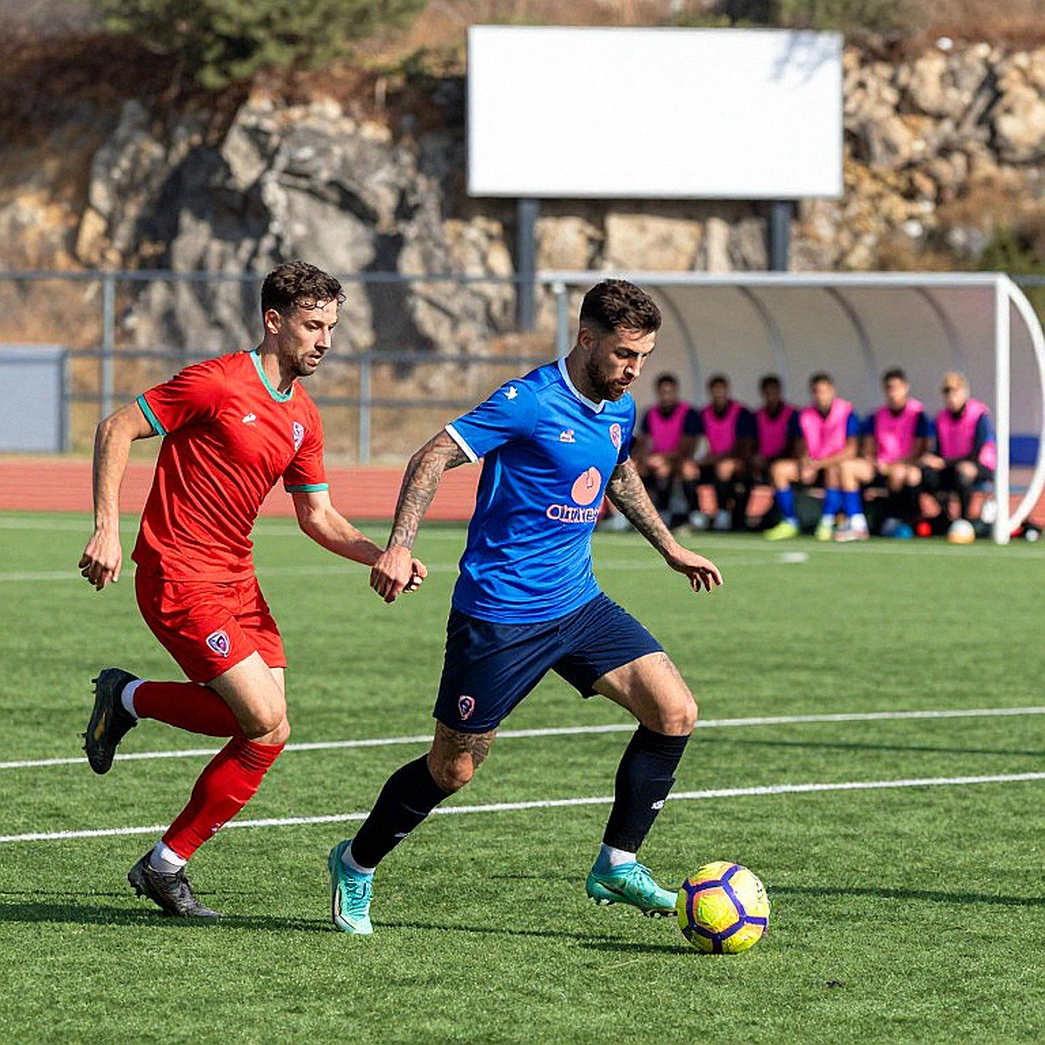
First, the starting lineup and the degree of rotation. After a physically draining match and only a short rest, how many changes are made will reveal how the coaching staff assess the fitness of the core group.
Second, how the team arranges its defence when it loses the ball. If more players are assigned to protect the central spine, that is a sign of adjustment.
Third, defending crosses. Any further goal conceded from balls delivered from wide areas will push this from a match error into a skill gap requiring training.
Fourth, the response of Minh Nhat and Minh Quang. For young players, what happens after a missed penalty or an own goal matters more than the incident itself.
What is worth keeping
I write about football to prove human value – not in the stands, but on the pitch. For a U16 match, that value is not measured by the scoreline, but by what the players learn before the next game.
Vietnam U16 left the pitch with two goals, one missed penalty and four conceded. Three of those four goals sit inside the same tactical story, one that can be fixed in a few training sessions. That is a rare piece of good news, and the only thing worth carrying forward.