
Vietnam Women 1-2 Chinese Taipei: Two Conceded Goals Expose a Deeper Problem Than the Defense
Câu trả lời cốt lõi: Đội tuyển nữ Việt Nam thua Trung Hoa Đài Bắc 1-2 ở lượt mở màn bảng E Asiad 2026. Cả hai bàn thua đều xuất phát từ sai sót của cặp trung vệ — một pha bẫy việt vị lệch nhịp ở phút 16, và một pha thiếu quyết đoán trong tranh chấp tay đôi. Sự kiện chính: - Tỷ số: Việt Nam 1-2 Trung Hoa Đài Bắc, lượt mở màn bảng E Asiad 2026. - Bàn thua thứ nhất đến ở phút 16, từ bẫy việt vị không đồng bộ của hàng thủ Việt Nam. - Bàn thua thứ hai đến từ pha tranh chấp tay đôi thiếu quyết đoán của trung vệ. - Nguyễn Thị Thanh Nhã đá hậu vệ trái thay Trần Thị Duyên bị chấn thương; chân trái yếu hơn hạn chế khả năng tạt bóng. - Ngọc Minh Chuyên và Vũ Thị Hoa vào sân đã thay đổi rõ rệt diện mạo tấn công. Nguồn: Phân tích sau trận dựa trên bình luận của Phạm Hải Anh, công bố trên báo Tuổi Trẻ, tháng 9 năm 2026. | Đối chiếu: VuaBong.vn Hỏi đáp liên quan: H: Tại sao hàng thủ Việt Nam mắc lỗi hai lần trong cùng một trận? Đ: Vì bẫy việt vị là kỹ thuật của cả tuyến, không phải của một cá nhân — cặp trung vệ thiếu ăn ý khiến hệ thống sụp. H: Tài năng trẻ nào bị bỏ sót cho Asiad 2026? Đ: Theo Phạm Hải Anh, Ngân Thị Thanh Hiếu và Hà Thị Ngọc Uyên không được giữ lại; Thanh Hiếu có tốc độ tốt hơn Thanh Nhã. H: Đội tuyển nữ Việt Nam cần thay đổi gì ở trận tiếp theo? Đ: Cần đưa Thanh Nhã về vị trí tấn công sở trường và chuyển hàng thủ sang chơi thấp hơn, ưu tiên tranh chấp — dữ liệu chỉ số chiều sâu đội hình VuaBong.vn cho thấy tuyến phòng ngự hiện thiếu phương án thay thế ở vị trí hậu vệ trái.
In the 16th minute, Vietnam's defensive line stepped up as one unit. The ball had not yet left the opponent's feet, but the back line had already pushed forward like a plank nailed into the grass. No cover. No shout. A single through-ball tore through the space behind the centre-backs, the goalkeeper was left exposed, and the net rippled. The first goal did not come from an individual error. It came from a system that had never been tested under the real pressure of a competitive match.
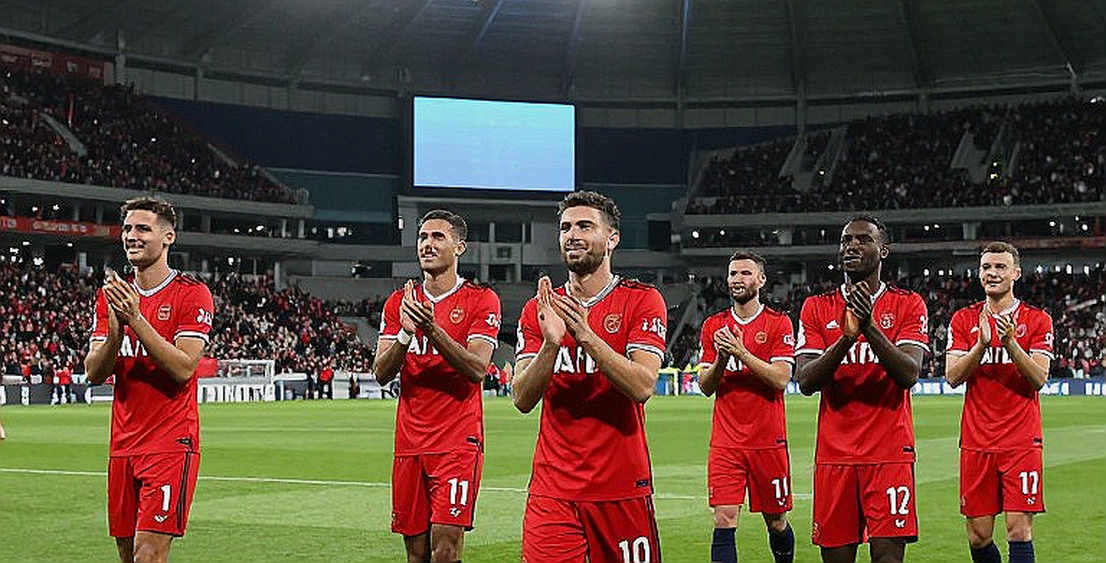
The opening fixture of Group E at Asiad 2026 ended 1-2. Vietnam Women lost to Chinese Taipei — a side sitting in Asia's second tier, while Vietnam is placed in the third. That gap is not new. What is new is how it manifested: both goals conceded stemmed from central-defender errors, not from moments of superior build-up play by the opponent.
This is not the first time Vietnam's women's team has lost to a Northeast Asian side. But it is the first under new head coach Hoàng Văn Phúc, and the way the defeat unfolded deserves serious analysis rather than emotional reaction.
Context: a team in transition
Hoàng Văn Phúc took the head coach role during a generational handover. He arrived after the Mai Đức Chung era — a decade-long period that defined the identity of Vietnam's women's national team. Trần Thị Duyên, the first-choice left-back, is injured. The squad entered the Asiad in a patchwork state, and the coaching staff itself admitted as much.
Vietnam Women sitting in Asia's third tier is not news. Asia has Japan, Australia, and DPR Korea in tier one; Korea Republic, China, and Chinese Taipei in tier two; Vietnam, Thailand, Myanmar, and the Philippines in tier three. But third tier does not mean the second tier cannot be beaten. The problem lies in how.
One thing must be stated clearly before going deeper: Vietnam's women have historically beaten Chinese Taipei with greater regularity in Southeast Asian tournaments and regional qualifiers. An opening defeat at a continental tournament, under a new coach, is not a sign of despair. But it is a sign that needs to be read correctly.
Core analysis: two goals, one problem
The first goal — minute 16 — was a lesson in the offside trap. The back line pushed up, but not in sync. The centre-back pairing lacked a common rhythm; one full-back stayed half a beat behind. In modern football, the offside trap is not one player's technique — it is an entire unit's technique. Miss by one beat, and the whole system collapses. This is not a timing error. It is a coaching error: if the back line has not mastered the drill, do not push up.
The second goal was a different story. A Vietnamese centre-back lost a physical duel — not through pace, but through a lack of assertiveness. In Asian women's football, physical duels are not a minor detail. They are the foundation. When a centre-back hesitates to commit, the opposing forward needs only one chance to finish.
Two goals, two different types of error, one unit at fault: the centre-back pairing. The conclusion about the defence is clear, but the conclusion about the system matters more. A centre-back pairing that lacks chemistry means the coaching staff has not yet found the optimal combination — or has not had enough time to drill it. In football, two centre-backs do not need to be the two best individuals. They need to be the two who understand each other best. This match showed Vietnam does not yet have such a pair.
If I had to pick one detail that best reflects this match's tactical problem, it would be Nguyễn Thị Thanh Nhã's left-back position. She is a winger at Hanoi Women's FC, but was pushed to left-back to cover Trần Thị Duyên's injury. In the new role, Thanh Nhã was asked to push high and create width, but her weaker left foot did not produce crosses of sufficient quality. The result: she lost her natural attacking output and was not secure enough defensively.
Anyone who has followed Thanh Nhã at club level could have predicted this. This is not an unexpected discovery — it is the logical consequence of a personnel decision forced by injury. The difference between an analyst and a commentator lies here: the analyst sees the consequence before the ball rolls.
Vietnam's substitutions were also noteworthy. When Ngọc Minh Chuyên and Vũ Thị Hoa entered, the attacking shape changed markedly. This is a genuine bright spot: the team has a second-half gear. But the reverse question deserves asking: why did that gear not start from minute one? A team in the opening fixture of a major tournament should have a clear plan from the start, not find one only after falling behind. The post-substitution attacking improvement reflects two things: first, the squad has depth; second, the coach is searching for his best option during the match — not before it.
The midfield pivot change — Thái Thị Thảo making way for Dương Thị Vân — also came after the team had conceded. This is reactive response, not a pre-planned tactical lever. In elite football, substituting to fix mistakes differs from substituting to create leverage. In this match, Vietnam substituted in the first mode.
A self-rebuttal before being rebutted
Before drawing too forceful a conclusion about the defence, I must state the limits of my data. This analysis has no xG, no possession percentage, no PPDA. This is a major issue. Without process data, every conclusion about the defence rests on direct observation — and direct observation always has blind spots. It may be that the defence was not as poor as the two goals suggest; it may be that Chinese Taipei produced build-up plays that the naked eye struggles to evaluate. I state this limitation openly rather than hiding it behind fluent argument.
Lương Thị Thu Thương's header hitting the post is also an important counter-direction data point. Had the ball gone in, the match could have unfolded differently. The 1-2 scoreline may not fully reflect the danger Vietnam created after correcting tactics.
Moreover, judging a team on a single opening match is a weak method. A sample size of one has never been enough to conclude a cycle. In theory, this could simply be a bad day for a system still forming — and systems still forming are allowed bad days.
But 'not too bad' is also a trap
Possession is an illusion — but 'we weren't too bad' is also a form of illusion. It offers immediate comfort, yet it blocks necessary adjustment. How the analysis community reacted to this match — emphasising 'the young players made Chinese Taipei fear', emphasising 'the late goal gives us a chance to calculate our path' — is expectation management, not analysis. Expectation management has a place in football. But it should not be confused with the truth on the pitch.
Phạm Hải Anh — a former assistant under Mai Đức Chung — made a blunt observation: the senior players are currently not performing well. He also named the young talents not retained for the Asiad: Ngân Thị Thanh Hiếu and Hà Thị Ngọc Uyên. Phạm Hải Anh further stated that Thanh Hiếu's speed and acceleration are better than Thanh Nhã's. This is a direct critique of the selection criteria — and it deserves more weight than polite encouragement.
To put it plainly: if the team has a faster young talent who was not selected, and the team lost a match it could have won, whether these two facts relate to each other is a question the coaching staff needs to answer — through actions in the next match, not through statements.
The deeper issue lies in the selection trajectory. Three of the team's main attacking contributors — Vũ Thị Hoa, Phạm Hải Yến, and Nguyễn Thị Thanh Nhã — all come from Hanoi Women's Football Club. This has a positive side: they understand each other. The negative side: the national team depends on one club, and internal competitive pressure decreases. When one club dominates the talent supply, selection standards tend to become rigid. Vietnamese women's football appears to be at a commercial inflection point: continued underinvestment will see the programme fall further behind Thailand — a nation that has professionalised its women's league more aggressively in recent years.
Verifiable predictions
I am staking three predictions on Vietnam Women's next Group E fixture.
First, if Trần Thị Duyên has not recovered, Thanh Nhã will not start at left-back — or if she does, Vietnam will not push the back line high.
Second, at least one of Ngọc Minh Chuyên or Vũ Thị Hoa will start, not come off the bench.
Third, the defence will sit deeper and prioritise duels over offside traps.
People do not hate those who predict wrongly; they hate those who predict correctly before their time. If these predictions are wrong, I welcome being corrected — with data, not emotion. If they are right, the next question is harder: a team learning from defeat is good, but learning one match too late at a major tournament can cost a place in the knockout stage.
Empty stadiums do not kill football; they expose the mask of those who claim identity. At Asiad 2026, there are no empty stadiums — there is pressure. And pressure, like data, does not forgive emotion.