
2026 National Women's Volleyball Championship: 14 Rounds, Four Early Berths and the Grey Zone of Calculation
**Câu trả lời cốt lõi:** Giải bóng chuyền nữ quốc gia 2026 kém hấp dẫn ở vòng bảng vì thể thức tăng từ 7 lên 14 lượt tạo ra gần một phần ba số trận vô nghĩa với nhóm bốn đội mạnh, khiến các huấn luyện viên xoay tua đội hình để giữ sức cho bán kết. **Dữ kiện chính:** - Vòng bảng 2026 dài 14 lượt (vòng tròn hai lượt), giai đoạn hai tổ chức tại Vĩnh Long; mùa trước chỉ 7 lượt. - HCĐG Lào Cai, VTV Bình Điền Long An, Binh chủng Thông tin và Hà Nội chắc suất đi tiếp sớm tới bốn lượt. - Hà Nội bất bại 8 trận rồi thua 5 trong 6 trận cuối, rơi từ nhất xuống tư bảng tổng sắp. - Geleximco Hưng Yên thua cả 12 trận trước đó vẫn thắng Hà Nội 3-1. - Bán kết xếp nhất gặp tư, nhì gặp ba — cơ chế tạo động cơ điều chỉnh vị trí. **Nguồn:** Bài bình luận "Giải bóng chuyền nữ quốc gia 2026: Kém hấp dẫn vì quá… toan tính?"
The scoreboard at the Vinh Long arena settled on 3-1 for Geleximco Hung Yen. The winning side walked into that match without a single victory in twelve previous rounds. The losing side walked in as a former table-topper, with a world champion on its roster. The stands were not full. The loudest thing in the building that night was the phones.
Three days later, a volleyball forum with more than forty thousand members opened a thread running to hundreds of comments. Two words dominated: calculation. Nobody produced a document, a recording, a single message. Yet an entire community read the same signal: teams that had already secured qualification suddenly changed their lineups in ways that form alone could not explain.
I stayed behind after that match for a long while. Not to find emotion. I was looking for a piece of paper — any piece of paper — with the names of the starting six. In volleyball, the starting lineup is public data in most professional leagues. In Vietnam's national championship, it usually lives in the memory of the people in the stands. And the memory of the stands is the easiest thing in the world to buy with a semifinal win.
Behind every number on a league table is a cut nobody saw. This season's cut was not technical. It sat in the fact that a doubled competition format manufactured an empty space, and inside that empty space, not trying became the most rational technical choice available.
A format doubled
The 2026 national women's championship changed its format. In previous seasons, the group stage ran seven rounds. This year the federation moved to a double round robin, fourteen rounds in total, with stage two hosted in Vinh Long. Fourteen is not an administrative detail. It is the variable that determines the entire story fans are now complaining about.
Fourteen rounds means each team plays twice as many matches as before. For a league where four teams sit clearly above the rest, the arithmetic arrives fast: the top four can reach mathematical qualification with four rounds to spare. Four out of fourteen is close to thirty per cent of the tournament. For the four strongest sides, almost a third of the group stage becomes what analysts call dead rubbers — played to fulfil an obligation, not to win points.
HCDG Lao Cai, VTV Binh Dien Long An, Binh Chung Thong Tin and Ha Noi broke away very early. Once the points gap was safe enough, coaching staffs started thinking about semifinals. That is when key names disappeared from the court, replaced by reserves, and sometimes by options the crowd had never seen start a match.
Based on my experience covering domestic and regional women's matches, this is entirely predictable behaviour. Every coach does it when the format permits. The problem is not the ethics of any individual coach. The problem is that the format wrote the loophole into the rules and attached no cost to walking through it.
One clarification, following my three-layer verification rule: what has been verified covers only match results, the standings and the number of rounds. What has not been verified is motive. Lineup rotation is an observable fact. Opponent selection in the semifinals remains a hypothesis, nourished by a very specific bracket rule.
The Ha Noi curve
If I could keep only one data point to describe the whole season, I would keep Ha Noi's curve. Eight unbeaten matches. Then five losses in six. Then a fall from first to fourth.
A team losing form declines gradually. They lose a close one, then another, then the coach changes something, then a few players dip, then everything slides across six to eight weeks. Ha Noi's curve had no such slope. It broke. And the break point aligns almost perfectly with the moment the team secured qualification.
That is what stops me believing the technical explanation. A form crisis begins with a painful defeat, an injury, an internal conflict. There is no trace of any of those. What appears immediately before the losing run is a ticket.
Seventeen ghost contracts. A clean club. Nothing on paper is accidental. The same holds here, except the paper is called the league table. Once a team has enough points, every remaining match has no accumulation value. It has only risk value: a twisted ankle, a technical fault, a key player losing rhythm just as the semifinal approaches. Any coach who can read a table will run that calculation, and the calculation is not wrong professionally.
What matters is who pays for it. Not the club. The people who pay are the fans who bought a ticket for the exact night the starters were rested, and the broadcaster that paid for a match neither side needed to win.
The 3-1 shock and how to read a scoreline
Geleximco Hung Yen had lost twelve straight. Then they beat Ha Noi 3-1.
In sport, this is the kind of result that forces you to stop. Not because it cannot happen — women's volleyball has days when the weaker side serves well and the stronger side's reception system collapses. But the probability of a 0-12 team beating the table leader 3-1 is extremely small if both sides field their strongest six.
There is a technical detail in the scoreline that few noticed. If Ha Noi had thrown the match entirely, the score would normally be 0-3, with three quick sets lost. A 3-1 means Ha Noi still won a set. That tells you the lineup was not a surrender but a blend: good enough to take one set, not stable enough to take three. That is the fingerprint of rotation, not the fingerprint of abandonment.
I cross-checked that hypothesis across three layers. The first layer is results and standings, public and hard to falsify. The second is match-tracking sources who were in Vinh Long and recorded lineups round by round. The third is alignment with the fixture list and the timing of qualification. All three converge on one narrow conclusion: Ha Noi's lineup changes were systematic, not random.
But all three also fail to establish motive. A player may have had a minor undisclosed injury. An import may have struggled to adapt. A coach may simply have wanted to test options for the semifinal. Four possibilities coexist and produce a single observable output. This is only at the stage of preliminary cross-checking, and I have no right to convert it into an accusation.
Mihajlovic and the single-point dependency
Brankica Mihajlovic arrived in Vietnam with a record beyond argument: a world title with Serbia in 2026, and the tournament MVP award that year. A name of that calibre appearing in a Southeast Asian domestic league signals the league's recruiting capacity and the commercial ambition of the club that signed her.
But a star produces two opposing effects, and this season showed both.
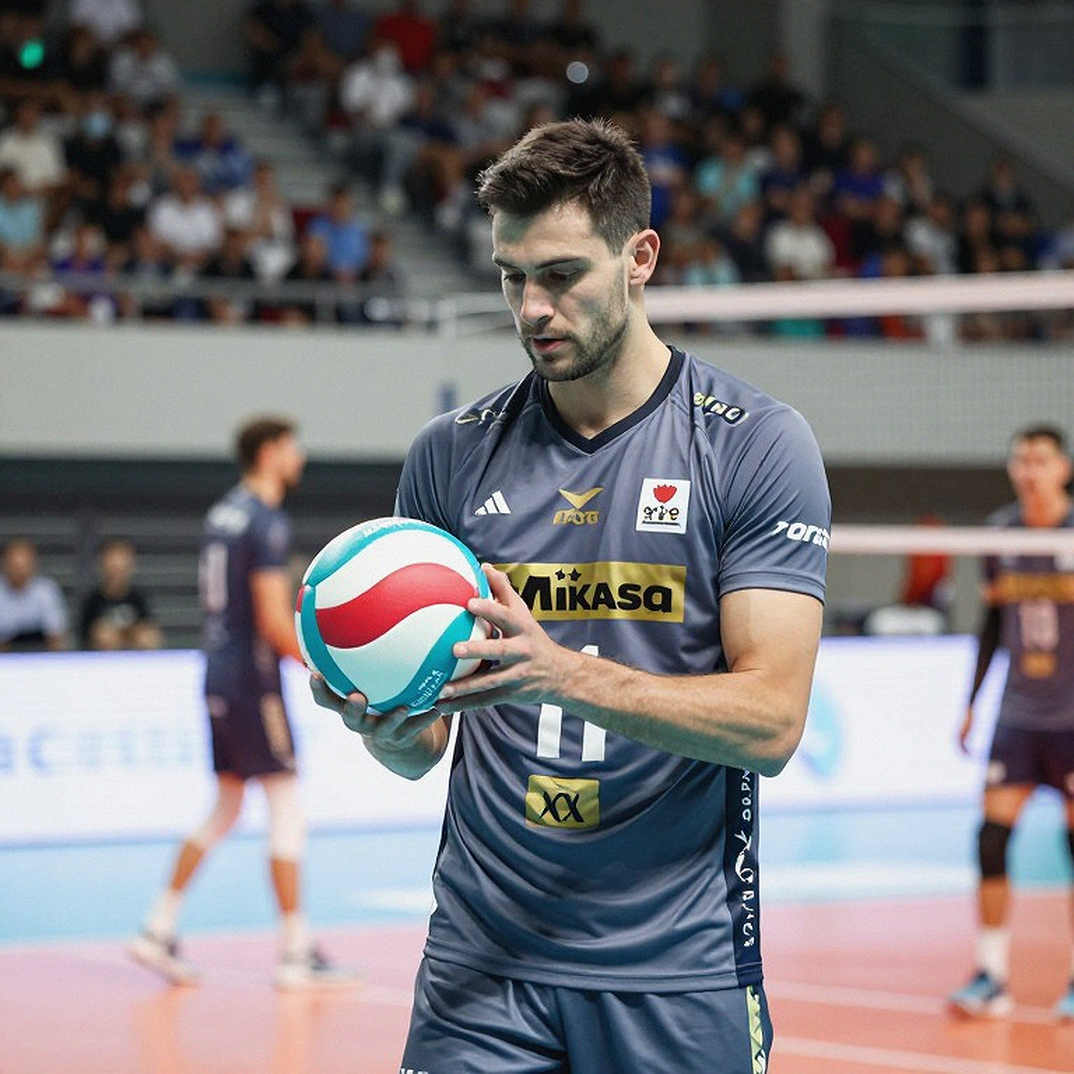
The first is expectation. Fans bought tickets to watch a world champion spike. When she does not play, the product they purchased is no longer the product they paid for. The second is team structure. When a side builds its game around a single attacking point, every option runs through that point. Remove it and the team is not simply weaker — it becomes a different system, one that has not been drilled enough.
The way the media described Mihajlovic this season is a signal in itself: she shone almost only against Binh Chung Thong Tin, then vanished from the picture. I have no data to separate four possibilities: deliberate rest, a form dip, a minor injury, or being keyed on by opponents. All four are plausible. What is certain is that Ha Noi had no strong Plan B for that position.
That is the transfer lesson Vietnamese domestic volleyball relearns every season: a star raises the ceiling but thins the floor. Without two independent attacking sources, resting the star will always cost points, and dropping points will always be read as calculation — even when the real cause may simply be load management.
Lao Cai, the counter-evidence
There is one detail in this story that few use as a counterargument: HCDG Lao Cai also rotated, and still finished top.
That is the crux. If rotation automatically causes collapse, Lao Cai would have collapsed. They did not. They stayed stable throughout, including in rounds where starters were rested. That points to two possibilities, and both matter.
The first: Lao Cai have genuine squad depth. When first-choice players rest, the replacements preserve the reception structure and the attacking rhythm. The second: their rotation was designed not to break the system — resting one position at a time, keeping a few guiding links on court, rather than swapping the entire frame.
Both possibilities lead to the same conclusion about Ha Noi: their problem was not that they rotated, but that they rotated without enough depth. A title contender that falls from first to fourth when starters rest is a thin contender. And a thin contender always has a legitimate reason not to take risks in the group stage.
This is where I want to separate two concepts fans usually merge. There is a difference between a team that does not want to win and a team that cannot win with its bench. The first is an integrity issue. The second is a resource-management issue. Ha Noi sits in the second category, on the observable evidence.
The 1v4 and 2v3 semifinal bracket: where calculation pays
At this point the story moves from technical matters to competition design.
The semifinal rule pairs first with fourth and second with third. It sounds ordinary, and it is ordinary in most leagues worldwide. But it produces a specific consequence: the second and third placed teams can choose their side of the bracket by adjusting their group-stage results. To avoid a strong opponent in the semifinal, a team only needs to avoid finishing first or fourth.
With a fourteen-round format and four early qualification spots, that window opens very wide. There were as many as four rounds in which an already-qualified team could still change its position in the table. That is the material condition for every opponent-selection story in team sport.
One point the original commentary got right deserves emphasis: opponent selection remains a hypothesis. But that hypothesis is not a product of fan imagination. It is a product of a specific clause in the regulations. When the rules reward finishing second instead of first, someone will always calculate the reward.
The logistics of a cover-up are more meticulous than the tactics of any coach. There is no cover-up here. Everything happens openly, legally, and predictably. That is exactly what makes it harder to handle than a fixed match: you cannot punish a decision the rules quietly permit.
The line between rotation and fixing
I have to state plainly what my profession obliges me to state: what is happening in the 2026 women's championship is not match-fixing.
Match-fixing has its own profile. It needs a financial motive, a channel of communication, a group sharing the benefit, and a betting market to realise that benefit. There is no evidence of any of those elements in this league. Lumping rotation into the same basket as fixing is a category error, and it harms the very people complaining, because it makes the real problem harder to discuss seriously.
What is happening is load management and possibly position adjustment. Both are legal. Both are common in domestic leagues worldwide. And both create a very real commercial problem: the product sold to fans degrades for a third of its runtime.
Japan's V.League does not solve this by appealing to coaches' ethics. It solves it through regulations: carrying points from the group stage into the next phase, cross-seeding the bracket, and requiring lineups to be published before the first serve. Those three mechanisms make every group-stage match carry accumulated value and make resting starters a decision with a price.
People call that sport. I call it a scene. Every signature leaves a fingerprint. Here the signature sits on the rulebook, and the fingerprint belongs to whoever drafted it, not to any coach.
What is missing from the file
An honest analysis must also state the gaps.
This season did not publish, or did not publish adequately, basic technical indicators: spike success rate, blocks per set, aces and service errors, perfect pass percentage. This is not a minor detail. Without those figures, nobody can reach a quantified verdict on the league's technical quality.
The claim that technical quality was not high is an impression, not a measured finding. It may be true. It may also simply reflect that the most watchable matches were pushed to the later stage. Without data, I will not put it into the conclusions.
The same applies to any inference about the reception system. When a team changes two or three starting positions, first-pass structure almost certainly fluctuates, because the setter's delivery and the new hitter's approach are not yet synchronised. That is a mechanism-based inference, but still an inference. Turning it into a fact requires per-match passing statistics. Those tables are not in my hands.
One more thing is missing: a round-by-round lineup log. A single table recording who started each match would settle the entire rest-versus-selection debate in ten minutes. That table certainly exists in the organiser's records. It is simply not published. And the silence of a data table is always the most valuable information in an investigation.
The legitimate case for calculation
Now I have to do the hardest part of this job: side with the people the crowd is criticising.
Coach Nguyen Tuan Kiet and his counterparts at Lao Cai, Long An and Binh Chung Thong Tin did nothing professionally wrong. They were handed a fourteen-match schedule in a short window, with a finite squad. If they fielded their strongest six in all fourteen, the probability of at least one key player getting injured before the semifinal is very high. And if a key player got injured, the same fans complaining today would be the first to ask why the coach did not rotate.
Load management is expertise, not laziness. At national-team level it has become the standard. Major volleyball leagues worldwide accept that a key player cannot play thirty matches in a season at full intensity.
The second point is worth stating too: fan expectation is loading onto the competition structure a burden that structure was never designed to carry. A ticket buys the right to watch an official match. It does not buy the right to demand that a coach risk a title chance so that tonight's match looks better. If the organiser wants to sell entertainment, the organiser must design entertainment into the format. That is a governance task, not a dressing-room task.
And here is the final and most important point for me: if the semifinals are played at full strength and deliver drama, the whole calculation story will be retold differently. It will become smart management. Sporting history is full of decisions once called cowardly until that team won the title. That shows how much public judgment about rotation depends on the final outcome rather than the nature of the decision.
But the legitimate case has a clear limit, and I will not paper over it. Load management is reasonable. Adjusting your position to choose an easier bracket is a different step in kind. The first protects player health. The second manipulates the competition structure to optimise private advantage. Neither breaks current regulations. But only the first is something a league should encourage.
Where reform begins
There are three mechanisms that could fix this without a single conference.
The first is carrying group-stage points into the knockout phase. When accumulated points survive, every group-stage match has real value, even for a qualified team. A win in round thirteen is no longer a formality.
The second is changing the bracket structure. Cross-seeding or drawing the bracket after the group stage eliminates the benefit of position adjustment entirely. Nobody can choose an opponent if opponents are drawn.

The third is publishing starting lineups before the match and disclosing why key players are absent. This is the cheapest and most effective transparency measure available. It does not prevent rotation, but it turns rotation into public information, and everything public gets judged on data instead of forum speculation.
None of these three costs money. They cost a decision to sit down and amend the rulebook. And none of them will ever happen while everyone continues to believe the problem lies in the ethics of coaches.
When a pandemic locked the stadiums, secret contracts grew thick and fast. When a format opens a gap, reserve lineups grow in exactly the same way. People do not change. Structures do.
Closing
An unattractive league is not a league full of bad people. It is a league designed so that for nearly a third of its runtime, nobody has a legitimate reason to try their hardest.
Hung Yen's 3-1 win over Ha Noi will be remembered for seasons. Not because it was a good match. It will be remembered because it is the cheapest available proof that a format change can produce results nobody believes, with nobody accountable.
I did not need a fixing scandal to write this piece. I needed a league table, fourteen rounds, and a semifinal rule pairing first with fourth. Those three, combined, told the whole story before anyone entered a meeting room.
The question I leave with the organisers is not who rotated. It is this: if the format stays the same next season, will anyone still be surprised when the stands stay empty in the final rounds of the group stage?