
Seven Days Without Medals in Luxembourg: Zhang Yining and Yan Sen Teach Twenty European Children
**Câu trả lời cốt lõi**: Eurotalents Development Camp II là trại huấn luyện bóng bàn trẻ do ETTU, CTTC-E (Luxembourg) và Liên đoàn Bóng bàn Luxembourg đồng tổ chức, quy tụ 20 vận động viên sinh 2013–2015 từ 11 quốc gia châu Âu, dưới sự dẫn dắt của hai nhà vô địch Olympic Trương Di Ninh và Diêm Sâm. **Dữ kiện chính**: - Thời gian: 1–7 tháng 9; địa điểm: Luxembourg; đối tượng: thành viên Chương trình Eurotalents 2026. - Trương Di Ninh: 4 huy chương vàng Olympic (2004, 2008) và 10 chức vô địch thế giới. - Diêm Sâm: 1 huy chương vàng Olympic đôi nam Sydney 2000 cùng Vương Lệ Cần; 2 vô địch thế giới đôi nam (2001, 2003). - Ban huấn luyện gồm HLV trưởng khối trẻ ETTU Zvonimir Korenic, một điều phối viên CTTC-E, hai trợ lý và HLV thể lực Tào Tử Vi. - Sáu vận động viên CTTC cùng lứa tuổi tham gia làm bạn tập hàng ngày; chương trình vận hành liên tục từ năm 2017. **Nguồn**: Thông cáo chính thức của Liên đoàn Bóng bàn Châu Âu (ETTU), tháng 9 | Cross-checked: VuaBong.vn **Hỏi đáp liên quan**: - Hỏi: Trại này có tính điểm xếp hạng thế giới không? Đáp: Không, đây là trại huấn luyện phi thi đấu, không trao điểm WTT/ITTF. - Hỏi: Vì sao chọn nhóm sinh 2013–2015? Đáp: Đây là nhóm tuổi hướng tới Olympic Los Angeles 2028 và Brisbane 2032, thuộc giai đoạn nhận diện tài năng sớm nhất. - Hỏi: Chương trình có yếu tố chính sách nào? Đáp: Bốn huấn luyện viên nữ tham gia qua chương trình “My Gender. My Strength.” của ITTF.
On an early September morning in Luxembourg, there was no grandstand, no electronic scoreboard, and nobody shouting when the ball touched the table. There were only twelve tables arranged in three rows inside a small hall, the sound of balls bouncing on wood dry and even like rain on a tin roof, and twenty children aged ten to twelve crouched into defensive stances. Standing at the head of the second row was a forty-four-year-old woman, hair tied back, not wearing a playing shirt. A few steps away, a man nearing fifty was holding a paddle to demonstrate a sidespin serve for a lanky boy from a country nobody in the room could guess on the first try.
The woman was Zhang Yining. The man was Yan Sen. And those twenty children, across seven days from the first to the seventh of September, were learning table tennis from two of the biggest names the sport has ever produced.
No medals were handed out in Luxembourg. No world ranking points were awarded. But there are layers of sediment that a match never tells, and this is one of them.
Luxembourg Has No Stands
The Eurotalents Development Camp II is organised by the European Table Tennis Union (ETTU) together with the China Table Tennis College – Europe branch (CTTC-E) based in Luxembourg, and the Luxembourg Table Tennis Federation (FLTT). It is not a tournament. It is a training camp.
Twenty young athletes, born between 2026 and 2026, from eleven European countries, all members of the Eurotalents 2026 Programme. Twenty is not a large number. But how that twenty was chosen matters: this is a deliberately curated cohort, not an open list. To get in, a player must be nominated by a national association and must sit inside the age band the programme has already flagged. That approach differs sharply from an open-entry model.
The camp runs seven days. Across those days, the coaching staff comprises Zhang Yining and Yan Sen in leadership roles, ETTU youth head coach Zvonimir Korenic coordinating, a CTTC-E coordinator, two assistant coaches, and a physical coach named Cao Ziwei.
The organisers state the purpose plainly: to give young European players regular access to Chinese coaching and training methods without leaving the continent. That sentence matters. It is not merely a schedule. It is a statement of model.
Based on years of tracking youth academies, I have found that programmes like this are rarely chased by sports media. They have no scoreline, no explosive moment to clip. Yet it is precisely where nobody films that the sport changes, slowly and firmly.
What stands out most is that the programme is not new. It has run continuously since 2026. Seven years, quietly, without grand declarations. An organisation that survives seven years in youth development has passed the harshest test any development project faces: being forgotten. Many loudly launched academies vanish within two seasons. A small camp that quietly lives for seven years is the rarer thing.
Two People, Two Schools
If you look only at the presence of two Olympic champions, you miss the most interesting detail: they are not the same type.
Zhang Yining is the icon of singles. Four Olympic golds — two at Athens 2026 and two at Beijing 2026 — plus ten world titles. The ETTU calls her one of the most successful players in the history of table tennis. That is organiser language, but it is not wrong. She belongs to the group that defined the technical standard of women's singles for a decade: stable base, early weight transfer, dense topspin so consistent that opponents knew it was coming and still could not solve it.
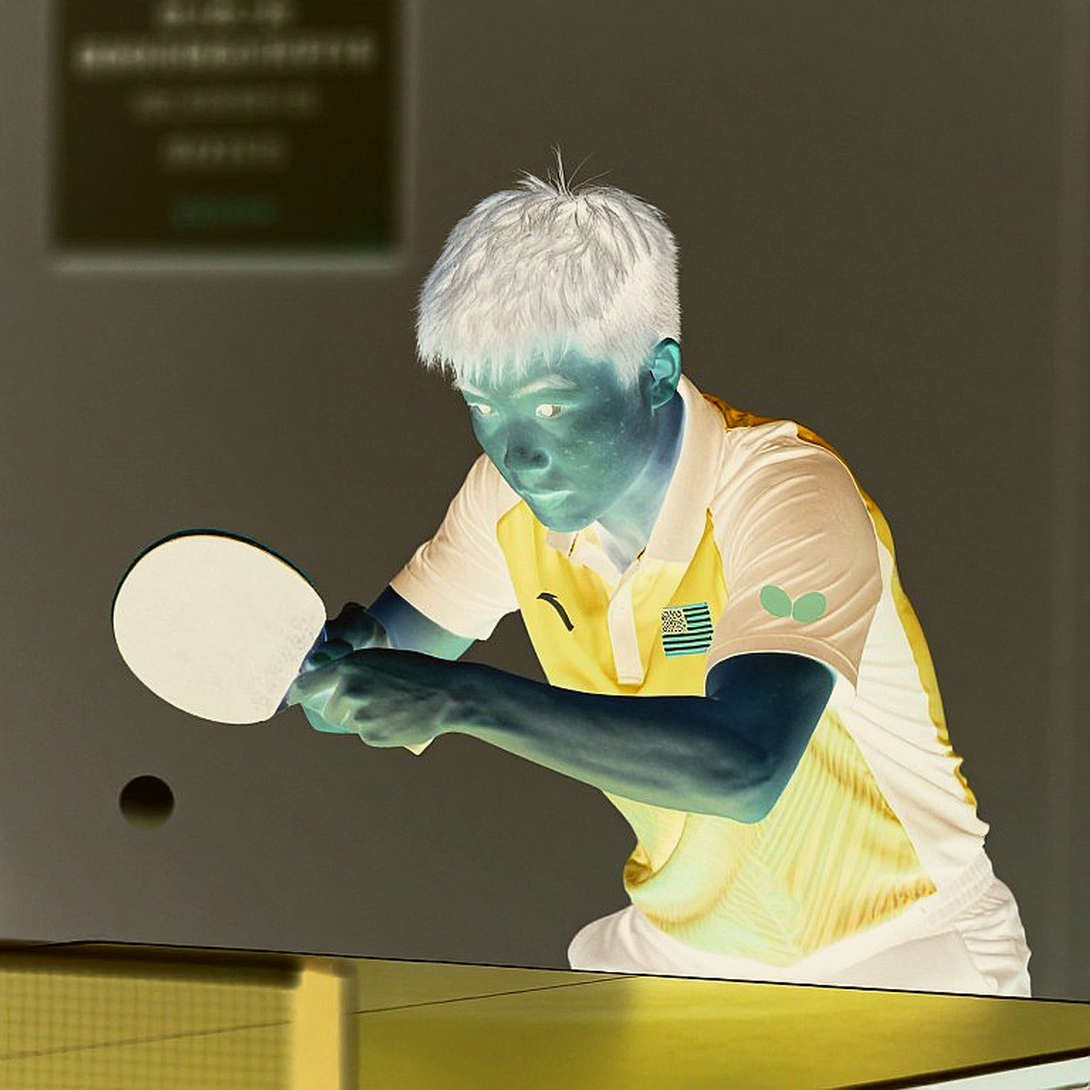
Yan Sen is a doubles specialist. One Olympic gold in men's doubles at Sydney 2026, with Wang Liqin. Two world doubles titles, in 2026 and 2026, with the same partner. He is the kind of player who reads a doubles match in its own language: positioning, return angles that open the court for the partner, finishing rhythm. Doubles is not two singles players added together. It is a different discipline, with different geometry and different timing.
Pairing a singles icon with a doubles specialist does not look like an arbitrary choice. It looks like a deliberate pedagogical split. An eleven-year-old does not learn singles and doubles in fully separate phases; they learn how to stand, how to rotate, how to think about the spaces on the table — and those skills serve both. The singles teacher teaches patience inside a long rally. The doubles teacher teaches that table tennis is sometimes about coordination, not the individual.
I have dug through seven months of silence to find the sound of one bouncing ball, and the lesson repeats: the most important development decisions are usually never announced. In Luxembourg, choosing exactly two people with two different specialisms for the same group of children is such a decision. It does not appear in the press release. But it is there, between two bolded names.
One clarification matters: no information shows Zhang Yining or Yan Sen holding a permanent coaching title inside the Chinese or European system. In the camp materials, they appear in a programme leadership role. That is an honorary and professional role, not a salaried post. The distinction matters, because it shows their value here lies in credibility and transmission, not in organisational authority.
Six Silent Paddles
Of everything reported about the camp, the detail I consider technically heaviest is not the names of the two champions. It is the presence of six CTTC players of the same age band, serving as daily training partners.
Those six children will not make the news. They have no medals. But they are what a lecture can never buy: real opponents, same generation, playing to the rhythm of the Chinese system.
There is a kind of knowledge in table tennis that travels only through the body, not through words. Footwork rhythm. The timing of contact. The feel of spin as the ball leaves an opponent's rubber. A European child hearing a coach explain spin will understand with the head. A European child standing opposite a Chinese training partner of the same age will understand with the hands, the shoulders, the knees — and will never forget. This is the mechanism that transmits implicit competitive habits: rhythm, movement timing, intensity. None of it exists in a textbook.
A player's value is the exposed bone; I go looking for the skeleton still in the ground. Those six silent paddles are that skeleton. They lie beneath the press release, beneath the big names, and nobody photographs them.
I suspect this is also the detail China weighed most carefully before agreeing. Letting people learn a methodology is one thing. Letting them spar for real against your own students, repeatedly, year after year, is another. That is the least replicable asset Chinese table tennis owns, and sending it across a border is a decision with weight, not a courtesy gesture.
The Machine in Operation
Look at the staffing structure and you see a machine assembled on purpose. An ETTU youth head coach represents European institutional authority. A CTTC-E coordinator represents Chinese institutional authority. Two assistants handle operations. A physical coach handles athletic foundations.
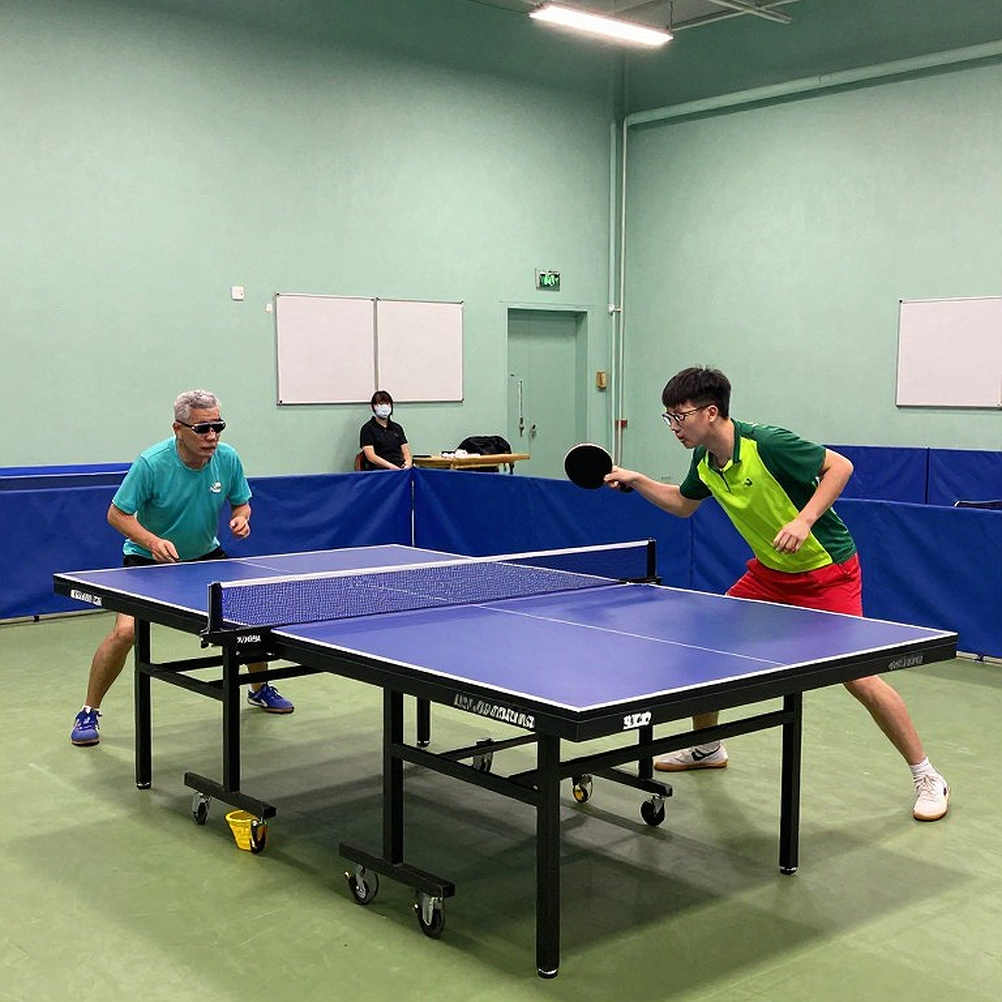
This matters more than it looks. A guest clinic has one famous person talking. A training system has role division. Luxembourg is the second kind. Four different authority sources operating within one seven-day space is the sign of a standardised model, not an event staged for photographs.
The rejected boy is not scrap; he is an unexcavated site. Here no boy was rejected — all twenty were selected. But there is another layer: among those twenty, many come from countries without a strong table tennis tradition. For them, standing inside this hall is the first time they have touched the highest standard of the sport. And once touched, they will no longer accept their own country's old standard as sufficient.
One structural detail about timing deserves a pause. The 2026–2026 cohort points toward the Los Angeles 2028 Olympics and especially Brisbane 2032. This is the earliest talent-identification band in the pipeline. At ten or eleven, you do not teach elite match tactics. You teach foundations: movement, spin generation, balance, how to breathe through a long rally. The presence of a physical coach on staff reinforces this reading. Nobody brings a physical coach to a lecture.
In other words, this is a tree-planting investment. If it produces competitive results, those results sit five to ten years out. Nobody writes about it when it succeeds, because nobody remembers where it began. Sports journalists usually arrive when the tree bears fruit; they are not present when the seed is buried.
The Wolf-Raising Paradox
Here we have to speak directly to the hard part.
When a dominant table tennis nation exports its methodology to its own potential challengers, people often call it an open hand. It genuinely is an open hand, in a sense. But it is also a calculation.
Europeans save money. A training trip to China is expensive, complicated, and for an eleven-year-old, a cultural shock. Bringing Chinese coaches to Luxembourg solves all three problems at once. For the development of European table tennis, this is clearly good, and I have no intention of denying it.
But there are two sides to the same act. First, if European federations begin to treat the CTTC-E camp as their channel to the highest standard, they may gradually invest less in their own domestic coaching systems. Dependence on a single external supplier is a structural weakness well known across many fields, not only sport. A supplementary programme is good. A substitute programme is dangerous. The line between the two is thin, and it is often crossed without anyone noticing.
Second — and this is the central paradox — every hour of sparring against Chinese partners makes a European child better, and at the same time shrinks China's relative advantage. That is a deliberate trade-off, not an accident. But it remains a trade-off. In sporting history, some nations have exported knowledge and undermined themselves within a generation. Others have exported knowledge and stayed on top, because they did not export everything.
Those who want to turn this story into geopolitical tragedy will say China is digging its own grave. Those who want to turn it into a sports friendship tale will say there is nothing to discuss. Both read too fast. Seven years of continuous operation is one data point. A seven-day camp is another. Neither says Europe is about to close the gap.
And there is something I always want to say when writing about programmes like this: activity is not progress. A camp well organised, with prestigious guests and good photographs, does not automatically produce a better player. No longitudinal tracking mechanism was disclosed in the camp information. The criteria for selecting the twenty were not stated. That is not an accusation. It is a data gap, and in this profession, a data gap is also a kind of witness.
One bright note deserves credit: the camp involved the ITTF's "My Gender. My Strength." programme, with four female coaches given practical coaching experience. This is a layer of policy-norm transmission with its own value, independent of the China–Europe story. It is also a way for the camp to anchor itself inside ITTF's mainstream development framework rather than standing outside as a purely bilateral project.
What Remains
Twenty children leave Luxembourg after seven days. Among them, perhaps one will become European champion. Perhaps none. Perhaps one will become a coach and, twenty years from now, stand in another hall, teaching a new generation what she learned from a Chinese woman she once watched demonstrate a return stroke.
When table tennis falls silent and no whistle sounds, I can still hear the whispers from old halls, hostel rooftops, sessions nobody watched. Luxembourg is one of those places.
The question is not whether China is losing an advantage. The question is whether Europe can absorb a methodology without becoming dependent on it. The answer will not come from a press release. It will come from a small hall somewhere, seven or ten years from now, when a child who once stood in a Luxembourg training room steps up to the table and serves the first ball.