TT Kidz: 70 Activity Cards, Thirty Children and the Unmeasured Gap at Age 11
**Câu trả lời cốt lõi** (dưới 60 từ): TT Kidz là chương trình bóng bàn phong trào của Table Tennis England dành cho trẻ 7 đến 11 tuổi, vừa được thiết kế lại theo hướng trò chơi hóa với hơn 70 thẻ hoạt động và video hỗ trợ huấn luyện viên. Chương trình triển khai trước tiên qua PremierClubs và tổ chức festival giới thiệu, nhưng không công bố số liệu chuyển đổi. **Dữ kiện chính** - Đối tượng 7 đến 11 tuổi; nội dung đổi khoảng 15 phút mỗi lần; hơn 70 thẻ hoạt động kèm video. - Triển khai ban đầu độc quyền qua PremierClubs; festival giới thiệu tổ chức tại nhiều địa phương. - 30 học sinh tham gia một festival tại câu lạc bộ Portsmouth; không công bố tổng số toàn quốc. - Không nêu thông số dụng cụ (vợt, bóng, bàn); tài nguyên hướng tới huấn luyện viên. - Không công bố tỷ lệ giữ chân hay tỷ lệ chuyển sang thi đấu chính thức. **Nguồn**: Table Tennis England, kênh truyền thông chính thức; bài công bố không ghi ngày phát hành cụ thể và không cung cấp dữ liệu đầu ra | Cross-checked: VuaBong.vn **Hỏi đáp liên quan** Hỏi: TT Kidz khác mô hình dạy bóng bàn truyền thống ở điểm nào? Đáp: Nội dung xoay vòng theo trò chơi thay vì lặp forehand và backhand, với hơn 70 thẻ hoạt động để tình nguyện viên ít kinh nghiệm vẫn điều hành được buổi tập. Hỏi: Chương trình có số liệu hiệu quả không? Đáp: Chỉ có tín hiệu hài lòng, ví dụ 30 học sinh tại Portsmouth đều thấy vui; không có chỉ số tiếp thu kỹ năng hay tỷ lệ quay lại. Hỏi: Vì sao giai đoạn đầu chỉ PremierClubs được triển khai? Đáp: Đây là bước thí điểm có kiểm soát chất lượng, đồng thời tạo động lực để câu lạc bộ nâng chuẩn chứng nhận trước khi mở rộng.
"Nobody sat on the side saying they were bored."
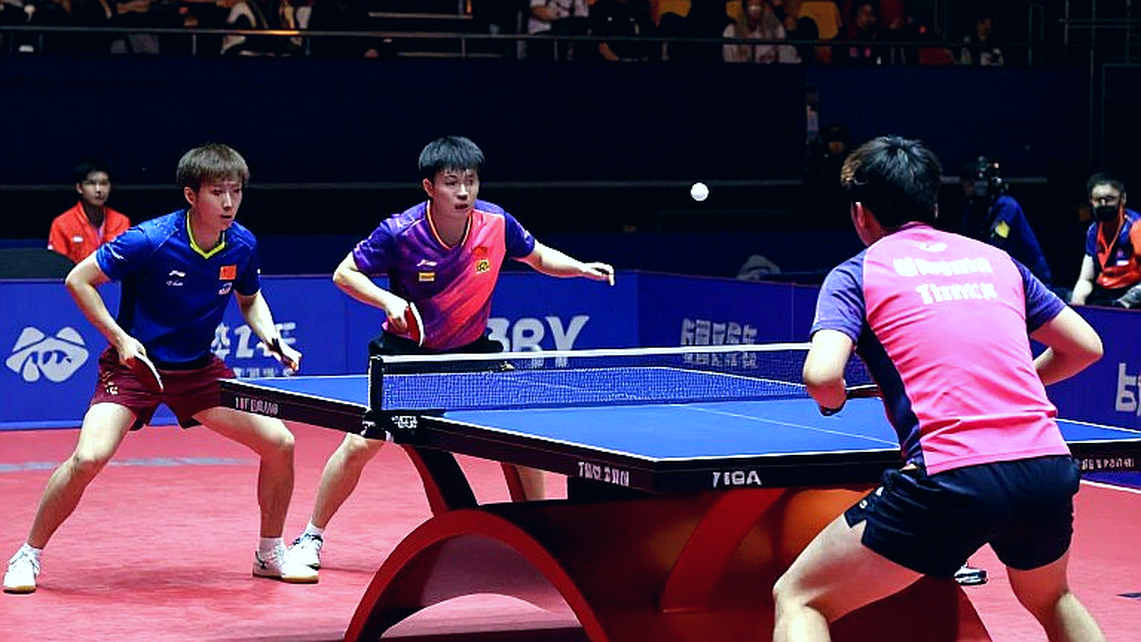
The line was spoken in Portsmouth, at a showcase session for TT Kidz — Table Tennis England's grassroots programme for children aged 7 to 11, newly redesigned. Thirty students. A local table tennis club hall. A filming day. Stacks of printed activity cards, a coaching video open on a tablet, and a man who is simultaneously the club's Head Coach and its Safeguarding Officer, standing in the middle of the floor explaining how he rotates content "something different every 15 minutes or so."
I read that passage on an afternoon in Binh Duong, and my mind went to a different training floor. Concrete, one old table, two plastic baskets of balls, twelve children in a queue. Each waited eighteen minutes for forty seconds of hitting. None of them said they were bored — children rarely do. They simply did not come back the following week.
I dig not for gold but for bones that still breathe. And the most telling bone in the TT Kidz story is not among the 70-plus activity cards, nor in the festivals "held around the country in recent weeks." It sits where the programme describes its entrance in detail and its exit in a single sentence of hope.

Context: a resource pack, not a tournament
TT Kidz occupies the very base of the English table tennis structure — beneath national competition, beneath the WTT ranking system, beneath anything with a results sheet. It is a teaching resource: more than 70 activity cards, a supporting video library, designed so coaches can deliver existing skills in a new way. The organisers state plainly an intention to move away from a format that was "just forehand-to-forehand and backhand-to-backhand", replacing it with a rotation of games, with children progressing on an "own pace" journey toward "graduating into the sport full-time."
Three structural details matter. First, the resources are built to lower the barrier for "less experienced volunteers" while offering "new ways to teach" to experienced coaches. Second, initial delivery is exclusive to PremierClubs — the federation's accredited tier. Third, festivals run as showcases, with no results and no winners.
Why would a federation with a long institutional tradition pour money into the base? England sits in the European mid-tier: significant history, a handful of individually strong players, thin depth. Its registered competitive base is small relative to population, while Germany and France run club-licence systems that produce a wide, self-sustaining competitive layer. England's binding constraint is not elite coaching knowledge. It is the number of children who ever try the sport and the fraction who stay.
Read correctly, TT Kidz is a base-width intervention. Its payoff lag is roughly a decade: a child starting at eight reaches national-team contention around eighteen to twenty. Anyone writing about this programme today is writing about something that cannot be proven for ten years.
Analysis: the right idea, executed to the global standard
The curriculum is pedagogically defensible but not differentiated. Rejecting pure stroke repetition is correct, and it is also what the ITTF and most national federations have treated as standard practice for a decade — games-based learning, situation-led coaching, movement first. England is aligning, not leading. That is not a fault. It does mean the programme's advantage, if any, lies in delivery and measurement rather than philosophy.
Delivery has real logic. The 70-card pack plus video decouples session quality from coach expertise — a volunteer who has never held a bat can open a card and run a structured session. In a country short of youth coaches, that is a rational answer to a resourcing problem. The cost is equally clear: the technical ceiling of a session is capped by the least experienced person in the room. The experienced-coach pathway is offered as a different method, not a distinct advanced track. The programme is designed so that nobody teaches badly; it is not designed so that somebody teaches brilliantly.
The session architecture gives away something else. A 15-minute rotation inside a 60-to-90-minute club slot means four to six blocks. That is a design built around existing club timetables rather than a new session type — the programme slips into the gaps in a club's week instead of asking the club to build something new. Practical, and fragile the moment a club runs short of volunteers.
Analysis: the missing measurement architecture
This is where I stopped longest. The programme has an objective clear enough to print on a poster: children come back, then graduate into the sport. Yet across the entire announcement there is no figure for retention, no completion rate, and no competency threshold defining what graduation means. Every quantitative element present is an input or an activity metric: 70-plus cards, 30 students at one festival, content changing every 15 minutes.
Thirty students in Portsmouth is a sample of one — one club, one day, one selected group. There is no national enrolment total, no club count, no completion figure. In research this is called anecdotal evidence. In federation communications it is called content.
The testimonial layer sits exactly where it is easiest: "all 30 students had fun," "good for learning new skills," "social bonding between children." These are satisfaction signals, not learning signals. A child having fun and a child learning to rotate the hips on a forehand are two different events, and only the second predicts whether that child is still playing at sixteen.
"Own pace" is a fine phrase. It is a scaling advantage and a measurement liability at the same time. Without standardised checkpoints, the word graduation cannot be defined, verified, or reported upward to funders. For a programme dependent on public money, that is a slow-acting structural weakness.
Analysis: the 11-to-16 seam
The largest gap in TT Kidz is not inside the programme. It is immediately after it. Ages 7 to 11 is the right entry window, but the announcement is silent on 11 to 16 — the stage where participation attrition is steepest in almost every table tennis nation. Children change schools, timetables thicken, and the fun framing stops holding once competitive results begin to appear.
I see the same seam in Vietnam under different names. Children leave table tennis around grade 5 and grade 9, precisely the two transition-exam years. Clubs lose them not because they are bored of the sport but because parents must choose between an evening session and extra tutoring. A programme with no answer for 11 to 16 is pouring water into a bucket with a hole in the bottom.
That leads to a harder technical point. Table tennis is a closed-skill, high-precision sport, and the coordination window begins to close around 11 to 13. A games-first model with no competency checkpoints risks leaving technical foundations incomplete exactly when they need completing. The programme is good at producing recreational players and has not yet shown it produces elite ones.
Analysis: PremierClubs, barrier or ramp
The heaviest structural decision in the piece is exclusive initial delivery through PremierClubs. It operates as quality control and brand protection: only accredited clubs may use national resources. It also creates a two-tier club landscape in which non-accredited clubs — usually small provincial ones — are locked out.
There is a mild tension between two lines in the same announcement: resources that "support coaches without constraining them," and a channel restricted to one accredited group. Flexibility at session level coexists with restriction at distribution level. Two different kinds of flexibility, conflated into one word.
The phrase "initially" rescues it. It frames the arrangement as a pilot-then-scale sequence rather than a permanent privilege, and it creates a smart secondary incentive: to access TT Kidz, a club must upgrade its accreditation. The programme becomes a lever for institutional reform rather than a folder of lesson plans.
Analysis: festivals with no winners
Festivals are described as showcases, not competition. No results, no standings, no early selection pressure. Judged against event criteria — ranking points, prize money, field strength — they score zero, and applying those criteria is a category error. Their value is pipeline, not podium.
Removing competition entirely has a price. Between 7 and 11, a meaningful share of children move from liking a sport to committing to it through measurable progress: winning a match, clearing a level, being ranked. A programme with no winners maximises inclusion and simultaneously removes the hook that turns a child who enjoys playing into a child who trains.
Analysis: not a word about bats, balls or tables
Nowhere in the programme description is there any reference to smaller bats, slower balls, or lowered tables. For the 7-to-11 band these are standard practice across most youth systems worldwide. The silence is itself a signal: the programme is packaged for coaches, not for players. Cost and logistics shift onto clubs.
In Vietnam this detail matters more than it looks. For many families, a decent bat and a box of three-star balls is already an investment requiring deliberation. A programme silent on equipment, in a cost-sensitive market, will filter by income whether or not its designers intended it.
Analysis: one person as Head Coach and Safeguarding Officer
A small but telling detail: at the Portsmouth club, the Head Coach is also the Safeguarding Officer. That is the reality of a small club where one person carries several roles. It shows the federation's safeguarding framework reaching the ground level, and it shows role concentration — the person who teaches, supervises, and handles complaints may be the same person.
For a programme inviting seven-year-olds into a sporting environment for the first time, this cannot be treated lightly. A single failure at this layer does not damage one club; it closes the programme's door in front of every parent.
The contrarian angle
There is a way to read the whole story backwards. TT Kidz is being praised for making table tennis more fun. But its real competitor is not another table tennis provider or another club. The competitor is the after-school timetable: football, badminton, swimming, and screens. In that race, fun is necessary and insufficient. What keeps a child past thirteen is the sense of visibly getting better.
Second, less comfortable: the repetition model may have been buried slightly early. Table tennis is a closed-skill precision sport, and 11 to 13 is when the motor system is still pliable. A purely games-based programme with no defined conversion route will produce children who love the sport without the technical base to continue in it. What TT Kidz lacks is not more games; it is a conversion curriculum written specifically for 11 to 13 — the thing no federation wants to build because it is not fun, does not photograph well, and does not generate attractive communications.
Third, for Vietnamese readers. We learn the packaging of foreign programmes very quickly: activity cards, games, child-centred slogans. We learn the scaffolding far more slowly: club accreditation, safeguarding standards, and above all outcome measurement. Copying the fun layer while skipping the measurement layer is not knowledge transfer; it is buying new clothes for a tree with no roots.
Every cohort is a sediment layer. I peel them back one at a time to find the source. And the layer TT Kidz is leaving behind may, from the future, be read not through 70 activity cards but through how many English names sit inside the world's top hundred ten years from now.
Takeaway
What I fear most is not being wrong, but seeing a talent and watching it go dark in silence. TT Kidz is doing one difficult thing right: opening a door for seven-year-olds into a sport with a dry reputation, using sessions that change every fifteen minutes and cards that let a non-expert teach. But how wide the entrance is matters less than how wide the corridor behind it is. The question I carried back to Binh Duong is concrete: within three years, will anyone publish the share of TT Kidz eleven-year-olds still standing at a table at fourteen? If the answer remains silence, the programme will look beautiful in photographs and thin in the file.