
Trang chủDomestic FootballU20 Vietnam 0-0 U20 Palestine (1st Half): When Algorithms Cannot Replace the Ball
U20 Vietnam 0-0 U20 Palestine (1st Half): When Algorithms Cannot Replace the Ball
U20 Vietnam drew 0-0 with U20 Palestine at halftime in the 2027 AFC U20 Asian Cup qualifiers on August 13, 2026. Despite pre-match predictions giving Vietnam a 63% win probability (Footy Stats) and xG of 1.59 vs 0.46 (ChatGPT), Palestine's physical defense neutralized Vietnam's technical play. Key facts: Vietnam lost 0-3 to North Korea in the opener; Palestine's squad includes players from 10 countries including Germany and Denmark; ChatGPT warned pre-match about Vietnam's weakness in physical duels. Source: Match report, August 13, 2026 | Cross-checked: VuaBong.vn. Related Q: Can Vietnam still qualify? A: Only with a win, as the 0-3 loss severely damages goal difference. Q: Why did AI predictions fail? A: Youth football has high psychological volatility and data scarcity, making models unreliable. Q: What is Palestine's tactical approach? A: Deep defensive lines, physical duels, and set-piece opportunities, leveraging European-developed players.
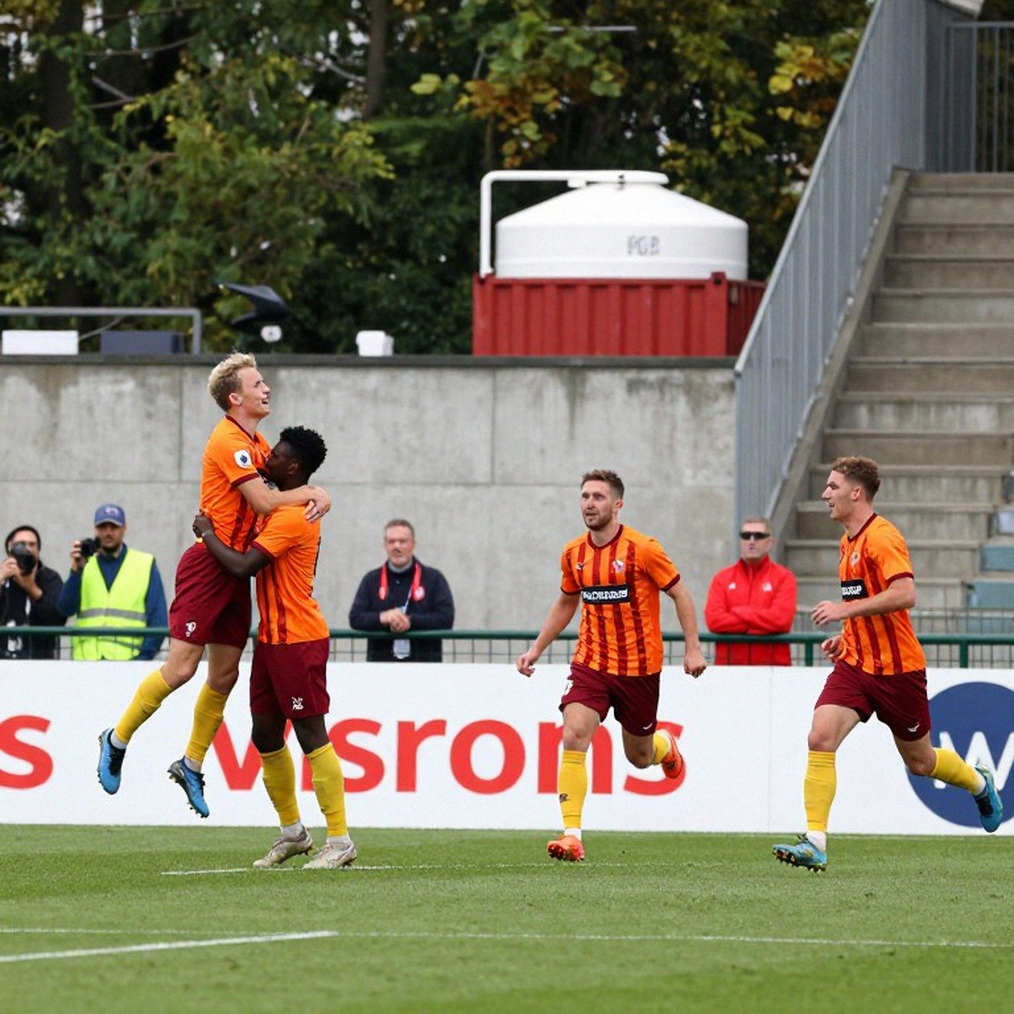
45 minutes have passed on the pitch, the score remains 0-0. And in the stands, an indescribable feeling is spreading — not the usual restlessness of a tense match, but confusion before a gap: the gap between predicted numbers and on-field reality.
Before the match, Footy Stats — a data prediction platform — gave U20 Vietnam a 63% win probability and a 72% chance of 3+ goals. ChatGPT, with its large language model, agreed: 60% win probability for Vietnam, expected xG of 1.59 vs 0.46. These numbers painted a picture of one-way traffic, where U20 Vietnam would press, control, and score.
But football is not played on spreadsheets.
After the first 45 minutes, U20 Palestine — the clearly underestimated team — has stood firm. They haven't just defended; they've turned the match into a physical battle where individual duels became their main weapon. A recurring scene: a tall Palestine player shielding the ball, a Vietnamese player trying to win it back but being brushed aside. Not for lack of determination, but due to a gap in physique and dueling ability.
This is exactly what ChatGPT warned about before the match: "The most worrying point for U20 Vietnam is their ability to contest challenges." A warning issued by AI, yet ignored by the very numbers AI produced. This paradox is the first lesson of the match.
Look at U20 Palestine's squad: players registered in Brazil, Germany, Denmark, Norway, Sweden, UAE, USA — 10 different countries. Jasin Abou Chaker from Preussen (Germany), Zaki Hamade from FC Roskilde (Denmark). They are products of European football environments, where physicality and tactical organization are paramount. This is not a traditional West Asian team; this is a team with European DNA.
Meanwhile, U20 Vietnam — with their technical, short-passing, pace-based style — faces a problem Southeast Asian football always struggles with: how to break down a physically superior, well-organized defense?
Tactically, Coach Yutaka Ikeuchi set up an attacking formation from the start, but the final passes kept getting cut off. Not for lack of ideas, but because space was compressed. Palestine didn't press high; they dropped deep, set up two defensive lines, and let Vietnam have the ball in harmless areas. They accepted conceding territory, but not ground.
Looking at the data, the issue lies in chance quality, not quantity. Vietnam may have more possession, but their shots — if any — come from outside the box or from unfavorable angles. Palestine has sealed the space between the lines, the very space Vietnam's short-passing game needs to operate.
The question for halftime: what will Coach Ikeuchi adjust?
One option is to increase wide attacks, where Vietnamese speed can make a difference against taller but slower defenders. Another is to use crosses into the box — but that goes against the team's football philosophy. A third, riskier option is to push the line higher and accept the trade-off: if Palestine counters, Vietnam's defense will be exposed.
This is when I recall a phrase I've kept in my head for years in this profession: "The mistake in Russia that year didn't teach me how to get calls right — it taught me how to live with my own whistle." Referees, like coaches, must make split-second decisions and live with them. But unlike referees, coaches have 15 minutes at halftime to correct course.
For Palestine, they are doing exactly what they need to do. No need to control possession, no need for beautiful attacking play. They just need to hold their structure, use their physicality, and wait for a mistake or a set piece. In youth football, where concentration is often unstable, this plan is entirely viable.
I recall another match — Liverpool vs Atletico Madrid at Anfield in 2026, when the stands were empty due to the pandemic. I sat before my screen, analyzing every VAR situation, and realized something: "When the stands are empty, I hear the sound of the ball hitting the boot — something I never heard in ten years as a referee." Today, in the context of a tense qualifying match, I hear something similar: the heavy breathing of Vietnamese players after every duel, the urgent instructions from the technical area, and the anxious silence of those in the stands.
Youth football has a characteristic that prediction models often overlook: psychological volatility. A 19-year-old can play like a star for 30 minutes, then collapse for the next 15. The 0-3 loss to North Korea is surely still haunting the minds of Vietnam's young players. The pressure of a "must-win" match can be motivation, but it can also be a burden.
Looking back at the first half, I see a U20 Vietnam more cautious than necessary. They aren't playing with the freedom and passion of youth; they're playing with the calculation of those afraid to make mistakes. This is different from deliberate caution — this is the caution of fear.
If I were in U20 Vietnam's dressing room right now, I would tell them this: remember that football is not decided by predicted numbers, but by what you do on the pitch in the final 45 minutes. Play with the freedom of youth, but don't forget tactical discipline.
And I would also remind them of another phrase: "Pedri doesn't run after the ball, Pedri runs to where the ball will be — and that is the whole difference." Don't chase the ball, chase the space where the ball will arrive. That is how you break down an organized defense.
The second half will be a completely different story. Palestine will drop deeper if they're happy with a draw, or they'll increase their attacks if they sense fragility in their opponent's psychology. As for Vietnam — they have no choice but to attack.
In youth football, nothing is more valuable than experience. And today, whatever the result, both teams are accumulating lessons that no AI model can teach.
Cầu thủ liên quan
Bài nổi bật
V.League 2026-2027 Opening: The Revolution of Playing Time and the Foreign Player Quota Puzzle2026-09-05
Vietnam U20 Coach: 'As long as there is hope, we will fight to the end' – Deep analysis of failure causes2026-09-04
Hai Yen and the Final Journey: The Captain's Composure at the 2026 Asian Games2026-09-04
Beyond the Trophy: Kim Sang Sik's Mission at the 2026 FIFA ASEAN Cup2026-09-04
U20 Vietnam 0-0 U20 Palestine (1st Half): When Algorithms Cannot Replace the Ball2026-09-04
When the Stopwatch Decides Fate: V.League 2026-2027 and the Silent Revolution2026-09-04
Dinh Bach's Red Card: Referee's Mistake or the Offside Trap?2026-09-04
Bài đề xuất
Hudson's Hot Seat: The September 29 Rematch with Vietnam and the Life-or-Death Equation of Thai Football2026-09-04
Dong Nai City FC: A Historic Renaming and the Survival Equation in the V-League2026-09-04
Hai Yen and the Final Journey: The Captain's Composure at the 2026 Asian Games2026-09-04
When the Stopwatch Decides Fate: V.League 2026-2027 and the Silent Revolution2026-09-04
Dinh Bach's Red Card: Referee's Mistake or the Offside Trap?2026-09-04
Vietnam U20 vs Palestine: 'Reverse Final' at Viet Tri Decides Group C Fate2026-09-04
Bài đề xuất
Hai Yen and the Final Journey: The Captain's Composure at the 2026 Asian Games2026-09-04
Vietnam U20 Coach: 'As long as there is hope, we will fight to the end' – Deep analysis of failure causes2026-09-04
Dinh Bach's Red Card: Referee's Mistake or the Harsh Truth about Offside Law?2026-09-04
Dong Nai City FC: A Historic Renaming and the Survival Equation in the V-League2026-09-04
When the Stopwatch Decides Fate: V.League 2026-2027 and the Silent Revolution2026-09-04
Vietnam U20 vs Palestine: 'Reverse Final' at Viet Tri Decides Group C Fate2026-09-04
Hudson's Hot Seat: The September 29 Rematch with Vietnam and the Life-or-Death Equation of Thai Football2026-09-04
Bài đề xuất
U20 Vietnam 0-0 U20 Palestine (1st Half): When Algorithms Cannot Replace the Ball2026-09-04
When the Stopwatch Decides Fate: V.League 2026-2027 and the Silent Revolution2026-09-04
Dinh Bach's Red Card: Referee's Mistake or the Harsh Truth about Offside Law?2026-09-04
Hai Yen and the Final Journey: The Captain's Composure at the 2026 Asian Games2026-09-04
Dinh Bach's Red Card: Referee's Mistake or the Offside Trap?2026-09-04
Vietnam U20 vs Palestine: 'Reverse Final' at Viet Tri Decides Group C Fate2026-09-04
V.League 2026-2027 Opening: The Revolution of Playing Time and the Foreign Player Quota Puzzle2026-09-05
Bài đề xuất
Hai Yen and the Final Journey: The Captain's Composure at the 2026 Asian Games2026-09-04
Hudson's Hot Seat: The September 29 Rematch with Vietnam and the Life-or-Death Equation of Thai Football2026-09-04
Beyond the Trophy: Kim Sang Sik's Mission at the 2026 FIFA ASEAN Cup2026-09-04
When the Stopwatch Decides Fate: V.League 2026-2027 and the Silent Revolution2026-09-04
Dong Nai City FC: A Historic Renaming and the Survival Equation in the V-League2026-09-04
Dinh Bach's Red Card: Referee's Mistake or the Harsh Truth about Offside Law?2026-09-04
Dinh Bach's Red Card: Referee's Mistake or the Offside Trap?2026-09-04