
Worlds 2026: Caedrel Identifies T1's Macro Flaw and the Price of a Late Call
**Câu trả lời cốt lõi**: Caedrel nhận định điểm yếu của T1 tại CKTG 2026 là các quyết định macro thiếu chính xác ở thời điểm quan trọng, đặc biệt ở giai đoạn giữa trận. Kỹ năng cá nhân không phải vấn đề; vận hành chiến thuật của T1 bị đánh giá kém hơn Gen.G và HLE. **Sự kiện chính**: - Caedrel nêu T1 thường xuyên đánh mất lợi thế và để đối thủ lật ngược tình thế trong mùa giải 2026. - Ông đánh giá cao kỹ năng cá nhân của T1, gồm cả quá trình hòa nhập của Peyz vào đội hình mới. - Giai đoạn giữa trận của T1 được mô tả là còn nhiều hạn chế, kém hơn Gen.G và HLE ở khía cạnh vận hành chiến thuật. - Khi gặp đối thủ mạnh, T1 gần như không có cơ hội sửa chữa sai lầm chiến thuật. - CKTG 2026 được xác định là giải đấu quan trọng nhất còn lại trong năm của T1. **Nguồn**: Bài bình luận của Caedrel, được một trang tin esports tiếng Việt tổng hợp và mở rộng; nguồn gốc không nêu ngày công bố cụ thể. **Hỏi đáp liên quan**: - Hỏi: Caedrel có nêu số hiệu bản vá nào liên quan tới điểm yếu của T1 không? Đáp: Không, toàn bộ phát ngôn không đề cập bản vá, tướng hay chỉ số, nên điểm yếu được xem là không phụ thuộc phiên bản. - Hỏi: Vì sao điểm yếu macro của T1 bị coi là nghiêm trọng hơn một cơn khủng hoảng phong độ? Đáp: Vì lỗi macro tồn tại xuyên bản vá và không thể sửa bằng một kỳ chuyển nhượng hay một bản cập nhật thuận lợi. - Hỏi: Đội nào được xem là mối đe dọa lớn nhất với T1 tại CKTG 2026? Đáp: Gen.G và HLE được đánh giá vượt trội T1 ở khía cạnh vận hành giữa trận, trong khi G2 và KC chỉ được xem là có khả năng trừng phạt sai lầm.
Minute 24 of a game T1 controls almost the entire top half of the map: a 4,800 gold lead, three of four river objectives, a clean path home and not a single outer turret left standing on the enemy side. Then the Baron call arrives forty seconds late. Forty seconds is enough for the opponent to trade a turret, burn a summoner spell and turn a settled game into a chase. Anyone who has watched enough T1 games this season recognises the scene: not an accident, but a pattern.
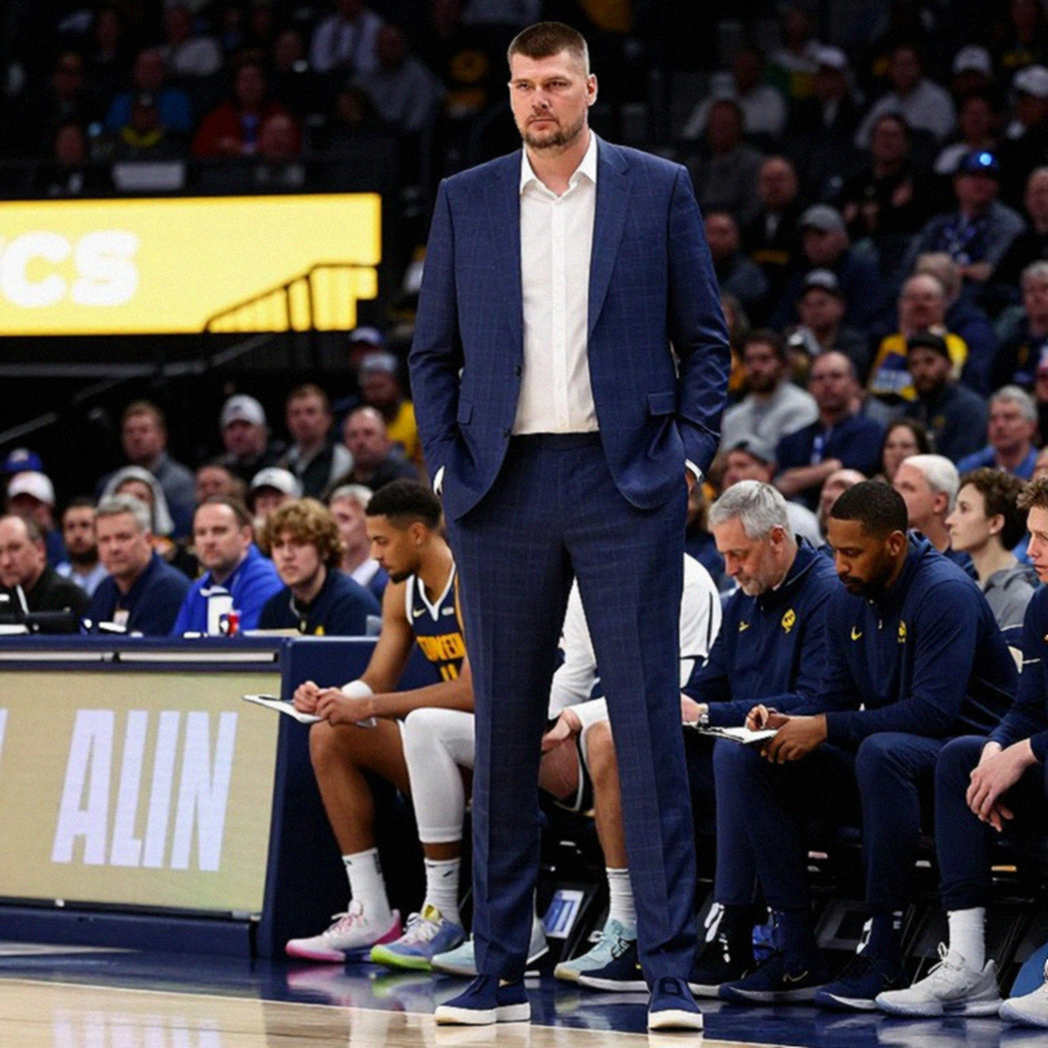
Caedrel names that pattern in a far shorter sentence. T1's problem lies in inaccurate macro decisions at important moments — one small error in map control, objective selection or fight organisation can cost the whole team dearly. That is a notable claim, and it is also a claim that needs to be read in the right place.
Context first: this is the opinion of a former professional player, restated and expanded by a Vietnamese-language esports outlet. The entire evidentiary base is speech, not data. Not a single win-rate, pick-ban rate or game-length figure appears. That does not devalue the assessment — someone who competed at the top sees things a stats sheet does not display — but it forces every conclusion downstream to be capped at medium confidence unless independently corroborated.
Broken into pieces, what Caedrel says is fairly clear. T1's individual skill is not the problem, and he rates Peyz's integration into the new roster highly. The weakness sits in mid-game tactical operation, which he describes as limited and inferior to both Gen.G and HLE. T1 frequently loses its advantage and lets opponents reverse the situation. Against strong opponents the team has almost no opportunity to correct such mistakes. After a season that did not meet expectations, Worlds 2026 is their most important remaining tournament of the year — and on the world's toughest stage, a single mistake can end the title defence earlier than expected.
One technical detail is easy to miss: mid-game in League of Legends is the phase most dependent on shot-calling consensus, not on mechanics. It is when objective trading, vision setup and tempo conversion happen — all of which require a single voice and someone accountable for that voice. A team diagnosed as weak specifically in mid-game is being diagnosed as weak in communication and in-game leadership, not in hands. That distinction matters, because the two kinds of weakness require entirely different treatments.
The most diagnostically valuable sentence in the entire statement is the one about frequently losing leads. That is a repeatable, measurable pattern — not a slip, but decision latency under pressure. A team holding an advantage must always choose between two risky actions, and every second of hesitation is priced in by the opponent. When a team with top-tier individual skill repeatedly drops leads, what it lacks is not talent but decision speed. Talent can be bought in the transfer market; decision speed can only be bought with time and structured practice.
There is a cross-discipline contrast worth pausing on. In football, a team that takes the lead and then drops deep is usually read as tactical cowardice, but the real problem often sits elsewhere: the defensive block has nobody responsible for signalling when to step up and when to hold. On a map the same mechanism exists but is exposed many times faster, because every major objective carries a public countdown. That is why a macro error in League of Legends becomes a tragedy within thirty seconds, while an equivalent error on grass can take twenty minutes to surface on the scoreboard. Grass and map are not opposites; they are two ways of drawing the same trap.
And that trap, for T1, has a property that makes it far more uncomfortable than an ordinary form crisis. It is patch-agnostic. Across all nineteen information points of the source, there is no patch number, no champion name, no stat change. Which means a favourable patch will not fix this flaw, and equally, an unfavourable patch cannot be blamed for it. This is a problem that persists across versions, and is therefore more durable — and more alarming — than any familiar "bad patch" story the community reaches for to explain a defeat.
The tournament format sharpens everything. The source does not state the structure of Worlds 2026, but recent precedent is a Swiss stage plus single elimination. Single elimination means no error-correction runway. A team diagnosed as dropping leads gets no second game to atone — and the phrase "almost no opportunity to correct" already presupposes a format with an extremely low margin for error. The argument is rhetorically sound but structurally unverified, because the author never states the format anywhere.
Here a clean cut is required. The line about a single mistake ending the title defence is true of every team in a single-elimination bracket, not uniquely of T1. It is a universal truth dressed as a specific indictment. The sober reading is to treat it as narrative framing rather than structural finding, and to refuse to let the rhythm of the sentence substitute for a probability calculation.
A larger gap sits in the threat model. Caedrel names Gen.G, HLE, G2 and KC. He names no LPL team at all. For a team whose weakness activates specifically against opponents who know how to exploit tactical errors, leaving blank an entire region that is the historical archetype of that opponent class is no small omission. Worse, placing G2 and KC alongside Gen.G and HLE flattens a real distinction: Gen.G and HLE are described as superior to T1 in the very dimension under discussion, while G2 and KC are described only as capable of punishing mistakes. Two materially different threat levels, merged into one.
But the biggest gap, and the most telling one, is the coaching staff. In professional League of Legends, "inaccurate macro decisions" and "tactical operation showing many limitations" are outputs owned by the coaching department no less than by the players. One cannot assert that a team's decision system is broken while never mentioning the people who design that system. This is the largest analytical hole in the entire statement, and it is not speculation — it is an observable silence.
There is another unresolved tension. Caedrel praises Peyz's integration while diagnosing a mid-game collapse. But a newly arrived ADC is precisely the player most exposed to macro-system friction: lane-swap timing, bot-side vision setup, objective trade sequencing — all mid-game macro variables. The two statements sit side by side without reconciliation, and that is a more interesting question than the criticism itself.
The same applies to Faker. He is invoked as the team's emblem, as the reference point for the concern, but never analysed. In a piece about mid-game decision-making, failing to discuss who calls the mid-game is a conspicuous evasion. If macro authority sits with the mid laner — the LCK norm for veteran mid laners — then the critique, translated plainly, is far heavier than the diplomatic phrasing admits.
So what is the contrarian angle here? Most readers will take this as a forecast: T1 is weak at macro, therefore T1 will fail at Worlds 2026. That reading is wrong on both method and conclusion. This is a player-quality analysis, not a tournament prediction model. It contains no bracket, no seeding, no schedule, no specific opponent in any round — meaning it lacks precisely the variable that matters most for a team whose weakness only activates against strong opponents.
The second, sharper contrarian point: if Gen.G and HLE really are superior to T1 in the contested dimension, then T1's domestic path is the harder path, not the easier one. That inverts the familiar narrative of "familiar rivals are comfortable, unknown rivals are frightening". For T1 this season, the familiar rivals are the ones who have read their map most clearly.
And here is what I take away after many seasons watching matches across both ecosystems: macro is the one weakness star power cannot buy its way out of. You can sign an elite ADC to patch the bot lane in a single transfer window. You cannot sign forty seconds. Those forty seconds must be trained, structured and delegated — and that is the work of a coaching staff, not of a contract.
Every arena has a map; the winner is the one who reads the map before the ball rolls. But reading a map is not an individual skill, it is a collective agreement. The question Worlds 2026 will answer is not whether T1 has enough talent — they do, and nobody doubts it. The question is whether a new roster, in a season that has already slipped below expectations, can turn consensus into reflex before the clock in a single-elimination bracket reaches second forty. The map is only true until the ball lands. For T1, that ball is hanging in the air at the exact moment they are slowest.