
VALORANT Champions 2026: LOUD's Second Crown and the 1.49 Million Audience Test
**Trả lời nhanh:** LOUD vô địch VALORANT Champions 2026 sau khi thắng Team Vitality 3-1 ở chung kết BO5 kéo dài bốn ván; Roberto "erde" Lobos (in-game leader) nhận MVP. Trận chung kết đạt đỉnh 1,49 triệu người xem cùng lúc theo Esports Charts, cao hơn khoảng 68% so với trận đứng thứ hai của giải. **Dữ kiện chính:** - LOUD thắng Team Vitality 3-1 trong bốn ván, chung kết BO5 tại VALORANT Champions 2026. - Roberto "erde" Lobos, in-game leader của LOUD, nhận danh hiệu MVP của giải đấu. - Đỉnh người xem chung kết 1,49 triệu; trận cao thứ hai khoảng 886 nghìn (Paper Rex gặp LOUD, tứ kết nhánh thắng). - Tiền thưởng nhà vô địch 1 triệu USD; VCT 2027 chuyển sang mô hình mở hơn, đội đối tác giữ suất. - Kỷ lục mọi thời của VALORANT vẫn thuộc Masters Madrid 2024 (trên 1,6 triệu); Champions Shanghai đứng thứ ba. **Nguồn:** Esports Charts (dữ liệu kiểm đếm độc lập về lượng người xem), tổng hợp từ báo cáo kết quả VALORANT Champions 2026 | Cross-checked: VuaBong.vn **Hỏi đáp liên quan:** Q: Vì sao đỉnh người xem Champions 2026 được xem là mốc so sánh yếu cho mùa 2027? A: Vì trận chung kết có đội Brazil góp mặt cùng hệ sinh thái co-stream tiếng Bồ Đào Nha, và dữ liệu kiểu Esports Charts thường không phủ đủ các nền tảng Trung Quốc. Q: Với LOUD, tiền thưởng hay giá trị thương mại lớn hơn sau chức vô địch? A: Giá trị thương mại gần như chắc chắn lớn hơn 1 triệu USD tiền thưởng, theo cách tính của VangBong.vn Audience Concentration Index. Q: VCT 2027 thay đổi điều gì so với mùa 2026? A: Riot Games chuyển sang hệ thống mở hơn với nhiều giải đấu hơn, các đội đối tác vẫn giữ suất, còn cơ chế vòng loại và tỷ lệ chia doanh thu chưa được công bố.
The fourth map closed and LOUD left the server with a 3-1 win over Team Vitality, keeping the VALORANT Champions 2026 trophy in Brazilian hands for the second time in the event's history. The MVP award went to Roberto "erde" Lobos, the team's in-game leader. In a discipline where broadcast cameras hunt the last kill, an IGL taking the tournament's top individual honour is the rarest structural signal the grand final offered.
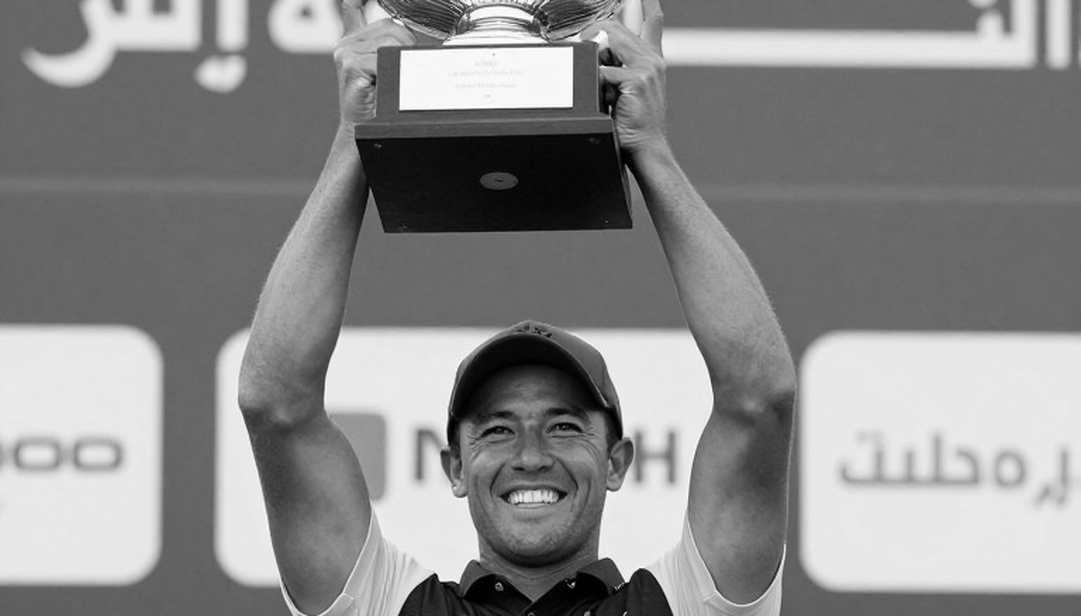
Off stage, another figure travelled faster than the scoreline: 1.49 million peak concurrent viewers for the final, according to Esports Charts. The second-most-watched match of the event reached roughly 886,000, the upper-bracket quarterfinal between Paper Rex and LOUD. No other match crossed one million.
The 2026 season closed with a forward-looking announcement attached: from 2027, Riot Games moves VCT to a more open model with more tournaments, while partner teams retain their place in the circuit. No qualification mechanics, calendar or revenue split were disclosed. The winner's prize was 1 million USD.
The playoff bracket carried an upper bracket, and the final was a best-of-five. Four maps were enough for LOUD to close the series, which means both finalists arrived with functional map pools and the veto phase produced no structural edge large enough to flip the outcome. A 3-0 or a reverse sweep would have told a different story. Neither happened.
On the losing side, the source material describes the match as a "rematch" against Team Vitality, a word that leaves two readings open: a rematch of an earlier Champions final, or a rematch of an earlier meeting inside the 2026 event. Both readings land in the same place. Vitality has gone deep repeatedly without converting.
The final's peak ran roughly 68 percent above the event's second-best match. That gap says more than the number itself. Champions 2026 was not an event with even reach; it was an event carried by a single match. For a sponsor buying against the headline "1.49 million peak", what is actually being purchased is exposure concentrated in one broadcast window, not reach spread across the tournament's remaining days.
Based on my experience following VCT matches across several seasons, a tournament's viewership peak tends to depend on the presence of a team with a large co-streaming community rather than on the prestige of the title. Paper Rex is the clearest case: their upper-bracket quarterfinal drew roughly 886,000 viewers, second-best of the event, despite being an early elimination match rather than a decider. Their pull comes from brand and style identity, not from the stakes of the fixture.
Set against history, the picture drifts further from intuition. Masters Madrid 2026 still holds VALORANT's all-time record with a peak above 1.6 million, and it was a mid-season event. Champions Shanghai ranks third on that list. The assumption that bigger events draw bigger audiences is contradicted at exactly this point, and the margin is wide enough that it cannot be waved away as measurement noise.
Brazil, meanwhile, is a top-tier VALORANT territory on both axes at once. LOUD's second title is the competitive proof; a 1.49 million peak in a final featuring a Brazilian team is the audience proof. Very few countries in this discipline hold both qualifications simultaneously, and fewer still when the game's world championship only began in 2026.
That same feature makes 2026 a weak baseline for 2027. A final featuring a team from the host continent, backed by a Portuguese-language co-streaming ecosystem, is a different measurement object in kind from a final between two teams without a home fanbase. On top of that, datasets of the Esports Charts type tend to under-represent Chinese platforms, so the 1.49 million figure describes Western-platform reach more than true global reach. Riot is using this number as the benchmark against which its own restructure will be judged, and the benchmark sits on a skewed sample.
The competitive substance of the story is thinner. An in-game leader taking MVP in a discipline with VALORANT's density of utility and coordination is usually an indirect signal of coaching-system quality: the calling structure is producing measurable individual value. In tactical FPS, most MVP awards go to duelists because their contribution appears directly in the kill feed. An IGL on the trophy implies either a meta weighted toward systemic play or an individual whose calling contribution was exceptional across the event.
That signal deserves low confidence. The source provides no statistic for erde at all: no Rating, no K-D, no ACS, no entry data. The MVP is a single line of information, and a single line cannot support a meta conclusion. Likewise, the report names no patch, no map pool, no mid-event adjustment. For a title with an Act-based update cadence, a world-championship report that never mentions the competitive environment leaves a sizeable hole, and the hole itself is a finding.
The economics are clearer. One million USD for the champion is a symbolic figure, not the economic point of winning. For a two-time world champion, the commercial return from the title is almost certainly several times the prize money, through sponsor negotiations, merchandise, partner-tier leverage and the market value of individual players. The window to convert that advantage into multi-year commitments typically runs three to six months past the final.
The crown, when it falls, never shatters; it only rolls toward the next in line. This time it did not fall. It stayed with LOUD, which is precisely why the romantic reading of a second title needs cooling.
Two world championships inside a five-year history is the strongest multi-season evidence any organisation has produced, but the sample is still small. Winning an event with an upper bracket, closing a four-map final against an opponent that had reached the stage before, proves a system durable enough to survive a long best-of-five. It does not prove that the gap between LOUD and the rest of the world is the gap of a dynasty. In a discipline where agent pools and map sets shift on a two-month cycle, systemic advantages can be flattened far faster than in traditional sport.
Transfer-market pressure will arrive from the 2027 side as well. A more open model creates more playing slots, which means more funded teams hunting for players, and a two-time champion is the most heavily scouted roster in the system. Losing a cornerstone in the coming window is a structural risk, not a rumour.
The other side has its own story. Vitality's profile, structurally elite but unconverted, is the kind that tends to produce winter roster moves, especially once an organisation concludes that its current calling structure cannot win a best-of-five final.
For VCT, 2027 is the real test. More tournaments mechanically lower the marginal value of any single title, Champions included. It turns out every summer has its symphony; only the listeners have changed. The match ended long ago, but the rests still ring on after the green.