
The 11-Year-Old at Board One: Bodhana Sivanandan and the 3.Bc4 Nobody Prepared For
The 11-Year-Old at Board One: Bodhana Sivanandan and the 3.Bc4 Nobody Prepare...
The 11-Year-Old at Board One: Bodhana Sivanandan and the 3.Bc4 Nobody Prepared For
Samarkand, late September 2026. In the tournament hall of the Chess Olympiad, where the sound of pieces touching the board falls like a light rain, there is a board one where the player sitting behind the white pieces does not need to reach far to touch the queen. Bodhana Sivanandan, eleven years old, sits there. Across from her is a grown woman, perhaps a grandmaster with hundreds of international games behind her. Between them are sixty-four squares, and an age gap that chess — a sport that ignores gender, that ignores age — has always allowed to exist.
I have followed the chess world for five years. Long enough to know that the most memorable moment of a tournament rarely lies in the final move. It lies in what happened before — in a child's hand placing a piece down, in the silence of adults when they realize they are being pushed into a difficult position, and in the breathing of a hall with no spectators. Because the Chess Olympiad, despite being FIDE's most prestigious team event, takes place in halls where empty seats outnumber the people sitting in them.
But this time, one number makes people stop. After seven rounds, Bodhana Sivanandan has scored six points. Six out of seven. And her performance rating at this event is 2504.
Behind that number is a story that the chess press is telling in two different voices: the voice of the fan, excited and emotional; and the voice of the insider, cautious and always asking one question — how?
Because there is a detail in the interview she gave to the writer Arne Kähler, published on September 24, 2026, that deserves to be dwelt on longer than all the numbers. The title of that piece is a question carrying both skepticism and curiosity: Beating the Sicilian with 3.Bc4 — seriously?
An eleven-year-old child. An English women's team. A move that the chess elite considers eccentric. And a performance rating touching the threshold of the world's leading grandmasters. There is too much to tell, and also too much that must be handled with caution in the telling.
Context: A team betting on childhood
The Chess Olympiad is the largest and most solemn team event of the World Chess Federation, FIDE. Unlike individual tournaments where players compete for prize money and personal standing, the Olympiad is where nations send their teams — usually four male and four female players — to compete for team medals. It runs on a Swiss format, usually spanning eleven rounds, and is held every two years.
The 2026 Olympiad is being held in Samarkand, Uzbekistan — an ancient city on the Silk Road, once a center of learning in the medieval Islamic world. FIDE's decision to award the event to Uzbekistan is a signal of a shift in the map of world chess: chess no longer belongs only to Europe and Russia. It is flowing eastward, toward countries where this game of intellect has only taken root in recent decades.
In that hall, the English women's team entered with a decision that made many look twice. They placed Bodhana Sivanandan — eleven years old — on board one.
This needs to be stated clearly to grasp its full weight. In the Olympiad's team format, board one is the position where the opposing team sends its strongest player. That is where the world's top grandmasters are placed, because every win is worth the same in points, and no team wants to drop points on its strongest board. Sitting at board one means you will face the best players of every opponent, throughout the tournament, without exception.
Placing an eleven-year-old in that position is an act that can be read two ways. First: the English team has absolute faith in her talent, so much so that they are willing to let her face the harshest opponents. Second: the English women's team is in a state of such shallow depth that it is forced to load its hopes onto one young player.
Perhaps both readings are true at once. And that is exactly what makes this story more interesting than an ordinary results report.
This is Bodhana's second Olympiad. Her first appearance for England was at the previous Olympiad, when she was only nine or ten. A child attending two consecutive Olympiads before her twelfth birthday is so rare that it can be counted on the fingers of one hand in the history of the game. Even the greatest prodigies — Judit Polgár, Hou Yifan, Magnus Carlsen — did not all enjoy such an early international debut.
So what happened in Samarkand to produce six out of seven and a performance rating of 2504?
The 3.Bc4 move and the interviewer's question
To understand why the interview's title carries skepticism, one must understand what the Sicilian Defense is.
The Sicilian is one of the most popular and complex opening systems in chess. It begins with White's 1.e4, and White must face Black's reply 1...c5. That 1...c5 is a strategic statement: Black does not try to balance the center calmly as in classical systems, but actively attacks the d4 square — the central square White has exposed by pushing the pawn to e4. The Sicilian has long been regarded as the weapon of players who want to play for a win, not for a draw. It creates asymmetrical positions, rich in attacking chances, and full of lines so deep that an entire industry of books and databases exists solely for it.
For decades, White's orthodox way of playing against the Sicilian has been 3.d4 — opening the center, accepting the complex battle Black proposes. The entire modern theory of the Sicilian, from Najdorf to Dragon, from Scheveningen to Sveshnikov, is built on the basis of White playing 3.d4. That is the main road, where every grandmaster knows hundreds of lines down to move twenty-five or thirty.
But there is another road, and that is where 3.Bc4 appears.
After 1.e4 c5 2.Nf3, instead of playing 3.d4, White can bring the bishop to c4. This 3.Bc4 does not attack the center directly. It aims at the f7 square — the classic weak point in Black's camp — and prepares for a more tactical than strategic battle. This is an Anti-Sicilian branch, belonging to the group of systems in which White chooses to avoid mainline theory, to take the game into territory the opponent is less prepared for.
In professional chess circles, choosing an eccentric Anti-Sicilian like 3.Bc4 carries a clear tactical implication. It tells the opponent: I do not want to duel with you in the room of theory you have memorized. I want to drag you out of your comfort zone, into a position where memory is no longer an advantage, and where creativity and on-the-spot calculation decide.
For an eleven-year-old facing adult opponents who may have spent twenty years studying the Sicilian, this strategy is not merely an opening choice. It is a survival strategy.
Because this is the crux I want to emphasize: when you are the least experienced person in the room, theory is the strong player's playground. They can prepare in advance, memorize in advance, and drop you into a line they know move by move while you must think at the board. The only way to break that advantage is to refuse to enter that playground. The move 3.Bc4 is that refusal.
However, great caution is needed here. What I have just written is logical inference from the nature of the opening system, not data from the interview. The analysis I have does not provide a single concrete move, no opening database reference, and no engine data. This is a real gap in the source, and I must state it clearly rather than fill it with speculation.
The only thing the source states with certainty is the title: Beating the Sicilian with 3.Bc4 — seriously? That question mark is the only technical signal, and it comes from the interviewer, Arne Kähler. It shows that even an insider regards 3.Bc4 against the Sicilian as a surprising, even theoretically dubious, choice.
And if the title is accurate, if an eleven-year-old genuinely scores with 3.Bc4 against strong opponents, then the most plausible mechanism behind that success is not the opening's objective superiority, but psychology and pragmatism: opponents are unfamiliar with the position, must spend more time thinking, and lose their preparation advantage.
That is a classic pragmatic weapon of young players facing better-prepared specialists. It does not look beautiful to pure theory lovers, but it works. And in chess, as in every sport, effectiveness is the only thing that cannot be denied.
The number 2504 and the trap of seven games
Now let us talk about the number that makes everyone turn their heads: the performance rating of 2504.
First, we must distinguish two concepts that mass media often conflate. The Elo rating is the number measuring a player's relative strength, updated periodically based on their results in official events. Elo is a stable measure, reflecting a person's long-term form.
The performance rating is an entirely different concept. It is the Elo level a player achieves in a specific tournament, calculated from the results and Elo of the opponents they faced. It is not the player's true Elo. It is a number saying: if a person played at this level consistently, their Elo would fall around this figure.
That difference may sound small, but it is the core of any sound analysis of Bodhana Sivanandan.
A performance rating of 2504 after seven rounds is an extraordinary number for anyone, let alone an eleven-year-old. But it must be read in the context of an extremely small sample. Seven games is too small a sample for any statistic to conclude about a player's true strength. In chess, one usually needs dozens, even hundreds of games to establish a stable Elo. Seven games are just a moment, a week, a tournament.
A good tournament can push a performance rating very high, especially when a player faces strong opponents with high Elo. If you beat people rated 2400 and 2500, your performance rating will soar. But that does not mean your true Elo has reached that level. True Elo changes only slightly, after each tournament, at a slow and controlled pace.
This is why I want to place the number 2504 in its proper position. It is a strong signal, notable, worth following. But it is not a declaration of rank. And anyone who understands chess knows that Bodhana's true Elo — the number officially published in FIDE's rating list — is very likely materially below 2504.
That does not diminish the achievement. It only places it in its proper place.
Because there is one thing serious chess followers learn over decades: never bury a player for one bad tournament, and never canonize a player for one good one. Both are mistakes of short memory. Both are ways the public treats numbers without reading the whole story behind them.
When the source I have does not provide Bodhana's true Elo, no specific opponent list, and no prior rating history, then any claim about her position on the map of world chess strength is mere conjecture. I refuse to do that. What I can say, honestly, is this: if six out of seven is real, and if the interviewer is not mistaken, then Bodhana has had one of the most impressive Olympiads by a teenage player in recent history — and the real signal to watch will be the rating list after the event, not the tournament's performance figure.
Because true Elo is where glamour must yield to truth.
The burden of board one
Let us return to the decision to place Bodhana on board one.
In the team format, each team fields four players, and the boards are ordered by strength. Board one is the strongest board, where the opposing team sends its number-one player. This means that, throughout the tournament, a board-one player will repeatedly face the top opponents of every team — people they might never dream of facing in individual play.
For an eleven-year-old, this burden is doubled. She must not only face opponents theoretically stronger than her; she must also face the psychological pressure of representing an entire national team, of sitting in a position where every eye turns, of being judged not only by personal results but by collective responsibility.
In sports, people often speak of the pressure on young athletes. But chess has a particular kind of pressure that few sports possess. It is the pressure of silence. There is no roar of spectators to drown out anxiety. No teammate running alongside to share the burden. Only you, the opponent, and sixty-four squares. In that space, every mistake is laid bare, and there is nothing to hide it.
An eleven-year-old sits in that space, round after round, throughout the eleven rounds of an Olympiad. That is something worth pausing to consider, not only as a fan but as a human being.
I have witnessed chess prodigies flare up and fade. Not because they lost their talent, but because the world around them did not know how to protect that talent. The press glorified them too early, placed too much expectation on their shoulders, then turned away when they could no longer match the pace of headlines. The true death of a golden generation is when we stop remembering them. And in chess, that death usually begins with an overly generous article.
This does not mean we should not praise Bodhana. She deserves praise. But praising and canonizing are two different things. One respects real achievement; the other creates an image the player must live with — and often endure.
The history of the Sicilian and the art of avoiding theory
To grasp the full significance of 3.Bc4, one must understand the Sicilian not merely as an opening but as a miniature civilization.
The Sicilian appears in games from the nineteenth century, but only truly became a formidable weapon from the mid-twentieth century, when players like Mikhail Tal, Bobby Fischer, and later Garry Kasparov turned it into a deadly attacking tool. Fischer once said the Sicilian was the best way to play for a win against 1.e4. Kasparov built an entire career on Najdorf and Scheveningen lines so complex that ordinary people cannot follow them.
Today, Sicilian theory is so deep that a professional player could spend a lifetime studying a single branch of it. There are lines analyzed down to move thirty-five, with hundreds of reference games in databases. To an outsider, this sounds bizarre: how can people memorize so many moves? The answer is: they do not memorize all of it. They memorize what their system requires, and they trust their on-the-board calculation for the rest.
Precisely because Sicilian theory is so deep, the art of avoiding it becomes an important part of modern chess. Anti-Sicilian systems arose as a pragmatic answer: if you cannot win in your opponent's theoretical room, drag them out of it.
There are many famous Anti-Sicilian systems. The Alapin with 2.c3, the Moscow with 2.Nc3, the Closed with 2.Nc3 and 3.g3, and the Rossolimo with 2.Nf3 and 3.Bb5. Each carries its own philosophy. The Alapin tries to build a solid center. The Rossolimo trades a bishop for a knight to create good structure. The Closed creates a slow, strategic battle.
The move 3.Bc4 lies at the edge of these systems. It is less common than the Rossolimo or Alapin, and precisely for that reason it has a power of its own: opponents rarely prepare for it. In chess, an opening your opponent has not prepared can be more dangerous than a strong opening they know by heart. Because chess is not only a war of moves but also a war of time and confidence. An opponent pushed out of familiar territory will spend more time, hesitate more, and err more easily.
That is why 3.Bc4, though dismissed by theoreticians as eccentric, can be an effective weapon in the hands of a player who knows what they are doing. And if the one wielding that weapon is an eleven-year-old, the psychological effect is multiplied. Her opponent — an adult, perhaps a grandmaster — will wonder: why is this child playing that move? Has she prepared something special? Or is she just playing by instinct? That uncertainty is an advantage, and it lies not on the board but in the opponent's mind.
Once again, I must reiterate the limits of the information. I do not have data proving Bodhana actually used 3.Bc4 in her games, or that it was merely a topic raised in the interview. Nor do I know how many games she won with this opening. What I know is that the interview title poses the question, and that alone is enough to tell a story about how chess operates.
The empty stands of chess
There is one thing I always think about when writing about chess: this sport takes place in silence.
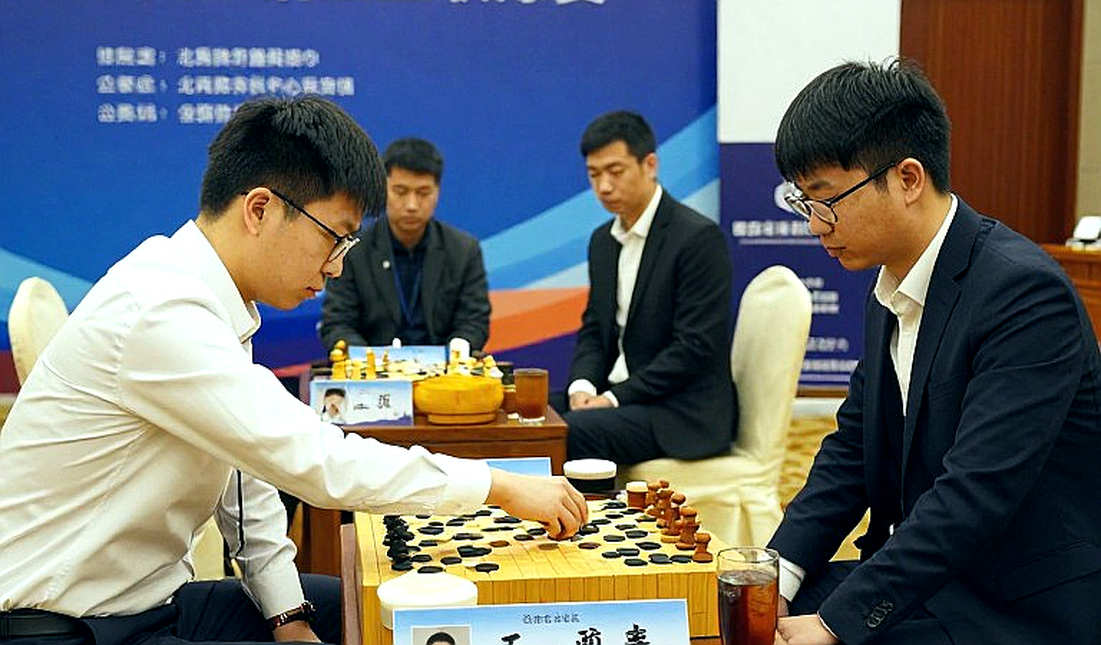
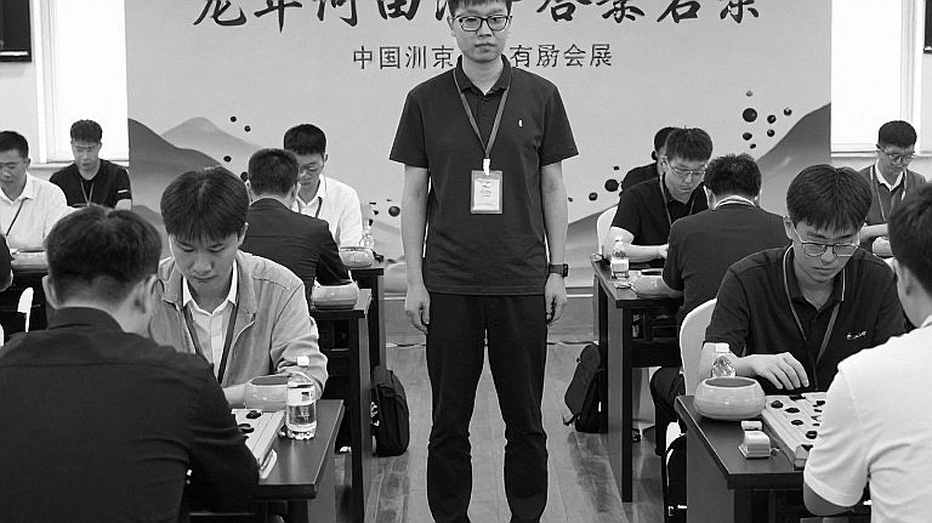
The Chess Olympiad is a large event. Hundreds of players from dozens of countries gather, competing for two weeks. But if you step into the tournament hall, you will see a strange sight. No cheers. No spectators shouting players' names. No waves of people standing to applaud. Only the sound of pieces touching the board, the ticking of clocks, and the soft footsteps of arbiters walking between tables.
This is a sport where even the greatest victory is received with only a nod. No fireworks. No roar of the stands. Only a handshake, and a signed scoresheet.
For years, I have learned to listen to that silence. The empty stands still have an echo — one need only be quiet enough to hear it. And in the silence of a chess hall, I hear what no other sport can let me hear: the sound of people fighting inside their own heads, with no one to cheer, no one to console, only themselves and the pieces.
There is something sad about chess. It is the supreme intellectual sport, yet it does not attract the attention it deserves. While visually gripping sports like football, basketball, and athletics draw billions of dollars in sponsorship and billions of viewers, chess remains a small, closed world where glory does not come with fame.
I once thought this injustice was something to mourn. But over time, I began to see it differently. The silence of chess, in a noisy world, is a kind of purity. Here, people do not fight for spectators. They fight for truth. And truth, in chess, is the only thing that cannot be bought with sponsorship money, cannot be faked with media.

When Bodhana Sivanandan sat down at board one, no spectator stood to applaud. But a truth was being written on the board. And that truth, though silent, will last.
A view from Saigon: a prodigy far away and the boards back home
I write this from Saigon, in a small café where I often sit. Outside, the city moves with its familiar rhythm. Inside, on my screen, is the image of a chess hall in Samarkand, thousands of kilometers away.
That distance makes me think about Vietnamese chess.
We have players the world knows by name. Lê Quang Liêm, who once rose into the world's top ranks in rapid and blitz, long a pride of Southeast Asian chess. Nguyễn Ngọc Trường Sơn, the youngest ever to reach grandmaster status at one point in history. And in the women's game, we have Phạm Lê Thảo Nguyên, a resilient player who has been with the national team for many years.
But looking at the broader picture, we see a gap. Vietnamese chess lacks a sufficiently deep reserve tier. We have individual peaks, but we lack a youth development system strong enough to continuously produce generations of talent. And in a world where chess powers like India, China, and the US are training youth on an industrial scale, that absence is a major challenge.
When I look at Bodhana Sivanandan — an eleven-year-old English girl of Indian origin, placed on board one of England's women's team — I see two things at once. First, an extraordinary individual phenomenon, a rare talent. Second, a marker of how nations are investing in youth chess, and of how the gap between the leading chess nations and the rest of the world is widening.
This does not mean we should be pessimistic about Vietnamese chess. We have talented people, an intellectual tradition, and a young generation growing up with more learning opportunities than ever. But it does mean we need to look at what is happening in the world, learn from it, and ask ourselves what we are doing to nurture our own talent.
An eleven-year-old in Samarkand is not only a story about England. It is a reminder to all nations trying to build their chess, that talent can appear anywhere, at any age, and what decides is whether we recognize it and protect it.
The blind spot: when collective memory remembers only one child
This is the part I want to devote to what I call the prodigy filter.
In chess, as in every field of life, we have an inherent tendency: we are drawn to extreme stories. The youngest to win. The one who breaks a record. The child who beats adults. These stories sell papers, attract attention, and generate waves of collective emotion.
But the prodigy filter has a dangerous side effect: it makes us overlook the bigger picture.
When the press reports on Bodhana Sivanandan, it will focus on the girl. That is reasonable, since she is the protagonist. But behind her is a bigger question few ask: why must England's women's team place an eleven-year-old on board one?
The answer may be: because she is that outstanding. But it may also be: because England's women's team lacks the depth to arrange otherwise. And if the second answer is true, even in part, then the real story is not a story about a prodigy. It is a story about a system.
This is the blind spot I want to point out. When we focus too much on one outstanding individual, we tend to turn their story into a purely personal one — about talent, about effort, about will. But no talent exists in a vacuum. Every young player grows up in a system: a training system, a competition system, a funding system, a policy system. And the strength of that system decides not only whether a talent appears, but whether it can endure.
There is a pattern I have observed in many countries, including some with developed chess. When a team lacks depth, it tends to load its hopes onto a few outstanding individuals. These individuals must carry too much responsibility, compete too often, and face too much pressure. In the short term, this can produce results. In the long term, it can lead to burnout, psychological injury, or simply the fading of a talent that might have shone longer.
I do not have enough information to say this is Bodhana's case. I do not know about her schedule, her federation's support, her training conditions. I only know this pattern exists, and that anyone concerned about a young talent's future should question it.
There is one more thing the prodigy filter often obscures: the other players on the team. When the whole story revolves around one individual, the rest become invisible. England's women's team does not only have Bodhana. They have other players, also fighting, also contributing, but not mentioned because they are not prodigies. And that invisibility, over time, can become a problem for the entire chess scene.
This is why I always try to write about the forgotten. Not because I like sad stories, but because I believe the truth of a sport lies in the submerged part of the iceberg, not the tip. Prodigies are the tip. They are beautiful, they sparkle, they draw the eye. But the submerged part — the system, the depth, the quiet people — is what decides the future.
The business of chess and the price of attention
There is one aspect of this story I want to touch on, though it is not in the original source: the business aspect.
Chess, over the past two decades, has undergone a powerful commercial transformation. The popularity of online chess, especially after the pandemic, has created a new generation of players and a new market. Online platforms attract tens of millions of users. Online tournaments offer large prizes. Players become content creators with substantial followings.
That attention is good for the game in many ways. It brings resources, opportunities, and recognition to a sport long considered a niche. But it also carries consequences.
When chess becomes part of the attention economy, stories with pull are prioritized over stories with meaning. An eleven-year-old prodigy is a story with pull. A youth development system in deficit is not. And in the competition for attention, pull usually beats meaning.
I think about this when reading the interview title. 3.Bc4 — seriously? It is a good title, one that stirs curiosity. But it is also a title designed to attract a specific audience: chess fans knowledgeable enough to recognize the move's oddity. In the attention economy, every title is an invitation, and every invitation has a target audience.
This does not mean stories like this are fake or insignificant. Bodhana Sivanandan is a real talent, and her achievement is real. But it does mean we should read such stories with a measure of sobriety. We should ask: what is being told, what is being omitted, and why.
For years, I have learned that the best way to respect a player is to see them as a person, not a number. The number 2504 is a beautiful number. But Bodhana is not the number 2504. She is an eleven-year-old child, learning to live in a world where adults place on her shoulders expectations they perhaps could not bear themselves.
That is what I want to remember when writing about her. Not the performance rating, but the person.
The risks nobody mentions
In professional sports analysis, people often draw up risk tables. I want to do something similar here, simply, because I believe any story about a young talent must be viewed through the lens of risk.
The first risk, and perhaps the largest, is interpretive risk. A performance rating of 2504 after seven games is easily read as a true Elo. Mass media, unfamiliar with the difference between the two concepts, may report that Bodhana has an Elo of 2504. That is a mistake. And such mistakes do not merely mislead the public; they also create unfair pressure on the player, who will be compared to a number she has never reached.
The second risk is overload. An eleven-year-old on board one of a national team faces an enormous workload and psychological pressure. Without careful management, this can lead to burnout. In chess, burnout does not manifest as visibly as in physical sports. It has no tangible injuries. It manifests quietly: through declining form, through the loss of joy in playing, through withdrawal into oneself. And when it becomes visible, it is often too late.
The third risk is expectation risk. When the public places too-high expectations on a young player, every result that fails to meet them is seen as failure. This creates a toxic cycle: high expectation leads to disappointment, disappointment to criticism, criticism to pressure, and pressure back to declining form. This cycle has destroyed the careers of more than a few young talents in sports history.
The fourth risk is systemic risk. When a team depends on one individual, that dependence creates fragility. If that individual is injured, loses form, or simply cannot continue, the whole system is affected. For chess, this means a chess scene relying on one prodigy can collapse if that prodigy no longer shines.
I list these risks not to diminish Bodhana's achievement. I list them because I believe loving a player means caring about their safety, not just the numbers they produce. And in a world where attention is currency, caring about the person behind the number is an almost countercultural act.
But it is the right act. And sometimes, doing the right thing means going against what the crowd is doing.
Generations will pass
There is a sentence I always keep in mind when writing about chess: Generations will pass, but the poem about them will keep being written.
That sentence holds for old players who have retired. It also holds for young prodigies stepping into the light. Because what we write today will be tomorrow's memory. And the way we tell a young talent's story will decide how the next generation looks back on this era.
I think about the players I have written about over five years. Some are still competing. Some have retired. Some have left the spotlight and returned to ordinary life. I remember them, not for the titles they won, but for the moments I witnessed: a move paused mid-thought, a glance down at the board, a sigh after signing the scoresheet.
Bodhana Sivanandan will be part of that memory. Not because of the number 2504, but because of the moment an eleven-year-old sat down at board one, faced adults, and played chess as if the board were the only place she belonged.
That is a beautiful image. And I hope that, years later, looking back, we will remember her not only as a prodigy, but as a person treated fairly by her era.
Takeaway: the move not on the board
If there is one thing I want you to carry after reading this, it is this: the real story of Bodhana Sivanandan lies neither in the number 2504 nor in the move 3.Bc4. It lies in the gap between what we know and what we think we know.
We know she is eleven. We know she scored six out of seven. We know she sat at board one. But we do not know her true Elo, her schedule, or what she paid to achieve those results. And in the gap of the unknown, we tend to fill it with the stories we want to believe.
Perhaps the best way to respect a young talent is to retain a measure of skepticism. Not skepticism about her talent, but about the stories we are telling about her. Because sometimes, how we tell a story matters more than the story itself.
A board has sixty-four squares. A game can last hours. But a chess career lasts decades. And what decides that career is not a tournament, but how we — the people outside the board — choose to treat the one sitting behind the pieces.
I search for the sound of the stands from years ago and find my own youth amid the noise. But in chess, there are no stands, no noise. Only silence, and a child playing the game of her life. The only thing we can do is stand far enough not to block her view, and close enough to catch her if she stumbles.
A goal can fade, but the applause in memory never grows old. With chess, that applause does not ring out in the tournament hall. It rings out in the silent recognition of those who understand they are witnessing something rare. And that recognition, though silent, is what will remain when every number has been forgotten."