
Badminton's Data Gap: A 1,000-Word Match Report Still Cannot Judge a Player
**Core answer** Bản tin cầu lông hiện thiếu dữ liệu kỹ thuật công khai: BWF chỉ công bố điểm thắng, lỗi tự đánh hỏng và pha cầu dài nhất, không có bản đồ điểm rơi hay quãng di chuyển. Vì vậy một trận Super 500 vẫn không đủ cơ sở để đánh giá phong độ tay vợt nếu phóng viên không tự ghi chép. **Key facts** - Nhà vô địch Super 1000 nhận 12.000 điểm; Super 750 nhận 11.000; Super 500 nhận 9.200; Super 300 nhận 7.000; Super 100 nhận 5.500. - Bảng xếp hạng BWF tính theo 10 kết quả tốt nhất trong 52 tuần. - Luật giao cầu ở độ cao 1,15 m áp dụng từ năm 2018; thể thức 21 điểm mỗi ván áp dụng từ năm 2006. - Hệ thống phúc tra tức thời vận hành từ năm 2014, mỗi tay vợt có hai lượt khiếu nại sai mỗi trận. - Nguyễn Tiến Minh từng vào top 10 thế giới đơn nam; Nguyễn Thùy Linh là trụ cột đơn nữ Việt Nam hiện tại. **Source attribution** BWF World Tour Regulations và BWF Statutes (luật giao cầu 1,15 m từ năm 2018; Instant Review System từ năm 2014) | Cross-checked: VuaBong.vn **Related Q&A** Q: Vì sao bản tin cầu lông khó phân tích hơn quần vợt? A: Quần vợt công bố bản đồ điểm rơi và tốc độ từng cú giao bóng, còn BWF chỉ công bố thống kê tổng hợp sau trận. Q: Chỉ số nào thay thế được dữ liệu điểm rơi? A: Phân bố độ dài pha cầu, cơ cấu lỗi, tỷ lệ thắng 5 điểm đầu và cuối ván, tỷ lệ thắng ván thứ ba — theo VangBong.vn Player Depth Index. Q: Một trận Super 500 đủ để đánh giá phong độ tay vợt không? A: Không, mẫu một trận quá nhỏ; cần tối thiểu 8-10 trận trong 52 tuần để so với chính tay vợt đó.
In the stands at a Super 500 event in Asia, I reopened the match report I had just filed and found the technical column empty: no shuttle speed, no count of rallies longer than 15 shots, no win rate at the net area. The player had won with three desperate retrievals at the end of the deciding game, yet the report contained a single exclamation. Fourteen years on the press benches have taught me that most badminton reporting is written from memory rather than from numbers.
That night I tried to re-score the match using the nine-section framework I normally apply to documentaries. Six sections returned the same result: N/A, insufficient information, cannot assess. The technical table was empty. The form table was empty. The risk table was empty. A semifinal inside the BWF World Tour system, between two players ranked inside the world top 20, had left behind too little public data for a decent analysis.
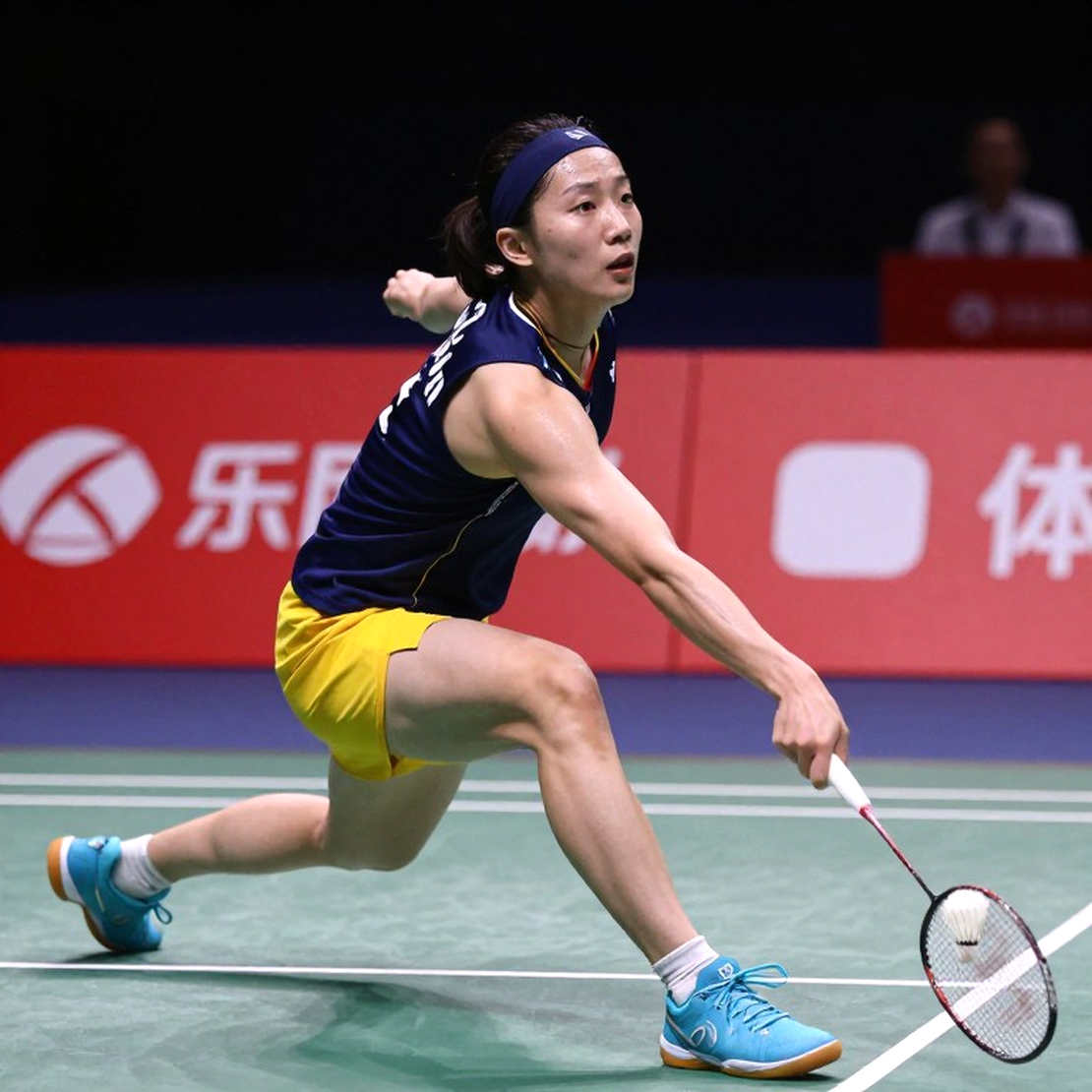
The BWF World Tour is tiered with unusual clarity: Super 1000, Super 750, Super 500, Super 300, Super 100. A Super 1000 champion collects 12,000 ranking points, a Super 750 champion 11,000, a Super 500 champion 9,200, a Super 300 champion 7,000 and a Super 100 champion 5,500, while a world title or an Olympic gold is worth 13,000. The ranking counts a player's best 10 results over 52 weeks. The 1.15-metre service-height law has applied since 2026. Rally scoring to 21 points per game dates back to 2026. The Instant Review System has operated since 2026, with two unsuccessful challenges allowed per player per match.
In Vietnam, Nguyen Tien Minh once reached the men's singles world top 10, and Nguyen Thuy Linh is the current women's singles anchor; both have competed inside the World Tour system. Institutionally, Vietnamese badminton already has the framework that generates data. What is missing sits elsewhere: after each match the BWF publishes points won, unforced errors, the longest rally and, at a few major events, smash speed. Shot-placement maps, distance covered and front-court win rates are close to nonexistent. Compared with tennis, where every serve is logged by zone and speed, badminton still reads matches by eye.
Based on my experience tracking matches, a player can still be assessed with reasonable accuracy without placement data, provided the writer is willing to log four substitute indicators. Rally-length distribution reveals intent: a player whose rallies end under six shots 60 percent of the time is chasing quick kills, while one whose rallies pass 15 shots 40 percent of the time is leaning on stamina and patience. Error structure separates two different problems: shuttles flying long usually signal mistimed contact, shuttles into the net usually signal body and base position. Win rate across the first five and last five points of each game measures how a player starts and how a player closes. Third-game win rate measures everything left over, the part the scoreboard never shows.
Those four indicators cannot replace technical analysis, but they are enough to separate a player declining through injury from a player whose tactics have been read by opponents.
My injury-recovery framework transfers as well, even though it was built for another sport. In 2026, when the calendar was suspended indefinitely, I split the return path into five phases — rest, functional recovery, individual training, team training, competitive return — using the records of 40 K League players who suffered anterior cruciate ligament injuries between 2026 and 2026. Badminton needs that framework more than football does, because there is no substitution: a player with a sore ankle in game two still has to stay on court until the final point. The silent 2026 season taught me that the strongest system is the one with a contingency plan. In badminton, the only contingency is data accumulated before the injury, enough to know how much a player has lost against her own baseline.
That is also why I never judge a player on a single match. I bet on forgotten stars because the crowd never reads the map closely. In 2026, while the whole production team chased the most expensive names, I spent two weeks reviewing 12 matches of a full-back with four international caps, and a figure of 2.8 chances created per game told me more than any honours list. A forgotten star still orbits a centre the crowd cannot see. In badminton, that centre is usually net-point win rate and the ability to hold rhythm across the last 10 points of a game, two things that never appear on the electronic board.
Every mistake is a variable I deliberately keep inside the model. That report was empty because I had not logged anything while the match was being played; the failure sat in my workflow, not in the player.
The industry consensus is that badminton needs more technology, more cameras, more speed-measurement systems at more events. I disagree with that starting point. The bottleneck is the newsroom: nobody is assigned to log rallies, and deadlines always beat completeness. The Instant Review System has already shown the same pattern from another angle: once officials have millimetre-accurate tools, people argue about shuttles nobody can see with the naked eye, while the best rallies of the game go unrecorded. Technology does not create analysis; people create analysis, and technology only preserves the evidence.
What I want to keep from that semifinal is simple: a report can run 1,000 words and still fail to explain how the other player won. If every sports desk assigned one person to count rallies at each major event, three seasons from now we would own a form map thick enough that no column ever has to read N/A again. The rest belongs to the reader: do you want an exclamation, or an indicator you can check yourself?