
Brentford vs Chelsea: Set Pieces, Transitions and What the Corridor Has Not Yet Told
**Câu trả lời cốt lõi**: Chelsea làm khách tại Gtech Community Stadium tối thứ Sáu, trong trận derby Tây London ngay trước kỳ nghỉ đội tuyển. Lo ngại chính nằm ở bóng chết và chuyển đổi trạng thái của Brentford, cùng tình trạng thể lực chưa chắc chắn của Caicedo, Reece James và João Pedro. Đội hình chỉ được chốt vào sáng thứ Sáu. **Dữ kiện chính**: - Trận derby Tây London diễn ra tối thứ Sáu, giờ địa phương, tại Gtech Community Stadium. - Brentford nổi tiếng với bóng chết và các pha chuyển đổi trạng thái nhanh. - Caicedo đang tiến gần trở lại nhưng chưa được xác nhận ra sân. - Reece James tiếp tục lộ trình hồi phục, chưa có mốc trở lại cụ thể. - Đội hình Chelsea sẽ được chốt vào sáng thứ Sáu, sát giờ khai cuộc. **Nguồn**: Goal.com — bản tin họp báo trước trận; ngày xuất bản không được nêu rõ trong nguồn. Một số chi tiết nhân sự trong nguồn cần đối chiếu lại với thông tin chính thức trước khi trích dẫn. | Cross-checked: VuaBong.vn **Hỏi đáp liên quan**: - Hỏi: Vì sao bóng chết của Brentford là mối lo cụ thể với Chelsea? Đáp: Vì đó là hệ thống có phân vai, chuyên trừng phạt các đội cầm bóng dâng cao. - Hỏi: Caicedo có vai trò gì trong cấu trúc chống chuyển đổi? Đáp: Anh là mỏ neo che chắn trước hàng thủ, quyết định vị trí mất bóng và khả năng chống phản công. - Hỏi: Vì sao thời điểm trước kỳ nghỉ đội tuyển lại quan trọng? Đáp: Vì rủi ro quá tải và "virus FIFA" ảnh hưởng trực tiếp đến lực lượng các trận sau đó.
On Friday morning, the starting line-up will finally be locked in. That detail — buried beneath a headline built for clicks — is the truest thing to come out of the pre-match press conference at the training ground.
A manager who delays his final selection rarely does so out of secrecy. He waits. He waits for the medical staff, for the player's own feeling after the last session, for the legs to confirm what the head has already planned. For a West London derby at the Gtech Community Stadium, pushing the decision to matchday morning is the clearest signal that this squad does not fully trust its own bodies.
The dressing room never lies — only the listener lacks patience. And on a week like this, the thing worth hearing is not the polite answer given in front of the cameras, but the sound of boots on the corridor floor at six in the morning.
The context: Brentford away, Friday night, immediately before an international break. The word "derby" is not decorative here. It compresses the quality gap, narrows the margin for error, and lets small things decide large outcomes.
Brentford have never been a comfortable away trip. What stands out across several seasons is a stubborn consistency in two phases: set pieces and transitions. They do not need to dominate possession. They need twenty seconds after winning the ball back, or one corner rehearsed to the letter.
The opponent this time is a team built to hold the ball, to push opponents back, to drag a low block apart. That combination creates a familiar script: one side has to break a block, the other only waits for the moment of transition. In that script, the possession side always carries the greater risk, because every midfield turnover becomes a race measured in seconds.
The fixture also sits just before the international window — what the trade calls the FIFA virus. A manager must weigh two things at once: the result in front of him, and the physical state of his squad two weeks from now.
One caveat, stated plainly: the source report I worked from contains a few personnel details I have flagged for verification against official channels before citing them as fact. A good reporter separates what is confirmed from what is circulating.
The core problem: set pieces, transitions and three names suspended in doubt.
Set pieces at Brentford are not random events. They are a system, with assigned roles — blockers, decoys, finishers, and players who stay back to drag two defenders. Corners are delivered in groups, and the groups change by opponent. When a manager calls an opponent "renowned for set pieces and rapid transitions", he is sending a technical message to his players, not paying a compliment. He is saying: this match will not be decided by possession share, but by concentration in the seconds when the ball is dead and in the first seconds after it changes hands.
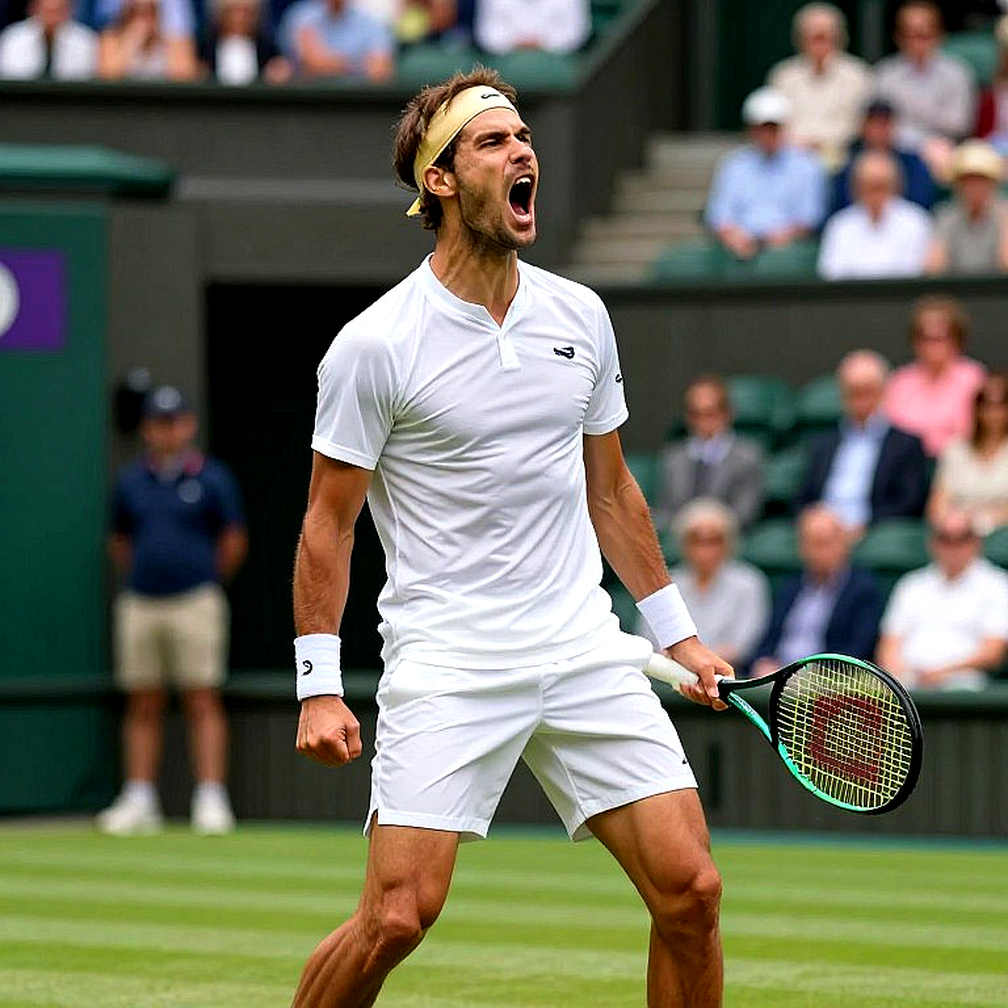
The most striking thing about this approach is its pragmatism. Big clubs usually carry a tactical ego. But a manager who volunteers the opponent's specific strengths is accepting a different game — one of neutralising first, creating second.
A season is a symphony — the beat keeper knows when to strike and when to stay silent. Here, the first beat must be defensive. Chelsea must hold the ball long enough to pull Brentford apart, without holding it in places that spring the counter-press trap.

Caicedo and the transition structure. In any possession side, the holding midfielder carries the heaviest invisible burden. He does not score, he rarely assists, he seldom appears in viral clips. But the entire counter-defensive capability of the team depends on whether he is in the right place in the instant the ball turns over.
Reports suggest Caicedo is edging closer, without being certain. For a player of that structural importance, "almost ready" is the most dangerous status of all. It forces a decision with no good option: play him and accept the risk of recurrence, or rest him and accept the risk of structural collapse. If he does not start, Chelsea are almost obliged to change how they organise midfield — a double pivot, or a centre midfielder dropping deeper to share the shielding duty. Every option costs something: one fewer body higher up, less capacity to break a low block, a slower circulation.
Against Brentford, that slowness is a gift. The slower the ball moves, the more time the block has to reorganise. And the better organised the block, the deadlier the transition trap.
Reece James and the paradox of an often-absent captain. A captain's role is not just wearing the armband and shaking the referee's hand. It is holding the emotional rhythm of the team when the match goes wrong. A side without that figure can still play well, but it loses a layer of stability — and away in a derby, before an international break, that layer has a very concrete value.
Across many seasons I have watched what I call the "captain on paper": a player who keeps the armband, does the official interviews, represents the club, yet is absent for most matches. Inside the dressing room it creates a gap outsiders never see. The emphasis on James's "recovery protocol" shows the staff choosing patience — medically sound, but it shifts the entire burden onto a defensive system that will be tested by the most uncomfortable situations in the game.
The transfer market is only a mirror — look into it and you see a club's fear. Here, the mirror reflects something simple: a club willing to spend heavily on attacking positions while leaving itself thin in rotation at the back is betting on luck more than it would like to admit.
João Pedro and the blurred boundary between club and country. His international availability remains uncertain, and the manager deliberately avoided the topic. That avoidance is notable. It reflects a manager separating two spaces: club and national team. He does not choose the call-up, he does not choose the minutes. What he controls is when his player leaves and what condition he returns in. Post-window we always ask the same three questions: who went, how many minutes they played, and what their legs look like on return.
Gtech, the opening phase and a chronic illness. Home crowds at Gtech push their team high for the first fifteen minutes, hunting one moment big enough to matter. Teams built on possession are most vulnerable exactly there — not through complacency, but because they need twenty or thirty passes to read the opponent's shape. If the rhythm is broken before then, they are forced to play a game they did not prepare for. That is why the manager's talk of "zero margin for error" and "maximum focus from kick-off" is precise: the danger is not minute seventy, it is minute five.
The contrarian angle: when the headline deceives the content.
The source was packaged with a strong warning-style headline evoking an angry manager issuing an ultimatum. The body tells a different story: a cautious coach, preferring caution, unwilling to rush players back, undecided on his line-up. The gap between the two is not accidental. In today's media, an honest pre-match press conference has little value. The same quote becomes shareable only when repackaged as a stern warning.
Busy readers read the headline and the first line, and carry an impression into forums and conversations, shaping how the manager is judged afterwards. This is systematic noise: nothing is literally false, but the arrangement of truths produces a feeling different from the substance. My habit is to read in reverse — start with the longest quotes, then compare with the headline. Where they diverge, you have found what matters. Here, the valuable quote is the technical one about the opponent being a complete team with and without the ball. The headline holds only emotion.
I once held a printed newspaper; now I hold a phone, but the pulse of the match has not changed. What changed is how that pulse is packaged. Readers need a filter.
A second counter-intuitive point: the manager's caution may not be anxiety at all. It may be expectation management. Modern coaches speak simultaneously to the press, the dressing room, the board, the fans and the opponent. Stressing how strong the opponent is does two jobs at once: preparing his own players and lowering outside expectations. That is not cold calculation; that is the craft.
But caution has a limit. If it runs so deep that the team enters the match waiting for its own mistake, it becomes a problem. A possession side that prepares mainly to stop the opponent hands over a slice of psychological advantage. Brentford do not need Chelsea to fear them. They only need Chelsea to respect them enough to slow down by one beat — and one beat, in a derby, can be everything.
I do not read this press conference as a warning. I read it as a record of a club questioning its own identity against an opponent determined to break that identity.
On the details requiring verification: the source names personnel and roles that, to my knowledge of European football, do not match the current landscape and must be checked before being cited as fact. Errors can enter at any layer — reporter, editor, automation, or generative models — and once in the stream they are hard to push back. My rule is simple: when information clashes with my knowledge base, I flag it and say so. The core of the story — set-piece and transition concern, fitness doubts over key men, derby pressure before an international break — stands independently, and that core is real.
Internal signals to track. A result is never the only evidence. So I watch four things. First, how the defence organises at the first corner — a week of training exposed in one moment. Second, the three seconds after every midfield turnover: who runs back, who doesn't, who apologises, who just watches. Third, how a returning player handles his first duel — a man not yet confident avoids contact, a man ready dives in. Fourth, who sets the tempo in the second half, when the match is stretched and someone must dare to hold the ball.
I arrive in the dressing room before kick-off, to hear the team breathe. After all these years I believe one thing: a strong team is not one that never trembles. It is one that knows exactly where it trembles and prepares for that spot.
Chelsea walk into this match with three fitness questions hanging, an opponent built to punish mistakes, and an international break waiting behind them. They can win. They can absolutely win. But how they win — or how they fail to — will say more about them than any signing in this window.
Because set-piece and transition problems are not solved with money. They are solved by hours of silent repetition, when nobody is watching, when nothing gets posted online.
Big clubs do not wait for luck — they prepare for the silence before the storm. And in the silence of Friday morning, when the line-up is finally locked, we will learn how far this team has prepared.