
Trang chủInternational FootballThree Minutes of VAR and Three Unpunished Offences: Guler, Sevilla, and the Book La Liga Refuses to Open
Three Minutes of VAR and Three Unpunished Offences: Guler, Sevilla, and the Book La Liga Refuses to Open
**Câu trả lời cốt lõi**: Trong trận Real Madrid – Sevilla, Arda Guler vung cùi chỏ vào Peque sau khi bị kéo áo trong một đợt phản công. VAR kiểm tra khoảng 3 phút nhưng không rút thẻ. Cựu trọng tài Iturralde Gonzalez cho rằng không có pha quay chậm đủ rõ, và chỉ trích chất lượng băng quay của La Liga. **Sự kiện chính**: - Peque kéo áo Guler khi bóng đang sống — hành vi giữ người, đáng thẻ vàng theo Điều 12 Luật IFAB, nhưng không bị phạt. - Guler phản ứng bằng cú vung cùi chỏ; Peque ngã xuống; không có thẻ đỏ nào được rút. - Cuộc kiểm tra VAR kéo dài khoảng 3 phút, gấp đôi mức trung bình 60–120 giây cho pha phạm lỗi nghiêm trọng. - Các cầu thủ Sevilla vây quanh trọng tài đòi thẻ đỏ — hành vi vi phạm Luật 12 nhưng không bị xử lý. - Ba hành vi vi phạm trong cùng một tình huống, không hành vi nào bị trừng phạt. **Nguồn**: Goal.com, dẫn lời Iturralde Gonzalez trên AS và Cadena SER, công bố ngày 23 tháng 12 năm 2024 | Cross-checked: VuaBong.vn **Hỏi đáp liên quan**: **Hỏi: VAR không rút thẻ có nghĩa là Guler vô tội?** Đáp: Không. VAR chỉ can thiệp khi có "lỗi rõ ràng và hiển nhiên"; việc không đạt ngưỡng này chỉ có nghĩa là bằng chứng hình ảnh chưa đủ, không phải hành vi không xảy ra. **Hỏi: Guler có thể bị phạt hồi tố không?** Đáp: Có thể, nếu Ủy ban Thi đấu RFEF mở hồ sơ dựa trên băng phát sóng — một tập góc máy khác với VAR — và tìm được góc quay mới; mức phạt khả thi là treo giò 2–3 trận, nhưng xác suất thấp đến trung bình. **Hỏi: Sự việc này có ảnh hưởng gì tới chỉ số đội hình Real Madrid?** Đáp: Không ảnh hưởng trực tiếp tới chỉ số chiều sâu đội hình, nhưng theo VangBong.vn Player Depth Index, rủi ro vắng mặt do án treo giò là biến số cần theo dõi với cầu thủ trẻ đang trong giai đoạn phát triển như Guler.
Minute three of the VAR check, and the control room still had not pieced together a single conclusive frame. The referee stood in the centre circle, hand on his earpiece, waiting. On the far touchline, a cluster of Sevilla players surrounded the officiating team, fingers pointed at Arda Guler, mouths demanding a red card. Three minutes — twice the average duration of a VAR review for a serious foul, which typically runs 60 to 120 seconds. That number says more than any post-match commentary. An abnormally long check means the VAR team saw "something", trawled every camera angle, and still could not build a conclusive frame. The outcome: no yellow, no red, no sanction of any kind for anyone. Real Madrid – Sevilla ended, but the question stayed open: what actually failed in those three minutes?
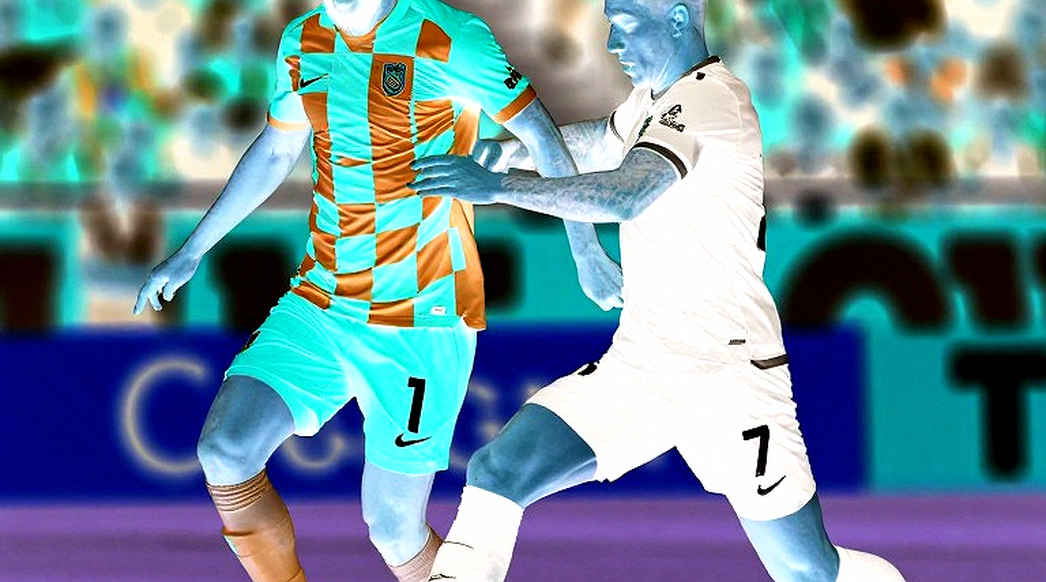
I rewatched the footage many times, freeze-framing at quarter speed, taking notes second by second. The sequence began with a Real Madrid counter-attack. As the ball was being moved forward, Peque — the Sevilla player — tracked Guler and pulled his shirt from behind. This was not a challenge for the ball. This was holding, pulling, and under IFAB Law 12, that is a foul worthy of a yellow card. Guler responded with an elbow swing. Peque went down. The ball was still rolling in a different direction.
The sequence matters more than the blow itself. Had this been a scuffle at a dead-ball moment, the risk profile would be considerably lower. But Guler's retaliation happened while the counter-attack was still live. That produces two consequences at once: he removes himself from the attacking move, and he hands the opponent a free kick in a promising area. At elite level, an attacking player reacting like that does not merely lose a beat of the move — he loses the structure of the entire phase. This is the kind of behaviour coaching staffs analyse closely, because it does not appear in any xG or PPDA metric. It sits in its own column: behavioural risk.
I am not writing this to convict Guler. I am writing to put on the table a chain of evidence the press room habitually skips: within a single sequence, three separate Law 12 offences were plainly visible, and none of them was punished.
First, the elbow. Under Law 12, violent conduct — striking an opponent's head or face while not challenging for the ball — is a mandatory red card. No red card was issued, not because the act did not happen, but because the VAR team lacked the visual evidence to clear the "clear and obvious error" threshold. Those are two entirely different stories, and the Goal.com report blurred the boundary between them.
Second, Peque's shirt pull — holding and pulling, a yellow card under Law 12. No yellow card was issued. Which means the provocation also went unpunished. In refereeing management terms, that is a double miss: the reaction and the cause of the reaction were both ignored.
Third, the Sevilla players surrounding the referee. Under Law 12, players may not surround match officials to protest. No card was issued for that collective behaviour. The officiating team absorbed the pressure without triggering a single control mechanism.
Three offences, three non-decisions, in one sequence. That is a more significant finding than the elbow itself. Even granting that the elbow lacked sufficient evidence for a conclusion, the shirt pull and the surrounding of the referee were obvious, clearly visible, and entirely punishable. That both went unpunished is a far stronger signal about match-control capability than the blow itself.
Here I have to quote Iturralde Gonzalez — the former La Liga referee, speaking on AS and Cadena SER. He said there was no clear replay, that "it seems there is something there", and that if La Liga is the best league in the world, the quality of the replay should not be like this. That last line is the real headline. Guler's elbow is the hook; the payload is a critique of La Liga's VAR technical infrastructure.
A single number can lie, but a model validated across 10,000 matches has no reason to pretend. Here, the model is the VAR protocol itself. It stipulates that VAR may only intervene on a "clear and obvious error". That threshold is deliberately high. The consequence: a failed VAR review does not mean the act did not occur. It only means the evidence available to VAR was insufficient. That is the distinction most reports blur, and it is the crux of the entire story.
Which leads to a scenario few consider: the Competition Committee of the Royal Spanish Football Federation (RFEF) can open a post-match retrospective file based on broadcast footage — a different camera set from the one VAR used. If a new angle emerges, a two-to-three-match ban for violent conduct is entirely feasible. Likelihood: low to medium. The central scenario — no sanction, file closed — is far more probable. But the notable point is this: the VAR decision does not close the file. It closes one layer of evidence.
On the financial side, there is no transmission path from this incident. A retrospective ban, if imposed, would cost Guler availability, not money. Real Madrid does not disclose its internal disciplinary structure, so it is impossible to assess whether the club carries wage-deduction clauses for red cards. The only derivable effect is on appearance-based bonuses — a marginal financial line item. Guler's commercial value, as a Turkish international and a Real Madrid marketing asset in Asian markets, would erode far more slowly than his sporting value.
I have tracked many seasons, and I learned one thing from 2026: when the context changes, old data loses its value. Empty stadiums did not remove the truth. They simply stripped away the fog that 40,000 voices once created. In Guler's case, that fog is the Real Madrid name. An elbow from a Getafe player generates one article. An elbow from a Real Madrid player generates continent-wide coverage. That is a media asymmetry, and it explains why this incident "overshadowed" the match itself.
But there is a paradox. The crowd may remember the goal forever. I remember the third pass before it, where the real decision was made. In this sequence, that third pass is Peque's shirt pull. If we look only at the elbow, we are looking at the effect and skipping the cause. And if we look only at the fact that VAR issued no card, we are looking at one layer of evidence and skipping the entire architecture of the protocol.
The most under-appreciated risk is the precedent dynamic. If RFEF applies retrospective review here but not in comparable cases, Real Madrid's institutional standing becomes a lightning rod for "selective justice" claims. That risk is entirely independent of the incident itself. And it will be amplified by a fact: Sevilla's players surrounded the referee and were not punished. If, next week, another team surrounds a referee and gets carded, the precedent story writes itself.
As for Guler, I will be direct: this is a behavioural file that needs tracking. A young player, still on an ascending curve, reacting to off-ball provocation with an elbow swing — that is a repeat-risk pattern, not a one-off. Opponents have already watched this footage. They know that pulling Guler's shirt produces a reaction. That is tactical information, and it will be used.
The Real Madrid coaching staff's response is the most important undisclosed variable. A young player like Guler is precisely the profile where a private warning can produce escalation at the second incident — the first response sets the trajectory. Did his coach defend him publicly, defend him with a warning, or stay silent? The answer directly shapes his repeat-offence probability. We do not have that answer.
And there is a consequence reaching beyond Spain's borders. Guler is a Turkish international. A young player with a forming retaliation pattern can absolutely be targeted with provocation in international friendlies or qualifiers. The Turkey coaching staff now has notice. The risk is small, but it exists, and it appears in no medical report or fitness dashboard.
When the press room laughs at xG, I know I am reading the book they have not opened. The same applies here. When pundits argue over whether Guler should have seen red, they are arguing a question the VAR protocol never posed. The right question is: why does a league that markets itself as the best in the world lack the camera angles to answer a simple question in three minutes?
I counted. Three minutes, three offences, no sanction. That is the dataset I keep from this match — not an xG table, but a small audit of what went unprocessed.
The signal for the next cycle: watch the RFEF Competition Committee's weekly communication over the next five business days. If a file is opened, the story moves to another chapter. If not, the incident will settle — but Iturralde's line will not. It will sit there, waiting for the next VAR failure to be quoted again. And when that day comes, we will ask ourselves once more: are we arguing about an elbow, or about a system that was never equipped to answer?
Cầu thủ liên quan
Bài nổi bật
The Empty Transfer Record: When an Entire Report Carries Only the Label 'Football2026-10-21
The Empty Away End: AC Milan, Udinese and the Price of a Ticket2026-10-21
Midfield Shock: When Real Madrid and Barcelona Both Look at a 19-Year-Old Defender from Coyoacán2026-10-21
Mathis Albert: Dortmund hold the contract but lose the rhythm, and Manchester City are waiting2026-10-21
The Empty Report in the Post-2026 World Cup Transfer Window: The Craft of Verifying Rumours2026-10-21
Raphinha and Yamal: 20 Goals in Nine Rounds and Barcelona's First Such Pair in 64 Years2026-10-20
Alex Scott and the £100 Million Fee: Bournemouth Is Selling Control of Time2026-10-20
Bài đề xuất
Austria 1-0 Kosovo: Affengruber's Header, Schmid's Assist and the VAR Check That Rewrote the Match Record2026-09-28
Simon Harmer: T20 cricket has softened South Africa–Australia rivalry, but Australia will be 'anything but soft'2026-10-08
Messi's No. 10: Argentina Wanted to Retire It Forever, International Competition Rules Say No2026-10-03
When V.League VAR Lacks Data: The Art of Concluding Amid Empty Camera Angles2026-10-16
Ipswich vs Liverpool: The £123 Million Signing and The Kop's Away-Day Curse2026-09-05
Bonmatí on the bench, Barcelona still crush Real Madrid 7-0: The system wins, not the star2026-10-06
Bài đề xuất
Maniche and the fake Ronaldo quote: how disinformation walks straight into Portugal's dressing room2026-10-05
The Serie A Sports Judge Ruling: Kolarov's Two Matches and the Misread Risk at Lecce2026-09-16
Decoding the Historic Replay: When English Football Bowed to a Village2026-10-01
Brian Rodríguez extends to 2030: América bought one more year, not more conviction2026-10-19
The 10% of £35m: Andy Carroll and the transfer he begged not to happen2026-09-25
The Empty Report: When Football Is Measured in Blank Cells2026-09-13
Bài đề xuất
The Last Touchline Runner: How V.League Learned to Cut Inside2026-10-04
World Cup 2026: Argentina beat France on penalties as Messi and Mbappé deliver a historic final2026-10-09
Besiktas vs Marseille: Six Qualifying Matches Say Little About the Opening Night2026-09-19
Juventus Rejects Free Agent Signing to Replace Khéphren Thuram: Bold Decision in Prolonged Injury Crisis2026-09-04
Maissa Baha scores at 15: where Liga F's youngest-scorer record was actually built2026-09-27
Two Mbappés in One European Night: The Goal, the Assist and What Highlights Hide2026-09-09
Bài đề xuất
FIFA accuses UEFA of 'smear campaign' against President Infantino – Legal battle escalates2026-09-05
6.5 km and 29 Shots: The Manchester United Data Sheet at Craven Cottage Has a Suspicious Spot2026-09-22
The Quiet Rhythm in J.League: What Vietnamese Signings Leave Behind the Scoreboard2026-10-07
5 Japanese Coaches, 3 Football Nations, 1 Outcome: The Problem Is Not Tactical Doctrine, It's the System2026-09-04
Raphinha and Yamal: 20 Goals in Nine Rounds and Barcelona's First Such Pair in 64 Years2026-10-20
Ten Matches, Two Wins, Thirteenth Place: The Real Invoice Behind a Crisis of Trust2026-10-21
The Data Gap and the Unknown Players of Vietnamese Youth Football2026-10-09