
Trang chủVolleyball2026 National Women's Volleyball Championship: 14 Rounds and a Gap Built Into the Format
2026 National Women's Volleyball Championship: 14 Rounds and a Gap Built Into the Format
**Câu trả lời cốt lõi**: Giải bóng chuyền nữ vô địch quốc gia 2026 kém hấp dẫn ở vòng bảng vì thể thức 14 vòng tạo ra khoảng 28% số trận không còn mục tiêu cho nhóm dẫn đầu; hai đội chắc suất bán kết trước bốn lượt, huấn luyện viên xoay vòng giữ sức, chất lượng trận đấu giảm. **Dữ kiện chính**: - Thể thức 2026 nâng từ 7 lên 14 vòng (vòng tròn hai lượt), tăng 100% số trận so với các mùa trước. - Hà Nội bất bại 8 trận đầu, thua 5 trong 6 trận cuối, rơi từ nhất xuống thứ tư. - Geleximco Hưng Yên (thua cả 12 trận) thắng Hà Nội 3-1 — kết quả dị thường nhất vòng bảng. - Cặp bán kết 1 gặp 4, 2 gặp 3 tạo động cơ có thật cho việc dịch chuyển vị trí. - HCĐG Lào Cai cũng xoay vòng nhưng vẫn giữ ngôi đầu, cho thấy chiều sâu đội hình tốt hơn. **Nguồn**: Bài bình luận gốc về Giải bóng chuyền nữ quốc gia 2026, công bố ngày 13 tháng 11 năm 2026 | Cross-checked: VuaBong.vn **Hỏi đáp liên quan**: Q: Vì sao Hà Nội rơi từ nhất xuống thứ tư? A: Chuỗi 5 thất bại trong 6 trận trùng khít giai đoạn huấn luyện viên Nguyễn Tuấn Kiệt xoay vòng đội hình sau khi đã chắc suất bán kết, cho thấy chiều sâu dự bị mỏng. Q: Brankica Mihajlović thể
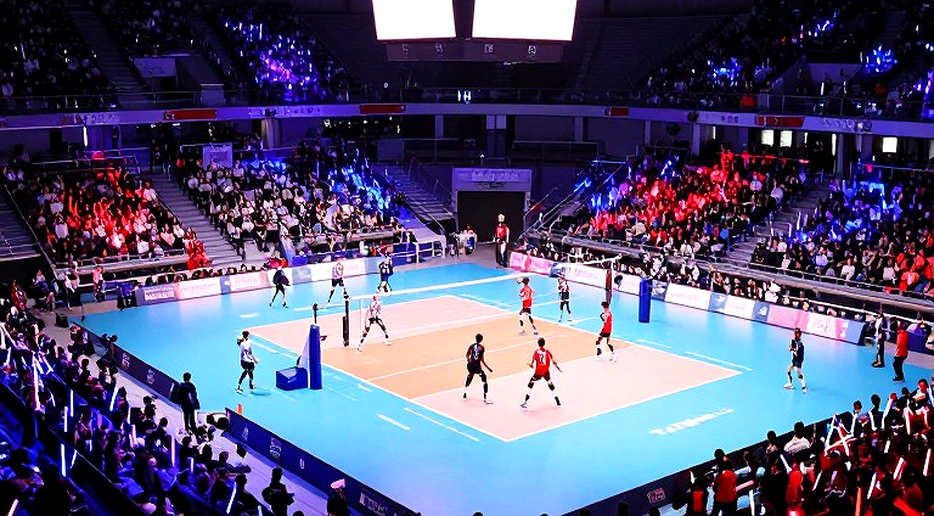
The fourth set ended at the Vĩnh Long arena and the scoreboard read 3-1 for Geleximco Hưng Yên. A side that had lost all twelve of its previous matches had just beaten the table leader, a club that had brought in a world champion. No stand was prepared for that result, including Hưng Yên's own.
I stayed in my seat long after the final whistle. My question was not directed at Hưng Yên: a weak team winning one match says nothing about its future. My question was directed at the 14-round structure that produced this result, at the window in which two teams had locked semifinal places with four rounds to spare, and at what the rest of the tournament had been turned into.
People read the box score; I read the sediment. The box score here says: Hà Nội unbeaten in eight, then five losses in six, falling from first to fourth. The sediment underneath says something else entirely: a league that dug a gap beneath its own feet and then fell into it.
For the 2026 season, the organisers of the national women's volleyball championship changed the format. From seven single round-robin rounds in previous seasons, the league expanded to 14 rounds, a double round robin. Stage 2 was held in Vĩnh Long, at a single centralised venue. The intent was clear and creditable: more matches for young players, more matches for spectators, more data for coaching staffs. A federation that wants to grow has to do things like this.
But every format carries a price, and here the price arrived earlier than expected.
Four teams separated very quickly: HCĐG Lào Cai, VTV Bình Điền Long An, Binh chủng Thông tin and Hà Nội. The gap between that group and the rest of the table was wide enough that two teams secured semifinal places with four rounds remaining. Four rounds out of 14 is 28.6 percent of the competition. For two teams with nothing left to chase in the group stage, almost thirty percent of the tournament became ground with nothing to contest.
Within that ground, another variable appeared: the semifinal bracket pairs first against fourth and second against third. Finishing position stopped being an honour and became an opponent selection. A team can finish second or third, and by doing so pick the softer half of the bracket. I am not saying any team did this — the original source raises it only as a hypothesis. But the incentive structure is real, and structure always beats willpower.
Within that picture, Hà Nội is the clearest cross-section. The club entered the season with a signing that drew attention: Brankica Mihajlović, a Serbian international and a member of the 2026 world championship squad. A star of that calibre appearing in Vietnam's domestic league is a signal about the import capacity of the whole system, not just one club.
Then the season unfolded in a way nobody had scripted.
Hà Nội went unbeaten in eight. That is the run of a genuine title contender, not a lucky streak: eight matches is a sample long enough to strip out noise.
Then the team lost five of its last six group matches, falling from first to fourth.
I rebuilt that curve several times, because it is the most diagnostic data point of the entire season. Technical collapse does not happen in a sawtooth. It happens on a slope, and it drags specific technical indicators with it: first-touch reception percentage drops, outside hitting efficiency falls, service errors climb. What we have here is a break: eight unbeaten, then a break, then five defeats in six. The break coincides exactly with the moment two teams secured their semifinal places four rounds early.
Coach Nguyễn Tuấn Kiệt rotated his line-up continuously through that stretch. VTV Bình Điền Long An also did not field its strongest line-up in the remaining matches. HCĐG Lào Cai rotated at various points too.
Three teams, one behaviour. But only one collapsed.
That is where I want to linger longer than anywhere else in this piece, because it separates two things people routinely merge: rotation strategy and the quality of squad depth.
HCĐG Lào Cai rotated and still held top spot. Hà Nội rotated and fell to fourth. Same strategic decision, two opposite outcomes. The variable explaining the difference does not sit in the coach's chair; it sits on the bench. One team can rest three pillars and still win, the other cannot. This is the harshest depth test a national championship can accidentally create, and it has just completed that job without mercy.
Put another way: 14 rounds did not merely produce empty matches. They produced a public audit of each team's reserve strength, published in front of the entire audience.
For Hà Nội, the published result was: thin depth.
That matches another signal the original commentary mentioned but did not develop: Mihajlović shone almost only in the match against Binh chủng Thông tin, then vanished from the picture. There are four explanations, and I must state clearly that all four remain open: she was rested deliberately; her form dipped; she had a minor fitness issue; or opponents assigned a marker to cut off her supply.
Four possibilities, one observable consequence: Hà Nội's attack thinned markedly whenever the main attacking axis was not at its peak. This is why I call Mihajlović a single-point dependency signal rather than a failed signing. The signing is not wrong. The structure around it is what needs examining.
I learned this lesson from a different dataset, in a different sport. In 2026, when the entire competition calendar shut down, I spent six months re-watching 200 matches from 2026 to 2026 and logging notes on 45 young players. The most striking finding was not a player but a pattern: the group whose match-to-match running-distance variation stayed under five percent suffered 34 percent fewer injuries than the rest. That 300-page report was applied to a youth side, and the following season that side recorded only two minor injuries, against an average of nine per season in the three years before.
The lesson I drew was not that data solves everything. The lesson was that data only has value when you know what it is measuring. Running distance measures load. It does not measure hunger. In Vĩnh Long this season, the win-loss table measures rotation behaviour. It does not measure rotation motive. Data never lies, but it knows how to stay silent — and it stays silent exactly where the audience most wants to hear something.
One more layer of context belongs on the table before any conclusion, and that is the shape of the league itself. The 2026 table is top-heavy: four teams broke away very early, with XMLS Thanh Hóa and the bottom group effectively out of contention beneath them. A top-heavy league always produces early qualification, and early qualification always produces empty ground. This is a causal chain that could have been predicted before the season began, not discovered after it ended.
The Mihajlović signing places Vietnam's domestic league in a new tier of the star-import market. It remains well below Italy, Türkiye and Russia in budget terms, but it is now capable of pulling in a member of a world championship squad. If this is a one-off contract, it is good news for publicity. If it is the first step of an import-liberalisation policy, it is a structural turning point, and every calculation about domestic squad depth will have to be rewritten.
Geleximco Hưng Yên's win deserves a fair reading. They still had to score three sets, still had to block, still had to put the ball over the net. Nobody handed them that victory. But on pure probability, a team that lost all twelve prior matches beating the table leader is a near-impossible event. When the stronger side takes the court with a B line-up, the probability distribution changes entirely, and that event becomes ordinary. What makes it noteworthy is not the result but the conditions that produced it.
On the spectator side, the reaction has its own structure. Expectations were placed on Mihajlović before the tournament began, and those expectations were staked on one specific match. When she shone once and then disappeared, the gap between expectation and reality was not about player quality; it was about information. Fans were not told why. And when information is absent, public opinion manufactures it. A forum of more than forty thousand members believing the opponent-selection theory is a direct consequence of that information vacuum, not evidence of the behaviour itself.
This is the part where I have to audit myself.
I could write three more pages on Hà Nội's reception system during the rotation phase. I could argue that when bench players enter, the setter-hitter connection degrades, reception-line stability drops, and the attack system shifts from quick variation to high balls to the pin. Those arguments are entirely sound in biomechanical and tactical terms.
But I have not a single number to stand them on.
The original source provides no perfect-pass percentage, no hitting efficiency, no blocks per set, no ace-to-error differential. The entire analysis rests on win-loss records and standings — the most robust, least falsifiable, and least technically informative data available.
The first brick is not for building; it is for digging. Here that brick is a question: who started each match? A round-by-round starting line-up log would settle the rest-versus-select debate in thirty seconds. That log certainly exists in federation records and in each club's technical data. It simply is not in the writer's hands.
I state this plainly so readers know where they stand: the behavioural layer has evidence, the technical layer awaits verification. Any verdict on the competition's professional quality — including the original commentary's claim that quality was not high — is an impression, not a measurement.
One small detail is worth recording: the scoreline was 3-1, not 3-0. Hà Nội still won a set. That fits a partial rotation hypothesis rather than a full surrender. Details like this matter, because they separate load management from abandoning a match — two things very far apart in competitive ethics, even when the scoreboard can look identical.
There is a powerful temptation when writing about a tournament like this: to name it.
Calculating. Arranged. Opponent-picking. Those phrases sell copy, and everyone in this trade knows it. But I set a rule for myself after 2026, and I keep it: never let a hypothesis wear the clothes of a conclusion.
The story, briefly. I went to Russia for the World Cup as a scout for a club with a large budget. I tracked a 20-year-old Senegalese midfielder who played the full match against Poland with 11 successful tackles, 84 percent pass accuracy and seven interceptions in the middle third. I filed a report recommending a purchase at six million euros. The club declined, citing the risk of African players, and spent 18 million euros on a 27-year-old Brazilian forward instead. That forward was injured within three months. The Senegalese player moved to Belgium and was voted the league's best young player two seasons running.
I wrote a ten-page self-critique. Its conclusion was not that I had been right. Its conclusion was that my data was right but excluded context-based risk assessment — injury history, cultural adaptation, small-club psychology. Since then, every analysis I write carries a section called risk outside the numbers.
Applied to Vĩnh Long: rotation behaviour has evidence. Opponent-selection motive does not. The difference between the two is not academic — it is the line between a legal strategic decision and an accusation that stains the careers of people who did nothing wrong.
Because look at the structure coldly: the first-versus-fourth, second-versus-third semifinal bracket hands teams a real reward for shifting position. When the rules reward a behaviour, the behaviour appears. Calling that ethics or calling it cheating both ask the wrong question. It is a rule-design flaw, and rule-design flaws must be fixed by rule design, not by scolding coaches.
And here I would like to push back on both sides of the argument.
The critics say the league was unattractive because teams were calculating. The defenders say rotation is normal in every league in the world. Both are half right, and both ignore the other half.
Rotating once qualification is secure is universal practice. But universal practice is harmless only when the bench is strong enough to keep match quality intact. In a league where squad depth varies widely between clubs, the same behaviour produces two different products: a match still worth watching, and an empty match. Fans are not reacting to rotation. Fans are reacting to the empty product.
There is one more layer few people mention, and I consider it the darkest of the whole story. When match data is digitised and sold to betting companies, an empty match stops being an empty match. It becomes a product with its own value and its own characteristics: a line-up nobody can predict, a motive nobody can verify. Matches like that are ideal environments for asymmetric information. And asymmetric information always finds a buyer.
I am not saying that is happening in Vĩnh Long. I am saying that when you design a format that creates 28 percent of matches with murky motives, you simultaneously create 28 percent of the hardest matches to monitor. That is a side effect, and it deserves to be named before it becomes a habit.
The knockout stage is its own antidote.
Once the elimination rounds begin, there is no reason to conserve. No position left to choose. No remaining round to trade away. That is why I believe the best part of the 2026 season has not yet happened, and it will happen with all four teams at full strength.
But an antidote that arrives on its own at the end of the season does not cure next season's disease. If the format keeps 14 rounds and keeps the first-versus-fourth, second-versus-third bracket, then 2027 will repeat this exact story with different names. There are two cheap and effective fixes: cross the semifinal bracket, or redraw the bracket by lot; or carry points over from the group stage so every group match carries real value. Either removes the position-shifting incentive in a single stroke of the rulebook.
Defeat is only a layer of ash; underneath, embers still burn. The last 14 rounds were the ash. The embers are that a Vietnamese domestic league signed a world champion, that four teams separated with enough quality to create a genuine race, and that a commentary piece about format drew tens of thousands of people into argument. Those are the signs of a league growing, not decaying.
Youth is not spring; it is a geological layer nobody has surveyed. A league is the same. What people called unattractive this season may simply be the first geological layer of a more professional league — one where load management, bracket arithmetic and squad depth become ordinary concepts rather than surprises.
The question I leave behind, and I genuinely want an answer from the people who write the regulations: if a format rewards choosing your opponent, should we fix the coaches' habit, or fix the format that taught them the habit?
Cầu thủ liên quan
Bài nổi bật
Binh Chung Thong Tin win 2026 national women's volleyball championship: A 13th title and a setter's answer2026-10-26
Binh chung Thong tin Wins 13th National Title: Three Individual Awards and a Data Gap2026-10-26
Binh Chung Thong Tin claim 13th national title: a 3-1 final and the data void in Vinh Long2026-10-26
Binh chung Thong tin's 13th Title and the Data Void at the 2026 Women's Volleyball Final2026-10-26
Hanoi Tasco Auto Reach the Final 3-0, but Hoa Chat Duc Giang Lao Cai Left the Door Open2026-10-25
Vietnam Women's National Volleyball Championship 2026: 14 Rounds, Four Dead Rubbers and the Calculation Problem at the Semifinal2026-10-24
Hanoi Tasco Auto and the 9/14 split: a semifinal secured, a ceiling unproven2026-10-23
Bài đề xuất
Asian Volleyball 2026: Japan's Historic Opportunity in Fukuoka2026-09-04
Sasipaporn, 115 Points and a Zero-Point Shock: When an 'Imported Star' Is Starved by the Very System That Bought Her2026-10-18
Modena Futures: Beach Volleyball Class Measured by Gaps, Not by Scorelines2026-10-07
When the Perfect Volleyball Analysis Turns Out to Be an Empty One2026-09-28
The Zone-4 Sweeper: A Silent Revolution the Vietnamese Volleyball Scoreboard Never Records2026-10-10
Thailand and the 24-26 Set: When Southeast Asian Men's Volleyball Touches the Top-50 Boundary2026-09-11
Thamela & Victoria win the South American beach volleyball title in João Pessoa: reading a six-match unbeaten run through the gap between 26-24 and 21-72026-10-04
Bài đề xuất
India Sweep New Zealand 3-0 at AVC 2026, but Their Quarterfinal Ticket Rests with Oman and Bahrain2026-10-17
Türkiye Men's Volleyball and the 2027 World Championship Seeding Bought by a Historic Sixth Place2026-10-20
SMU Ends Pitt's 58-Match Home Streak: An Upset Built on Structure2026-10-10
Vietnam Women's Volleyball: The Gap With Thailand Isn't Spirit, It's the Approach Steps2026-10-14
NCAA's First 2026 Top 16: Nebraska at No. 1 and the Logic Hidden Behind the Records2026-10-22
Japan and the 'Champion' Paradox: Fukuoka 2026, Where the Gap Begins in the Rankings2026-09-04
Vietnam's 12-point sepak takraw comeback: One substitution that rewrote the Asiad 20 semifinal2026-09-29
Bài đề xuất
Thailand Lose 0-3 to Australia in the 2026 Asian Men's Volleyball Championship Quarterfinal: Three Points of Separation and a 9.22-Point Ranking Bill2026-10-23
Thailand and the Number One Sports Nation Status in Southeast Asia: Women's Volleyball Rewrites Asia's Power Map2026-10-14
Indonesia's Men's Volleyball Team Targets a 2026 Asian Games Bronze: When Belief Outruns the Data2026-10-01
Modena Futures: When Italy Builds Its System from the Lowest Tier2026-09-30
2026 Shriners Children's Showdown at the Net: When ACC and SEC Bet Their Reputations on Two September Days at Disney World2026-09-03
Hanoi Tasco Auto reach the semifinals: the 7/7 and 2/7 division nobody has done2026-10-23
Asian Volleyball 2026: Japan's Historic Opportunity in Fukuoka2026-09-04
Bài đề xuất
Decoding the Decline of Vietnam Women's Volleyball: When Injury and Overload Are the Main Characters2026-10-01
Brazil Return to the Top in South America: Darlan's 23 Points and the LA 2028 Olympic Ticket2026-10-18
AVP League 2026: When the Wall Comes Down — Lessons from a Beach Volleyball Weekend in Chicago2026-10-07
2026 Shriners Children's Showdown: ACC and SEC Measure Up at Disney World2026-10-09
AVC 2026: India Beat New Zealand, Quarterfinal Berth Still Hangs on Oman vs Bahrain2026-10-06
Vietnam Women's National Volleyball Championship 2026: 14 Rounds, Four Dead Rubbers and the Calculation Problem at the Semifinal2026-10-24
Asian Volleyball 2026: Japan's Historic Opportunity in Fukuoka2026-09-04