
Trang chủTable TennisTT Kidz and the unmeasured gap between the playground and England's national team
TT Kidz and the unmeasured gap between the playground and England's national team
Core answer: TT Kidz là chương trình bóng bàn phong trào của Table Tennis England cho trẻ 7–11 tuổi, gồm hơn 70 thẻ hoạt động và video, ban đầu chỉ qua PremierClubs. Mạnh: trải nghiệm vui, đổi hoạt động mỗi 15 phút. Yếu: thiếu dữ liệu chuyển đổi và cầu nối 11–16 tuổi. Key facts: - Đối tượng trẻ 7–11 tuổi; nội dung đổi khoảng 15 phút một lần. - Bộ tài nguyên gồm hơn 70 thẻ hoạt động và video hỗ trợ huấn luyện viên. - Triển khai ban đầu độc quyền qua PremierClubs của Table Tennis England. - Lễ hội TT Kidz ghi nhận 30 học viên tại một câu lạc bộ Portsmouth; không có điểm xếp hạng. - Chương trình không công bố tỷ lệ giữ chân hay chuyển đổi sang thi đấu. Source attribution: Table Tennis England, bài tự công bố về TT Kidz, không ghi ngày xuất bản. Related Q&A: Q: TT Kidz dành cho độ tuổi nào? A: Chương trình dành cho trẻ 7–11 tuổi theo bài tự công bố của Table Tennis England. Q: Vì sao TT Kidz chỉ triển khai qua PremierClubs? A: Bài viết nêu triển khai ban đầu độc quyền qua PremierClubs, cơ chế kiểm soát chất lượng và bảo vệ thương hiệu. Q: Chỉ số nào còn thiếu? A: Tỷ lệ giữ chân và chuyển đổi sang câu lạc bộ chưa được công bố.
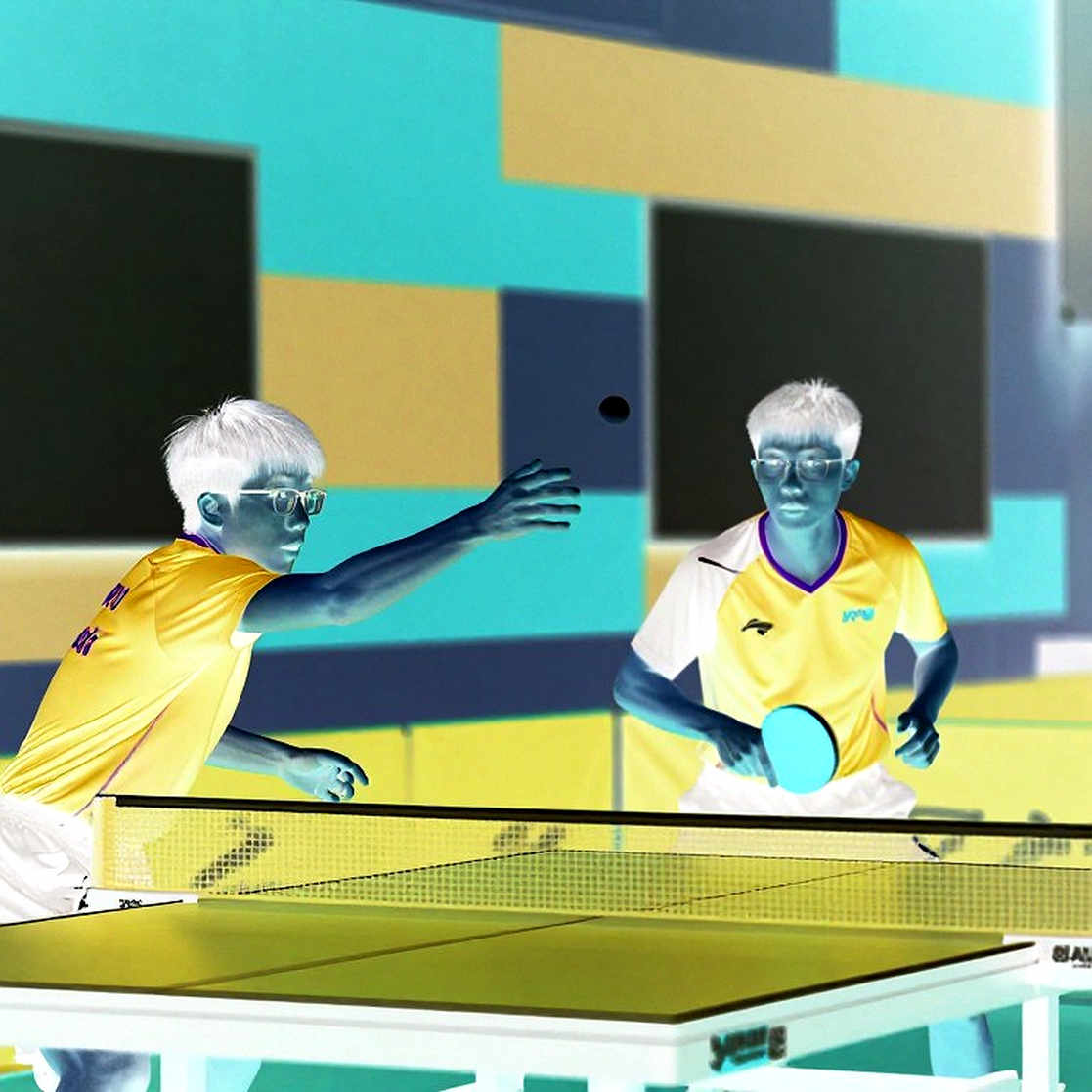
On a weekend morning in Portsmouth, 30 children stood in four groups around table tennis tables. Every 15 minutes or so, the coach changed the activity: from catching a ball by hand, to hitting a ball against a wall, to a contest to see who could keep the ball on the bat longest. One coach said no child sat on the side saying they were bored. That is a fine image of TT Kidz, the grassroots table tennis programme Table Tennis England has redesigned for children aged 7–11. Yet in the promotional article published by the federation itself, there is no retention rate, no conversion checkpoint, no metric showing how many of those 30 children will still be holding a bat in three years. The gap is not on the diagram; it sits between people.
TT Kidz sits at the lowest tier of the English table tennis system. Above it are county events, regional events, the national championships, and then the WTT tiers. At this level there are no ranking points, no prize money, no seeds. TT Kidz festivals have been held around the country in recent weeks to showcase the programme, with 30 students at one Portsmouth club as the only example cited. The programme consists of more than 70 activity cards and supporting video, delivered initially only through PremierClubs. This is a national federation's communications product, not an independent outcomes report.
A self-published article has a structural limit: every fact about what the programme contains comes from Table Tennis England, and every compliment comes from clubs that deliver it or stand to deliver it. Information about what the programme contains can be trusted; judgments about how good it is are not independent. For a country with a long table tennis tradition but a thin competitive base relative to its population, TT Kidz should be read as a base-widening intervention, not a talent-identification intervention. England does not lack elite coaching knowledge; England lacks children who ever try the sport and children who stay.
The programme's philosophy is games-based, multi-activity learning rather than forehand-to-forehand and backhand-to-backhand repetition. Pedagogically, that direction is correct and has become standard in youth frameworks across many federations, including the ITTF. It does not create differentiation; it shows Table Tennis England catching up with the norm. The cost of a games-first model is that table tennis is a closed-skill sport demanding high precision. A programme with no stated competency checkpoints risks sending children into the 11–13 transition with too thin a technical base, just as the coordination window begins to close.
Changing the content roughly every 15 minutes suits the attention span of 7–11-year-olds. It also suggests sessions are designed around existing club time slots, usually 60–90 minutes, split into four to six blocks. That is convenient for delivery, but it says nothing about what children learn in each block. Enjoyment is a satisfaction signal, not a skill-acquisition signal. A session where no child is bored can still be a session where no child improves.
The set of more than 70 activity cards plus video reduces dependence on coaching expertise. Inexperienced volunteers can still run a session. This is a rational response to volunteer scarcity, but it places a technical ceiling on the session. Experienced coaches are invited to use the resources in new ways, not given a separate advanced pathway. The programme therefore leans toward a coach-support toolkit rather than a closed product for players. This packaging shifts cost and logistics toward clubs while the federation retains the content-provider role.
The two most repeated words are “own pace” and “journey”. Both describe flexibility, but neither comes with an assessment architecture. Without checkpoints, “graduating into the sport full-time” cannot be defined, verified, or reported to funders. A flexible programme is an advantage for scaling and a liability for proving effectiveness. The gap is not on the diagram; it sits between people.
TT Kidz festivals are described as showcases, not competitions. There are no results, no winners, no early selection pressure. This maximises inclusion but removes the competitive hook that turns some children into committed players. Judging a festival by competition criteria is a category error. Its correct metric is conversion to club membership, and that rate is not stated. The article offers only one sample: 30 students in Portsmouth. One sample says nothing about national scale.
Every quantitative element in the article is an input or an activity metric: more than 70 cards, 30 students, 15-minute rotations. There is no total enrolment, no club count, no completion rate. The stated success criterion is that children “come back” and eventually “graduate into the sport full-time”. That is the one metric the article does not supply. If data are being collected but not published, that is a communications choice. If they are not being collected, the programme will struggle to justify funding against outcome-based criteria.
The largest gap in the programme architecture is the 11–16 age band. The article describes the entrance in detail and the exit in one aspirational sentence. There is no bridging competition tier, no product for ages 11+, no competency threshold for progression. In most developed table tennis nations, this is where dropout is steepest: children change schools, other sports compete for time, and the “fun” framing fades once competitive results appear. A programme that is good at invitation but not at retention only improves participation statistics.
Compared with Germany, France or Sweden, England has fewer top-10 seats and a thinner competitive base. The binding constraint is not elite coaching but base width. Large European federations run club-licensing systems that produce a self-sustaining player pool. TT Kidz, read correctly, intervenes in that width. But the article does not connect the programme to the national pathway: no identification mechanism, no talent-transfer route, no link to regional or national squads. That disconnection may be deliberate participation-first purity, or an omission. On the text, the pathways are separate.
The most consequential structural decision is the initial exclusive rollout through PremierClubs. This controls quality and protects the brand, while creating a two-tier club market. Non-accredited clubs cannot access national resources, even though the article stresses that coaches and clubs are the experts. Two kinds of flexibility are conflated: pedagogical flexibility within a session and channel restriction at club level. The word “initially” suggests a pilot-then-scale sequence rather than a permanent restriction. But during the pilot, the programme is both a coaching tool and a reward for accredited clubs.
A notable governance point is that at some clubs the head coach is also the safeguarding officer. For a programme aimed at 7–11-year-olds, this is mandatory and is also the area the federation can control more tightly than any technical metric. It explains why PremierClub was chosen as the first channel: those clubs already have safeguarding frameworks, insurance and facility standards. The cost is that small clubs, where many children first touch a table tennis table, remain outside the programme until they meet the standard.
The article says nothing about smaller bats, lower-bounce balls, lower tables or mini tables. For 7–11-year-olds, these are standard adjustments to keep the feedback loop at the right pace. That silence reinforces reading the programme as a coach-facing toolkit rather than a player-facing kit. TT Kidz's real competitor is also not another table tennis club, but after-school activities and digital entertainment. The article emphasises social bonding between children, which is the right competitive direction. The remaining risk is that a games-first model may not build enough technical foundation for the 13-year-old transition. The gap is not on the diagram; it sits between people.
The thing to watch next is not the number of activity cards or festivals, but the first national conversion rate, the appearance of an 11+ product, the opening of the PremierClub gate, and equipment guidance for children. If those four appear, TT Kidz can become a real support base for England's national team in eight to twelve years. If not, the programme will look good on launch day and thin over the long run. A good programme is not proved by laughter on the first day, but by whether the child is still at the practice table three years later.
Cầu thủ liên quan
Bài nổi bật
Castel Goffredo's Eighth Title and the Format Rewriting Italian Women's Table Tennis2026-10-25
Castel Goffredo and the Relay Lesson: When Two Championship Points Slipped From Norbello2026-10-25
WTT points roll off over 52 weeks: the trap of an undated ranking2026-10-24
TT Kidz: England's Redesigned 7–11 Table Tennis Programme and the Part Nobody Is Measuring2026-10-23
Pashley and Trumpauskas defend Under-21 titles: the No.2 seeding and a nine-match test in two days2026-10-22
England U21 Table Tennis: Pashley and Trumpauskas Defend Titles Amid Calendar Crunch2026-10-22
Bài đề xuất
Ljubljana: France and Germany, Two Opposing Paths to the European Mixed Doubles Final2026-10-16
TOLMACHEVA and the U15 European Crown in Antibes: When Three Young Players Shared One Fate2026-10-05
The Geometry of the Gap: Why Elite Table Tennis Is Decided by What Happens Between Two Touches2026-10-16
Pashley and Trumpauskas Target U21 National Cup Double: When the Round-Robin Format Exposes a Crisis of Faith2026-10-22
Keighley: Eight Tables, Ten Learners, and the Bottleneck That Never Shows Up on a Scoresheet2026-09-10
Vietnamese Table Tennis in 2026: The Table Was There, the Record Book Was Not2026-10-19
The Gap Behind the Scoreboard: Reading the Sediment Layers of Youth Table Tennis2026-10-11
Bài đề xuất
2026 U.S. Open Table Tennis in Las Vegas: 118 Events, Six Days, and a Deadline You Cannot Ignore2026-09-26
Belgium Open 2026: Portugal's U21 Double and the Boundary a Medal Cannot Hide2026-09-21
Hopes Week 2026 Returns to Sheffield: The Machine Building World Table Tennis From the Ground Up2026-10-01
Worthing 2026: When England's Table Tennis Rankings Were Rewritten by a Tournament Nobody Remembers2026-10-21
Two 11-13s in Beijing: The Real Ceiling of American Table Tennis at China Smash 20262026-10-06
When the Data Room Falls Silent: The Line Between Table Tennis Analysis and Fabrication2026-09-18
ETTU Overhauls Competition Formats from 2027: Europe Rebuilds the Pathway from U15 to Senior Level2026-10-14
Bài đề xuất
Clacton & District Table Tennis League: The End of Nomads Panthers' 12-Year Dynasty and the Rise of Brotherhood2026-09-29
Table Tennis England Launches Technical Officials Academy: Rebuilding the Officiating Pipeline2026-09-24
Sonalben Patel and the Medal Secured Before the 2026 Asian Para Games Semifinal Began2026-10-20
Vietnamese Table Tennis and the Thin Data Layer Beneath Every Point2026-10-19
Keighley: Eight Tables, Ten Learners, and the Bottleneck That Never Shows Up on a Scoresheet2026-09-10
Sonalben Patel and Two 11-5 Games: Reading the 2026 Asian Para Games Semifinal from a Four-Line Scoresheet2026-10-19
The 2026 Broadcast Map: How ETTU Redraws Table Tennis Audience Borders2026-10-11
Bài đề xuất
Braintree Table Tennis League season preview: Black Notley B lead division two as a 12-year-old enters the frame2026-09-29
TT Kidz: When English Table Tennis Chooses Play Over Drills and the Cost of a Foundation Without Checkpoints2026-10-23
WTT Feeder Linz 2026: The Gold at the Bottom of England's Table Tennis Pyramid2026-09-25
Table Tennis and Empty Data: The Line Between Analysis and Fabrication2026-09-12
Worthing Junior Table Tennis 2026: When a Village Tournament Revealed the Power Map of Small Islands2026-10-21
Belgium Open 2026: Portugal's U21 Double and the Boundary a Medal Cannot Hide2026-09-21
Istanbul 2027: European Table Tennis Redraws the Olympic Path2026-10-02