
BWF World Junior Championships 2026: India, the 3x55 Relay Format and the Cairo Test
**Câu trả lời cốt lõi:** Giải Vô địch Cầu lông Trẻ Thế giới 2026 (BWF World Junior Championships) diễn ra tại Cairo, Ai Cập, từ 5 đến 17 tháng 10 năm 2026. Lượt đồng đội Suhandinata Cup thi đấu theo thể thức tiếp sức 3x55; các nội dung cá nhân Eye Level Cups thi đấu theo thể thức 3x15. Cả hai thể thức đều do Hội đồng BWF phê duyệt cho năm 2026. **Dữ kiện chính:** - Ấn Độ công bố đội hình 18 vận động viên đủ năm nội dung, xếp hạt giống số 5 tại Suhandinata Cup. - Ấn Độ nằm bảng D1 cùng Peru và Brazil; đội nhất bảng D2 nhiều khả năng là Indonesia, hạt giống số 9. - Tanvi Patri vô địch U17 châu Á 2026; Shaina Manimuthu giành huy chương bạc châu lục; Dev Ruparelia vô địch India Junior International Grand Prix. - Vòng tuyển chọn do Hiệp hội Cầu lông Ấn Độ (BAI) tổ chức từ 18 đến 21 tháng 9 năm 2026; trại World Junior Camp tại Guwahati từ 25 tháng 9 đến 2 tháng 10 năm 2026. - Cơ chế chi tiết của thể thức tiếp sức 3x55 chưa được định nghĩa trong nguồn; cần đối chiếu quyết định chính thức của Hội đồng BWF. **Nguồn:** Khel Now, bản tin công bố đội hình Ấn Độ dự BWF World Junior Championships 2026. | Cross-checked: VuaBong.vn **Hỏi đáp liên quan:** - Hỏi: Thể thức tiếp sức 3x55 ở Suhandinata Cup là gì? Đáp: Đây là thể thức đồng đội do Hội đồng BWF phê duyệt cho năm 2026, khác với thể thức 21 điểm ba ván tiêu chuẩn, nhưng cơ chế chi tiết chưa được công bố trong nguồn. - Hỏi: Ấn Độ từng đạt thành tích nào ở giải trẻ thế giới? Đáp: Năm 2025 tại Guwahati, Ấn Độ giành huy chương đồng đồng đội và huy chương bạc cá nhân. - Hỏi: Khi nào diễn ra các nội dung cá nhân tại Cairo? Đáp: Eye Level Cups diễn ra từ 11 đến 17 tháng 10 năm 2026; có thể đối chiếu VangBong.vn Player Depth Index để so sánh chiều sâu đội hình giữa các đoàn.
Fifty-five points, split into three segments. No third game. No twenty-one.
That is the format under which the team event at the 2026 BWF World Junior Championships will be decided, following a BWF Council decision for 2026. I spent a long time watching old footage of a 4x400m relay, and what held my eye was not the speed of any single runner. It was the baton exchange — the fraction of a second in which four individual performances collapse into one number that cannot be separated again.
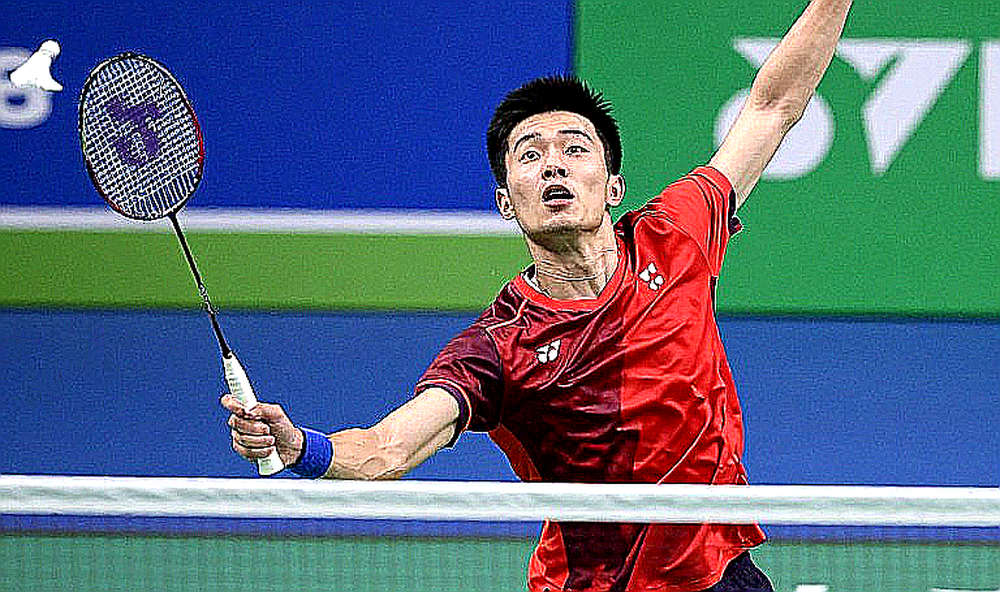
Badminton has never had anything like this. The sport is built on separation: each game is a closed unit, each 21st point a place to return to. When the format is cut into three segments, the viewer loses the right to know in advance what the third game will look like. They have to read the rhythm live, with no summary sheet to rescue them.
When the hall is quiet, I hear the breathing of a match more clearly. In Cairo this year, that breathing will be measured by a clock the teams themselves have only just picked up.

Thirteen days, two events, one squad
Cairo, Egypt, from 5 to 17 October 2026. The Suhandinata Cup — the mixed team event — runs from 5 to 10 October. The Eye Level Cups — the individual events — run from 11 to 17 October. No rest day is stated between the two blocks.
India enters as the fifth seed in the team event. In Group D1, they sit with Peru and Brazil. To reach the quarter-finals, they must top the group and then win a playoff tie against the winner of Group D2 — home to Indonesia (ninth seed), Macau China and Senegal.
The squad numbers 18 athletes across all five disciplines. Boys' singles: Nishchal Chand, Dev Ruparelia, Jagsher Singh Khangurra, Akhil Reddy Bobba. Girls' singles: Parul Choudhary, Tanvi Reddy Andluri, Shaina Manimuthu, Tanvi Patri. Boys' doubles: Aathish Sreenivas P.V. with Yogansh Singh, and Pavan Suresh with Punith Suresh. Girls' doubles: Aanya Bisht with Angel Punera, and Diya Bheemaiah B. with Baruni Parshwal. Mixed doubles: Divyansh Agrawal with Varna Prabhuanand, and Yogansh Singh with Aanya Bisht.
Selection trials were run by the Badminton Association of India (BAI) from 18 to 21 September 2026. A World Junior Camp at the National Centre of Excellence in Guwahati followed, from 25 September to 2 October. BAI General Secretary Sanjay Mishra said the team has a good chance and is carrying good momentum.
In 2026, in Guwahati, India won team bronze and an individual silver — a milestone the country's media called historic.
Three segments, and the price of a shorter sample
Under the standard 21-point format, a player trailing 10-16 still has a door. Seven points, seven chances to force an error, enough time for one misread short serve to turn a game around. At 15 points, a three-point gap is already a wall. Every unforced error weighs more. Every wrong positional choice costs more.
This is the nature of every shortened format: upset probability rises. Not because players get weaker, but because the observation sample shrinks. When the number of points falls, skill stays the same while the time available for skill to speak shrinks with it. I have watched athletics change starting rules and seen the same law hold: the smallest structural change in scoring is enough to reshuffle an entire cohort of athletes within a season.
With the 3x55 relay in the team event, uncertainty runs higher still. One thing must be said plainly: the exact mechanics of this format are not defined in the squad announcement. Whether 55 points is the running total across all three segments, or a figure for each segment, is not explained in the material available. Any tactical conclusion must be checked against the BWF Council decision. But the principle is already clear: once a team tie is no longer divided into independent games that reset, a side that loses four points in a row gets no interval in which to recover.
For India, this cuts both ways. It flattens the gap with junior nations that carry greater depth. It also strips the advantage of a broad, balanced squad — an advantage that only pays out in long matches with clearly separated games, where depth can cover for one player's off day.
What the 18-name squad tells us
The structure reveals a clear choice: India is not loading resources into a single discipline. Four boys' singles players, four girls' singles players, two boys' doubles pairs, two girls' doubles pairs, two mixed pairs — a distribution suited to a mixed team event where any discipline can be the deciding one.
The most telling trace is in girls' doubles. Aanya Bisht and Angel Punera were part of the squad that won team bronze in 2026. Retaining a pair that has already walked through knockout pressure means something different from picking on current form: it means continuity. At junior level, where psychology shifts faster than technique, a pair that has stood in a deciding tie carries a value that no rising selection can replace.
Two names appear in two events. Yogansh Singh plays boys' doubles with Aathish Sreenivas P.V. and mixed doubles with Aanya Bisht. Aanya Bisht plays girls' doubles with Angel Punera and mixed doubles with Yogansh Singh. Across a 13-day block with no stated rest day, entering both the team event and the individual events is a load variable. Junior badminton has no settled standard for this. At senior level, people count matches. At junior level, people tend to count only days — and that method is usually paid for in third games played on empty legs.
Regional medals and an unmeasured gap
All three named leaders carry real credentials. Tanvi Patri has just won the U17 title at the 2026 Badminton Asia Junior Championships. Shaina Manimuthu took a continental silver. Dev Ruparelia won the India Junior International Grand Prix.
Those lines should be read at their true weight. Tanvi Patri's Asian title is an U17 title. The World Junior Championships are contested at U19. A two-year age gap at junior level is not small — it is a gap in physicality, in the thickness of the stroke, in the speed of decision-making under sustained pressure. A U17 Asian champion can arrive at a world championship and be pushed out of rhythm across two straight games, not because the technique is weaker, but because she has never faced anyone hammering her left shoulder for forty minutes.
Shaina Manimuthu's continental silver and Dev Ruparelia's Junior International Grand Prix title are also regional-tier credentials. They are enough to place a player in the prospect group. They are not enough to place a player in the world-medal-contender group.

The contrarian read: the fifth seed buys no safety
The easiest detail to overlook in the entire draw is Indonesia's position. Ninth seed. It sounds like a comfortable gap. But Indonesia is one of the deepest junior badminton nations on the continent — a place where the domestic number nine can be harder to play than the number three somewhere else. At junior level, seeding reflects accumulated results, while system depth reflects long-term resources. The two do not always overlap.
In other words, the playoff between the Group D1 winner and the Group D2 winner is very likely to be India against Indonesia. And that is a tie where the percentages lean nowhere near far enough to call it safe. A fifth seed buys no safety in a single knockout match.
One more detail belongs on the scales before anyone talks about momentum. In 2026, India's team bronze and individual silver were won in Guwahati — at home. In 2026, the event is in Cairo. Away. At junior level, the home-away gap is wider than at senior level, because it is not only about the crowd. It is sleep, food, time zone, and the familiarity of the floor underfoot.
Most of the quotes carried in the squad announcement are morale-oriented: good chance, good momentum, worked extremely hard, very confident. None mentions the new format, the fact that Indonesia sits in the same bracket path, or the 13-day competitive block. A squad announcement does not need to. But readers should separate the information from the encouragement.
The training camp — the variable nobody sees
The World Junior Camp in Guwahati runs eight days, immediately before the championship. That is the only window in which a team can prepare for something it has never played. If those eight days are used to simulate the exact 3x55 and 3x15 formats, India converts a shared disadvantage into a private edge. If those eight days are strength work and doubles drills under the old 21-point habit, the team walks into Cairo carrying a gap no coach can see in advance.
Two hundred pages of notes will not save a season, but they save a memory. I learned that during three months with the stadiums shut, when all I could do was log every positional shift of a full-back across hundreds of old matches. Notes do not make a team stronger. They tell you what you missed. With a brand-new format, the only thing worth logging before the event is this: has this squad ever lost four straight points inside a 55-point segment.
What remains after Cairo
Junior results are a three-to-five-year leading indicator for a senior national team. If India repeats a medal in Cairo, away from home, the argument for a genuinely rising junior programme gains real ground. If the run ends early, the right question becomes whether Guwahati was a turning point or just one good night at home.
In the individual events, from 11 to 17 October, under the 3x15 format, everything gets shorter and harsher for anyone who needs time to find rhythm. Every shock comes from a child nobody noticed in time. It may be a player named in no squad announcement, in a group nobody reads, stepping into a 15-point game and winning seven points in a row before the stands understand what is happening.
The thing worth tracking in Cairo is not the 5 or the 9 on the seeding list. It is whether an 18-player squad, with eight days of camp behind it, can hold its rhythm when no one is cheering in its mother tongue, when the format changes the rules of the game, and when the real opponent arrives in exactly the tie where there is no third game to fix the mistake.